When to Choose Reverse Osmosis Vs Under Sink Carbon
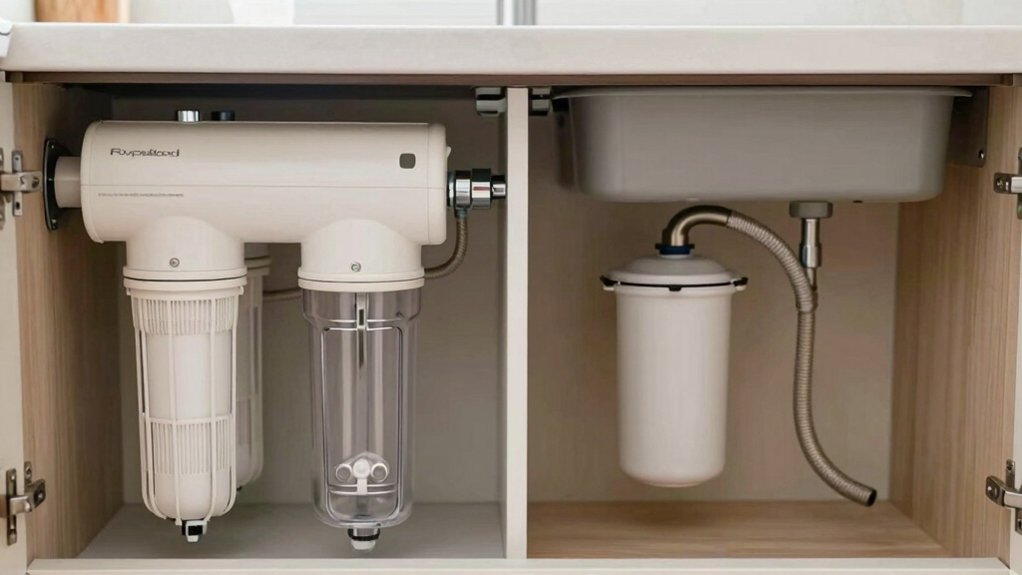
Choose reverse osmosis when your tap has high TDS or specific contaminants like nitrates, fluoride, or heavy metals. RO cuts TDS 90–99%; however, it wastes water, lowers flow, and strips minerals.
Pick under-sink carbon when TDS is low and chlorine, taste, or odor are the main issues. Carbon preserves minerals and maintains steady flow.
Size systems for peak flow; plan pre-filtration for RO, and consider a post-RO remineralizer for taste and health if you want more detail.
Quick Overview
- Choose RO when source TDS exceeds ~150 ppm or you need nitrate, fluoride, or dissolved-salt removal.
- Choose under-sink carbon when TDS is low and primary concerns are chlorine, taste, and odor.
- Use carbon for steady, high-flow drinking or cooking needs. RO has lower output and produces wastewater.
- Select RO if specific contaminant reduction (nitrates, fluoride) or near-complete desalting is required.
- Add a remineralization cartridge after RO if you want restored minerals, alkalinity, and improved taste.
TDS Reduction Comparison
How much TDS you need removed determines whether you choose RO or under-sink carbon. You’ll choose RO when you need 90–99% TDS rejection; this typically reduces TDS to
| System | TDS Reduction | Typical Use |
|---|---|---|
| Under-Sink RO | 90–99% ( | High TDS, nitrates, fluoride |
| Under-Sink Carbon | 0% (TDS unchanged) | Chlorine, taste, odor |
Test TDS at the tap. Choose RO if TDS >150 ppm. Pick carbon when TDS is low and taste/odor are primary concerns.
Filter Flow Rate Requirements
Why does flow rate matter for under-sink filtration? You rely on consistent delivery for drinking, cooking, and appliances. Flow rate dictates usability and system sizing. Consider trade-offs between throughput and purification efficiency, especially when wastewater impact is a concern with RO.
- Measure peak demand: size filters to meet liters-per-minute needs without pressure drops. Carbon units maintain steady flow; RO throttles output as membrane loads.
- Evaluate recovery vs. waste: RO’s lower flow correlates with higher reject streams. Quantify wastewater impact per liter produced before choosing.
- Maintain performance: fouled cartridges or membranes reduce flow rate and compromise removal. Select pre-filtration, routine replacements, and pressure checks to sustain rated throughput.
Mineral Reintroduction Options
Since reverse osmosis strips beneficial minerals, you’ll need a controlled remineralization strategy to restore alkalinity, taste, and dietary ions. Choose from calcite, magnesium oxide, or blended media and set dosage to target balanced Ca:Mg ratios and appropriate TDS increments without overshooting hardness.
You’ll also decide between inline post-filters, remineralization cartridges, or point-of-use dosing to optimize timing for flavor and health effects.
Why Reintroduce Minerals
Curious about restoring minerals to purified water? You’ll reintroduce minerals to correct mineral balance lost to RO membranes, improving electrolyte content and buffering capacity without compromising contaminant reduction. Remineralization addresses taste considerations by restoring mouthfeel and perceived sweetness that demineralized water lacks.
You’ll also mitigate corrosion risk in plumbing and prevent cascading pH drops that can leach metals from fixtures. Clinically, trace calcium and magnesium improve palatability and contribute to daily intake; you’ll still rely on diet for nutritional needs. From a system standpoint, controlled reintroduction lets you tailor output hardness and alkalinity to local water chemistry and personal preference.
Implementing it post-RO preserves contaminant removal while delivering predictable, stable water quality.
Types Of Mineral Filters
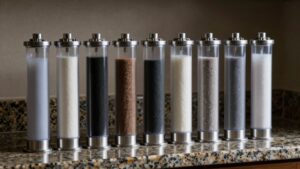
What options do you have for reintroducing minerals after reverse osmosis? You can choose inline remineralization cartridges, calcite/limestone media, or blended mineral cartridges that combine pH adjustment with trace minerals.
Inline cartridges mount post-membrane for predictable dosing; calcite media uses passive dissolution dependent on flow and water chemistry. Blended cartridges balance mineral compatibility across different feedwater profiles and minimize silica scaling.
Select materials rated for potable use and compatible with your system’s flow rate and pressure to preserve membrane integrity. Consider filtration aesthetics: compact, chrome-finished housings and under-sink placements keep the system discrete.
Evaluate serviceability—cartridge swaps, media replacement intervals, and compatibility with pre/post-carbon stages—to ensure consistent performance without compromising RO rejection or system longevity.
Dosage And Mineral Balance
After choosing among inline cartridges, calcite media, or blended mineral cartridges, you’ll need to set target dosing and mineral balance to restore palatability and protect plumbing. You’ll calculate addition rates based on post-treatment conductivity or target TDS; you aim for a stable ionic mix that avoids mineral oversaturation at pipe surfaces.
Use dosing pumps or controlled-flow cartridges to deliver consistent calcium and magnesium increments. Monitor pH shifts to maintain taste neutrality without promoting scaling. Validate with periodic hardness and alkalinity tests; adjust dose in small increments (±10–15%) rather than large swings.
For blended cartridges, select formulations matched to your source water’s residual alkalinity. Document settings and test results so you can revert to proven parameters after maintenance or media changes.
Remineralization Timing Options
When should you reintroduce minerals into purified water: immediately after reverse osmosis, with a controlled post-filter dosing, or at point-of-use? This depends on your goals for taste, corrosion control, and regulatory compliance. You will evaluate remineralization timing by balancing system complexity, dosing control, and monitoring requirements.
Immediate post-RO remineralization (inline cartridge or calcite bed) stabilizes pH and reduces corrosivity for whole-house use. Controlled post-filter dosing (proportional chemical feed) gives precise alkalinity and conductivity targets for regulatory or industrial needs. Point-of-use remineralizers (tap-level cartridges) minimize system-wide plumbing impacts and let you tailor taste per outlet.
Consider maintenance frequency, dosing variability, and verification protocols when comparing mineral reintroduction options. This ensures consistent, compliant water chemistry.
Taste And Health Effects
How should you balance taste and health when reintroducing minerals to reverse osmosis water? You evaluate taste tradeoffs versus health considerations by matching mineral types and concentrations to intended use. For drinking water, a modest reintroduction of calcium and magnesium (20–80 mg/L combined) restores mouthfeel and buffering without significantly increasing TDS.
For culinary or brewing, slightly higher concentrations improve flavor extraction; monitor conductivity to avoid exceeding target TDS. Use calibrated remineralization cartridges, alkaline cartridges, or controlled inline dosing to add predictable amounts. Prioritize nonreactive, food-grade mineral salts and avoid indiscriminate alkalizers that mask microbial risk.
Document dosing, measure post-treatment TDS and pH, and validate against local guidance to ensure you regain palatability while preserving RO’s contaminant removal and health protections.
Maintenance And Replacement
Which remineralization option fits your RO system and water goals depends on maintenance capacity, monitoring discipline, and desired mineral profile. You’ll choose between inline remineralization cartridges, calcite cartridges, or external dosing systems.
Consider maintenance frequency: inline cartridges typically need replacement every 6–12 months. Calcite media lasts 12–24 months depending on feed water acidity. Dosing pumps require periodic calibration and reagent replenishment.
Verify filter compatibility with your existing housings, flow rates, and post-filter stages to avoid pressure loss or bypass. Measure post-treatment TDS, pH, and calcium hardness quarterly until stable. Document service intervals and spare-parts availability.
Pick the option that aligns with your willingness to perform routine maintenance and with regulatory or health-driven mineral targets.
Frequently Asked Questions
How Much Wastewater Does RO Produce per Gallon?
RO systems typically waste about 2–4 gallons of wastewater for every usable gallon produced. You’ll assess membrane efficiency and wastewater cost when sizing systems and estimating operating impact.
Higher-efficiency membranes and newer flow-restrictor designs can reduce waste toward 1:1. However, older or low-pressure setups stay around 3:1. Factor in faucet flow, storage tank size, and local water costs to model real household wastewater and lifetime operating expense.
Can Carbon Filters Remove Chlorine Byproducts Like Chloramines?
Yes, standard activated carbon filters often can’t reliably remove chloramines; catalytic carbon media are required. You’ll want discussion ideas comparing catalytic carbon, KDF-enhanced cartridges, and combined pre/post-treatment to break chloramine bonds.
Carbon filters with catalytic or higher-contact-time designs will reduce chloramines effectively, while basic granular or carbon blocks perform poorly. Test your water first. Then, choose carbon filters engineered for chloramine reduction for consistent, regulatory-level removal.
Are RO Systems Effective Against Bacteria and Viruses?
Yes, RO systems are effective against bacteria and viruses when properly maintained. You’ll get near-complete microbial reduction because the semipermeable membrane and multi-stage filtration physically remove pathogens.
For discussion ideas in water filtration, pair RO with carbon pre/post-filters to protect membranes and improve taste. You’ll need regular maintenance, membrane checks, and disinfection protocols to prevent biofouling and ensure consistent microbial control and system performance.
Which Option Is Better for Well Water With High Iron Content?
You should choose reverse osmosis for well water with high iron content because RO offers effective iron removal when preceded by proper pretreatment. For well water feasibility, install sediment and oxidizing prefilters (air injection, greensand, or catalytic carbon) to remove particulate and dissolved iron before the RO membrane.
That setup protects the membrane; it yields low TDS and reliably reduces iron, heavy metals, nitrates, and other well-specific contaminants.
How Often Should RO Membranes Be Replaced?
You should replace RO membranes every 2–3 years under typical use. Monitor feed water quality and pressure; high TDS, iron, or biofouling shortens membrane life.
Use two word discussion ideas like “service interval” and “flow decline” when planning maintenance. Ensure material compatibility for seals, housings, and tubing to avoid chemical attack.
Test permeate TDS and decline in output; replace sooner if TDS rises above manufacturer specs or flow drops significantly.
Conclusion
Choose reverse osmosis when you need maximum TDS reduction; pick under-sink carbon when you prioritize higher flow and essential contaminant removal without stripping minerals.
If you want low TDS for specific processes or immunocompromised users, RO plus controlled remineralization gives predictable composition. For general drinking water, carbon with targeted mineral dosing preserves taste and health benefits.
Maintain scheduled cartridge and membrane replacement to keep performance and mineral balance within designed specifications.