What Is a Normal Ph Range for Drinking Water
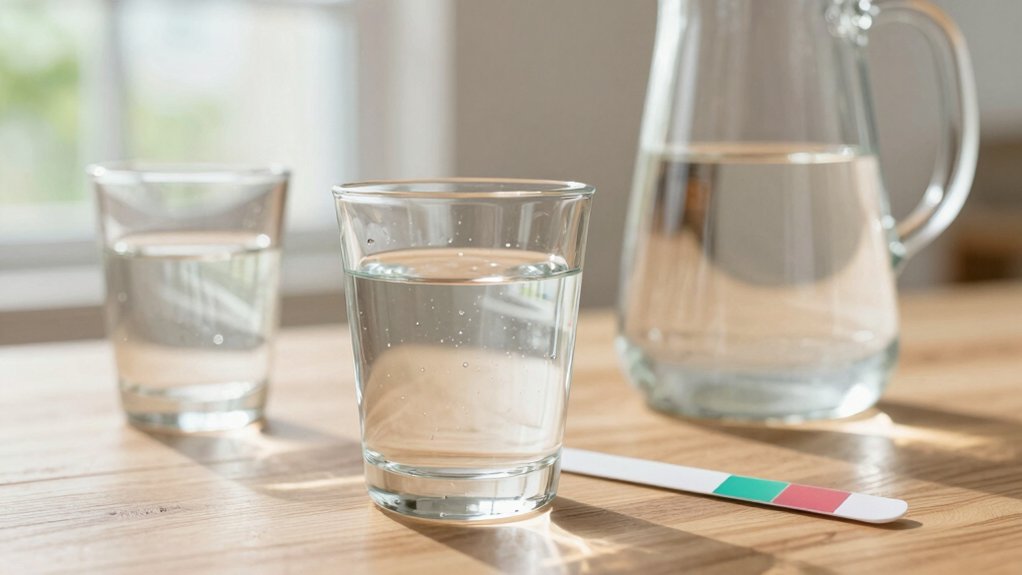
You can expect your drinking water’s pH to sit near neutral, commonly between about 6.5 and 8.5. Utilities target this range to protect taste, disinfection, and pipes.
Groundwater or bottled options may be slightly outside that window: about 6.0–8.5 for wells, 5.8–7 for RO/distilled, and some alkaline brands up to 10.
Staying in 6.5–8.5 limits corrosion and metal leaching while avoiding excessive scaling. The next section explains how sources, testing, and treatments affect this.
Quick Overview
- Typical safe drinking-water pH is about 6.5–8.5; this is the range utilities and EPA target for distribution systems.
- Surface waters and well-managed tap systems usually cluster near neutral, roughly 6.5–8.5.
- Bottled, distilled, or RO waters can be more acidic (about 5.8–7.0) due to low mineral content.
- pH below 6.5 raises corrosivity, increasing lead and copper leaching from plumbing.
- pH above 8.5 reduces corrosion; however, it can cause scale formation and aesthetic/taste changes.
pH Ranges by Source
Wondering how pH varies with water source? You’ll see clear patterns: Surface waters and well-managed tap systems cluster near neutral (6.5–8.5). Groundwater can dip to ~6.0 or rise to 8.5 depending on geology. Oceans sit around 8.2. Bottled and processed waters are broader: Distilled and RO tend acidic (5.8–7). Many bottled brands fall 6.5–7.5, while marketed alkaline products reach 8–10. Use pH interpretation to judge corrosivity, taste, and treatment needs for drinking water.
| Source type | Typical pH |
|---|---|
| Surface/tap | 6.5–8.5 |
| Groundwater | 6.0–8.5 |
| Bottled/processed | 5–10 |
| Ocean | ~8.2 |
Acceptable pH Limits (6.5–8.5)
Why does the EPA and most utilities target a drinking water pH of 6.5–8.5? You should know this range balances safety, disinfection efficacy, and user experience. It’s an aesthetic guideline used by municipal systems to maintain predictable water quality without invoking corrosion discussions here.
- Taste preferences: Within 6.5–8.5 most people find water neutral to mildly sweet; above 8.5 it can taste bitter, below 6.5 slightly sour.
- Aesthetic concerns: Clarity, odor, and overall acceptability generally stay within expected norms in this window, reducing complaints and service calls.
- Operational reliability: Utilities can stabilize chlorine effectiveness and routine treatment processes when pH stays inside 6.5–8.5, per EPA recommendations.
Corrosivity Effects on Plumbing
If your water pH falls below about 6.5, it becomes more corrosive and can accelerate metal pipe corrosion; this increases lead and copper release into your tap water. At higher pH, you’ll see more scale formation, which can protect plumbing but may impair flow and disinfection.
Metal Pipe Corrosion
How does water pH affect the metals in your plumbing? Low pH increases corrosivity, accelerating rust and metal loss in iron, steel, and brass. Higher pH can reduce corrosion; however, it may promote scale. Both extremes stress joints and fittings.
You should monitor pH because maintaining EPA-recommended 6.5–8.5 helps limit generalized corrosion and supports disinfection. Utilities often use corrosion inhibitors (orthophosphate, silicates) to form protective films; these reduce metal dissolution and extend service life. When active corrosion or tuberculation occurs, targeted pipe rehabilitation—lining, relining, or section replacement—restores hydraulic capacity and reduces contaminant release.
Inspect visible pipes, review water reports, and consult a qualified plumber or water specialist to match treatment and rehabilitation strategies to measured pH and water chemistry.
Lead And Copper Release
Lead and copper can leach from plumbing when water is corrosive. You’ll see release increase as pH drops below the recommended 6.5 range or when protective scale and films break down. You should know that lower pH accelerates metal dissolution, raising lead release and copper release into tap water, especially from older lead solder, brass fixtures, and corroded pipes.
Monitoring pH alongside lead and copper concentrations gives actionable data: if levels approach action limits or health advisories, adjust treatment or corrosion control. Municipal or point-of-use adjustments that maintain pH within 6.5–8.5, add orthophosphate, or stabilize alkalinity reduce metal mobilization. Test regularly, review water reports, and consult a certified specialist when you detect persistent lead release or copper release.
Scale Formation Versus Corrosion
Lowering pH that increases lead and copper release also shifts the balance between corrosion and scale in your plumbing. You’ll find lower pH water is more corrosive: it dissolves protective oxides, increases metal solubility, and accelerates corrosion effects that damage pipes and fixtures.
Conversely, higher pH promotes scale formation as calcium and magnesium precipitate, forming hard deposits that reduce flow and heat transfer. The EPA’s suggested 6.5–8.5 range minimizes both risks by limiting corrosivity while keeping precipitation tendencies moderate.
You should test pH and related parameters (alkalinity, hardness, conductivity) to assess whether you’re seeing corrosive loss or scale buildup. Adjustments or municipal controls aim to keep water within the range that balances corrosion effects and scale formation.
Protective Coatings And Linings
When water is corrosive or near-neutral, protective coatings and internal linings in pipes and fixtures act as the primary barrier preventing metal dissolution and contaminant release. You should evaluate their condition whenever pH or alkalinity suggest elevated corrosivity.
You’ll inspect for coating breaches, blistering, delamination, or thinning that expose metal to low-pH or aggressive water. Intact protective coatings and linings reduce lead and copper leaching and slow uniform corrosion; however, damaged linings create local anodes and accelerate deterioration.
Prioritize aging infrastructure, solder joints, and fittings where coatings often fail first. Document coating type and service history. Target repairs where inspection shows loss of adhesion, and coordinate with water quality managers to address pH-related drivers before replacing linings to prolong plumbing service life.
Corrosivity Testing Methods
How can you tell if your water will attack pipes and fixtures? You use targeted corrosion testing to quantify corrosivity and plumbing risk. Start with pH measurement (digital meter or lab) because low pH correlates with increased metal leaching. Measure alkalinity, hardness, chloride, sulfate, and dissolved oxygen; each influences corrosion mechanisms.
Use linear polarization or weight-loss coupons in representative piping to get rate data over weeks. Conduct copper and lead release tests under stagnant and flowing conditions to simulate real use. Compare results to benchmarks and EPA guidance to assess intervention need. Document water chemistry, temperature, and disinfectant residuals; those variables change corrosion behavior.
Use results to choose mitigations like pH adjustment, corrosion inhibitors, or protective linings.
Frequently Asked Questions
Is Alkaline Water Healthier Than Neutral pH Water?
No, you won’t find strong evidence that alkaline water is healthier than neutral water. In alkaline vs neutral comparisons, studies don’t show consistent health benefits for the alkaline side beyond temporary acid reflux relief for some people.
Many health claims about alkaline water lack rigorous support. You should focus on safe, clean drinking water. If you have specific medical issues, consult a clinician before relying on alkaline water for health effects.
Can pH Affect the Effectiveness of Home Water Filters?
Yes, pH can affect filter effectiveness. You’ll find some filters (carbon, ion exchange, RO) perform differently across pH levels. Very low pH can corrode components and reduce media life. Meanwhile, very high pH can cause scale and clog membranes.
Don’t fall for alkaline controversy claims about health; pH mainly impacts treatment mechanics and taste perception dynamics. Test your water, match the filter to its rated pH range, and maintain it regularly.
How Does pH Influence Bottled Water Labeling and Marketing?
You’ll see pH used in bottled water labeling to position products, for example, “alkaline” 8–9, and support marketing claims. Marketing standards don’t require specific pH; however, labels must be truthful and not misleading. Producers often test and report pH to back branding. Regulators and industry guidelines expect accurate measurement and documentation.
If claims imply health benefits, you’ll need substantiation to meet advertising and labeling standards.
Do pH Levels Change During Boiling or Distillation?
Yes, boiling effects and distillation changes can shift pH. Boiling drives off dissolved CO2, raising pH slightly toward neutral or alkaline. The change is modest unless alkalinity is very low.
Distillation removes dissolved ions and CO2, producing very low-conductivity water that often measures slightly acidic (CO2 reabsorption from air) or near neutral. You’ll see larger pH shifts when initial alkalinity is low or when water re-equilibrates with atmosphere.
Can pH Impact Taste Preferences Across Different Cultures?
Yes, pH can shape taste preferences across cultures. You’ll perceive acidic water as sharper, and alkaline water as smoother or bitter; cultural norms influence which you prefer.
Regions with mineral-rich, higher-pH sources often favor slightly alkaline tastes. Others accept mildly acidic profiles. Exposure, culinary traditions, and local water chemistry condition your palate. What tastes “normal” or pleasant varies with cultural norms and long-term sensory experience.
Conclusion
You should aim for drinking water with a pH between about 6.5 and 8.5, since that’s the range regulators and studies identify as acceptable for health and plumbing. Outside that range, you’ll increase corrosion or scale risks: low pH can leach lead and copper from pipes. High pH promotes scale that reduces efficiency.
Test water and address deviations with treatment or protective linings. This way, you minimize metal release and maintain safe, durable distribution systems.