What Does Tds Mean in Drinking Water
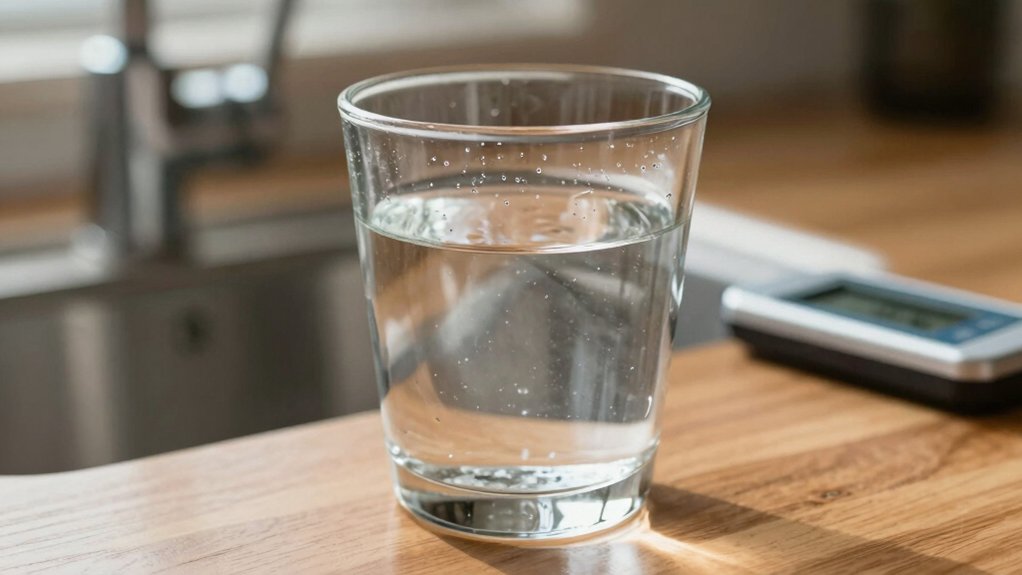
TDS stands for total dissolved solids and tells you how many milligrams per liter of minerals, salts and other dissolved substances are in your drinking water. You’ll see values like 0–300 mg/L for very low (distilled); about 300–600 mg/L for balanced tap or bottled water; and 800–2,500+ mg/L for mineral‑rich or salty sources.
Regulators use 500 mg/L as a secondary guideline. Higher levels prompt testing or treatment. Keep going to learn what those numbers mean for taste and health.
Quick Overview
- TDS means “total dissolved solids,” the combined concentration of dissolved salts, minerals, and inorganic substances in water, measured in mg/L.
- TDS is a general water-quality indicator; it is not a measure of specific contaminants or toxicity. Typical taste and balance occur around 300–500 mg/L. Below 300 tastes flat; above 800 can taste salty or metallic.
- Regulatory guidance treats 500 mg/L as a secondary (nonhealth) guideline. Values above 1,000–2,000 mg/L raise health and treatment concerns.
- High TDS prompts targeted testing for specific contaminants (nitrate, lead, sodium) and consideration of treatment options.
TDS Levels by Source
Wondering how much dissolved material is in different water sources? You’ll see TDS ranges tied to source and taste profile: distilled (~0 mg/L) tastes flat due to lacking minerals. Moderate bottled waters (50–800 mg/L) offer varied mineral balance and preferred flavors. Mineral-rich options (800–2,527 mg/L) push strong, saline profiles. Use the table for quick comparison.
| Source | Typical TDS (mg/L) | Flavor/Notes |
|---|---|---|
| Distilled / Low TDS | 0–300 | Flat; low mineral balance |
| Moderate bottled / Tap | 300–600 | Balanced taste profile |
| Mineral-rich / High TDS | 800–2,527+ | Strong, salty/metallic notes |
Choose 300–500 mg/L for optimal mineral balance and palatability. Extremes risk flatness or unpleasant, scaling-prone water.
Acceptable TDS by Municipality
How much TDS your municipality deems acceptable depends on local regulations, source water quality, and treatment goals. Most U.S. systems aim to keep TDS at or below the EPA’s 500 mg/L secondary guideline for aesthetic reasons. You should expect local targets to reflect source variability, treatment capacity, and consumer taste thresholds.
Acceptable municipalities set operational limits, monitoring frequency, and corrective actions tied to measured TDS. When you check reports, compare annual averages, peak events, and compliance actions rather than single readings.
- Routine monitoring frequency (monthly, quarterly) in many acceptable municipalities
- Source variability driven by seasonal runoff, groundwater mineral content
- Treatment adjustments documented when TDS approaches guideline limits
- Reporting of averages and exceedance events to consumers
- Cross-reference TDS with specific contaminant tests for clarity
Health Effects Thresholds
When you assess health effects thresholds for TDS, focus on numeric guideline values that separate short-term exposure limits from chronic-risk levels. Use EPA/WHO benchmarks, for example, 500 ppm as a secondary EPA guideline and 1,000–2,000 ppm tied to safety concerns.
Consider lower action levels for sensitive groups like infants, pregnant people, and those with kidney disease. You’ll then compare short-term tolerances, long-term chronic exposure risks, and specific regulatory or advisory limits to inform testing and treatment decisions.
Health Effects Thresholds
What level of total dissolved solids (TDS) in your drinking water begins to pose health concerns depends on which specific dissolved substances are present and their concentrations, not the TDS number alone. You should evaluate substances individually: nitrate above 10 mg/L, sodium levels relevant to dietary intake, and heavy metals (lead, arsenic) even at low ppb can be harmful.
Use TDS as a screening metric; high TDS flags the need for targeted chemical analysis. Consider taste perception and mineral balance: 50–300 mg/L often yields acceptable flavor and beneficial calcium/magnesium.
>1,000 mg/L usually warrants treatment. Base actions on measured contaminant-specific thresholds, regulatory guidance, and your health status rather than TDS alone.
Short-Term Exposure Limits
Building on the need to evaluate individual contaminants rather than TDS alone, short-term exposure limits define the maximum concentrations you can encounter over brief periods without expecting acute health effects. Regulators set short term exposure thresholds, often expressed as mg/L or ppm, based on toxicological data and acute reference doses.
You’ll see values for specific constituents (e.g., nitrate, lead, fluoride) that trigger advisories when a single-day spike or multi-day event exceeds the limit. Short-term exposure guidance prioritizes immediate symptoms, hospitalization risk, and vulnerable populations.
You should also note sensory thresholds: some constituents impair taste perception well below health-based limits, prompting consumer complaints and corrective action. Use targeted contaminant testing, not TDS alone, to detect and manage short-term exposure risks.
Chronic Exposure Risks
Why should you care about chronic exposure to dissolved solids in drinking water? Long-term intake can subtly affect health depending on composition and concentration. You’ll mainly encounter dissolved minerals like calcium, magnesium, sodium, and trace metals. Their cumulative intake may alter electrolyte balance, blood pressure, or renal load when concentrations exceed guideline ranges (EPA secondary 500 ppm); advisory concerns arise above 1,000–2,000 ppm.
TDS alone doesn’t identify toxicants; therefore, repeated high readings warrant targeted testing for nitrate, lead, or sodium. You should monitor trends, not single values, and compare against standards and clinical advice. Beyond health metrics, chronic high TDS often produces persistent taste impact and consumer rejection. This prompts alternative water sources or treatment to prevent long-term exposure.
Sensitive-Population Limits
If you’re monitoring TDS because of repeated high readings, focus next on limits for sensitive populations: Infants, pregnant people, the elderly, and those with compromised kidney or cardiovascular function can experience adverse effects at lower concentrations of specific dissolved constituents even when overall TDS sits near guideline values.
You should prioritize testing for nitrate, sodium, heavy metals, and fluoride since those constituents drive health risks at lower mg/L thresholds. Use constituent-specific limits that are tighter than general TDS bands; apply sensitive population limits when advising households or facilities serving at-risk groups.
Where regulatory guideline values exist for individual contaminants, follow them rather than relying solely on TDS. Document constituent concentrations, exposure duration, and clinical context to guide mitigation.
Regulatory Guideline Values
How should you interpret regulatory guideline values for dissolved solids and specific contaminants in drinking water? You should treat them as concentration thresholds tied to health studies and aesthetic guidance. Agencies like the EPA set a secondary standard of 500 mg/L TDS for regulatory compliance; WHO provides taste impact categories and health-based values for individual contaminants (nitrate, lead, sodium).
Values reflect risk margins, exposure assumptions, and analytical limits. If TDS exceeds 1,000 mg/L, regulators flag potential safety or treatment concerns. Above 2,000 mg/L, treatment systems may fail. Use guideline values to prioritize testing for specific analytes, not as a sole safety metric: TDS indicates total load while targeted assays determine toxic constituents.
Follow local regulations and retest after treatment changes.
Frequently Asked Questions
Can a TDS Meter Detect Bacteria or Viruses in Water?
No, a TDS meter can’t detect bacteria or viruses. You’re measuring conductivity; so talking points include that TDS instruments only give an aggregate dissolved-solids estimate. They don’t identify specific contaminants.
Water testing limitations mean microbes, viruses, and particulates won’t show in TDS readings. Therefore, you’ll need microbiological assays (culture, PCR) or specific test kits to confirm biological contamination.
Use TDS for general mineral/salt trends, not pathogen detection.
How Do Temperature Variations Affect TDS Meter Readings?
Temperature variations change conductivity, so you’ll see TDS meter readings shift with water temperature. Warmer water increases conductivity and raises TDS readings; colder water lowers them. You’ll face calibration challenges if your meter isn’t temperature-compensated or if you don’t calibrate at expected field temperatures.
To minimize error, use automatic temperature compensation (ATC), calibrate regularly at reference temperature, and record sample temperature to correct or interpret readings accurately.
Does Boiling Water Change Its TDS Level?
Yes, boiling water won’t remove dissolved solids, so its TDS stays essentially the same; you’ll concentrate TDS slightly as water evaporates.
You’ll also see a temperature impact: TDS meters read higher conductivity at higher temperatures, so measurements must be temperature-compensated or taken after cooling. If you boil until significant evaporation occurs, expected TDS increases proportionally to volume reduced, not because solids were created or destroyed.
Can TDS Levels Impact Aquarium Fish Health?
Yes, TDS can affect aquarium fish health. You should monitor TDS as part of aquarium setup because many species need specific ionic strength and mineral balance. Sudden TDS shifts stress fish, impair osmoregulation, and increase disease risk.
Aim for stable, species-appropriate ranges. Test water regularly, and adjust with RO mixing or mineral supplementation. Use TDS alongside pH, GH, KH, ammonia, nitrite, and nitrate for complete fish health considerations.
Are TDS Readings Affected by Household Plumbing Materials?
Yes, your plumbing material can raise TDS readings by leaching minerals and corrosion products into tap water. Metallic pipes (copper, galvanized steel, lead) and older solder release ions that increase conductivity and TDS.
Plastic pipes leach fewer inorganic ions but can contribute organics not measured by TDS meters. If you see unusually high TDS, test near mains and after flushing; analyze specific contaminants for source confirmation.
Conclusion
You’ve learned that TDS (total dissolved solids) measures dissolved minerals and salts in water, with typical sources like runoff, groundwater, and treatment residuals. Municipal limits often range 200–500 mg/L. Short-term exposures under 1,000 mg/L are usually non-toxic, while chronic exposure above 500–1,000 mg/L can affect taste and sensitive groups.
If you’re concerned, check local guidelines, use certified testing, and consider filtration to keep TDS within recommended, health-protective ranges.