
What Are Pfas Chemicals in Drinking Water
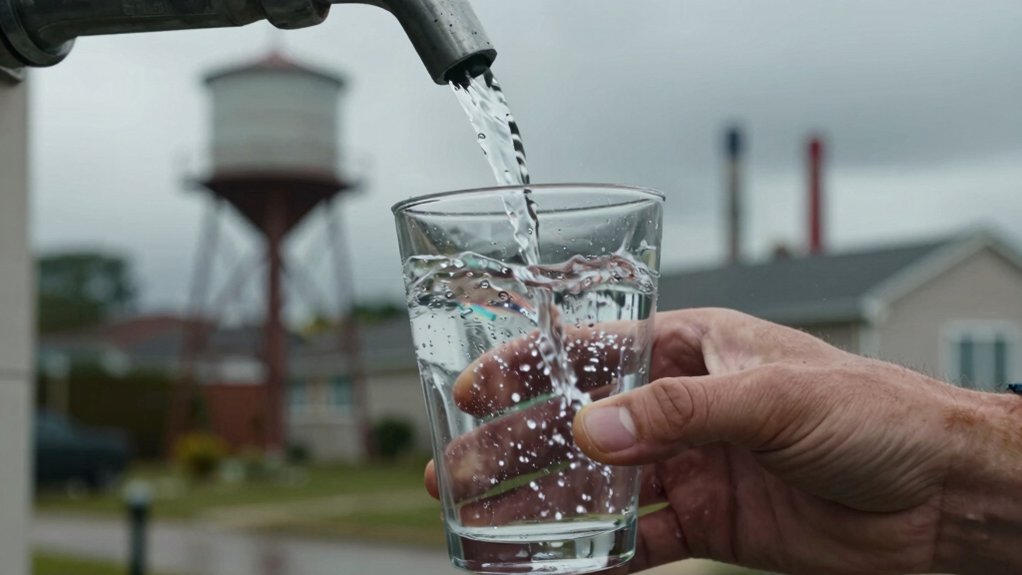
PFAS are a large group of persistent, human-made chemicals that can get into your drinking water from industrial sites, firefighting foam, and contaminated runoff. They resist breakdown and build up in people and the environment. They have been linked to health effects at low concentrations.
Federal and state programs now monitor and set guidance for specific PFAS like PFOA and PFOS. If you want practical info on testing, health benchmarks, and follow-up actions, keep going.
Quick Overview
- PFAS are a large class of man-made chemicals used for stain, water, and grease resistance that persist in the environment and human body. They can contaminate drinking water near industrial sites, firefighting foam use, landfills, and wastewater discharge.
- Health concerns include links to cancer, immune effects, developmental issues, and other chronic outcomes at low exposures. Regulatory guidance varies: EPA’s 2016 PFOA/PFOS advisory is 70 ppt, while enforceable MCLs exist for several PFAS at 4–10 ng/L.
- Monitoring uses targeted lab methods, routine and follow-up sampling, and a hazard index approach to assess PFAS mixture risks.
PFAS Concentration Comparison Chart
How do PFAS levels in drinking water compare across compounds and locations? You should focus on detected compounds, enforceable MCLs, and mixture risk. National data show ≥45% of tap samples contain at least one PFAS. State maps reveal county hotspots. Enforceable MCLs (PFOA, PFOS 4 ng/L; PFHxS, PFNA, HFPO-DA 10 ng/L) guide comparisons. PFAS mixtures use a Hazard Index: the sum of concentration/reference limit; HI >1 flags concern when ≥2 listed PFAS co-occur.
| Compound/Group | Typical MCL (ng/L) | Comparative note |
|---|---|---|
| PFOA/PFOS | 4 | Tracked nationally and by county |
| PFHxS/PFNA/HFPO-DA | 10 | Included in HI calculations |
| PFAS mixtures | HI = 1 | Unitless sum; >1 exceeds risk |
EPA Lifetime Health Advisory
The county maps and hazard-index comparisons make clear why you need to understand the EPA’s Lifetime Health Advisory: it set a numeric benchmark of 70 parts per trillion (ppt) combined for PFOA and PFOS in 2016 to guide emergency responses and inform water systems. Even though many states and scientists have since recommended much lower values, you should know the advisory limits were designed as non-enforceable health guidance for PFAS health risk management, not as a regulatory maximum contaminant level.
The advisory prompted monitoring, treatment upgrades, and state advisories. Key points you’ll want to track include:
- Advisory context: short-term protective benchmark for lifetime exposure.
- Scope: only PFOA and PFOS combined at 70 ppt (2016).
- Limitations: non-regulatory, conservative for emergency planning.
- Impact: drove state actions and treatment investments.
Sampling Frequency Requirements
You’ll need a clear monitoring schedule that sets routine sampling frequency and specifies where samples should be taken to represent your system.
Follow-up sampling must be triggered by exceedances or detected trends. Your site selection should prioritize likely sources and vulnerable points. Make sure your sampling and triggered results are reported within the regulatory timelines required by state and federal agencies.
Monitoring Schedule Requirements
Why should you care about monitoring schedules for PFAS in drinking water? You need predictable monitoring schedules so detection and response are timely. Regulatory frameworks set required sampling windows; however, you’ll also manage monitoring logistics: site access, chain-of-custody, and lab availability to meet them. A clear schedule reduces missed samples and preserves sample integrity.
You’ll coordinate frequency with event-driven sampling after known releases or treatment changes. Do not confuse that with routine sampling frequency specifics. Good schedules prioritize high-risk points like intake and post-treatment locations and align with approved analytical methods and labs.
Finally, consistent timing improves data interpretation, letting you distinguish trends from analytical variability. This supports defensible compliance and public-health decisions.
Routine Sampling Frequency
How often should you collect routine PFAS samples to reliably detect trends and meet regulatory obligations? You should set a baseline sampling frequency based on system size, source vulnerability, and regulatory schedules: commonly quarterly for high-risk systems, semiannually for moderate risk, and annually for low risk.
Align sampling logistics with laboratory capacity, holding times, and chain-of-custody to avoid data loss. Use consistent sampling points and methods so temporal comparisons are valid. Apply data normalization for flow, seasonal variability, and method detection limits to distinguish real trends from noise.
Review frequency after two to three sampling cycles; increase it if concentrations approach health advisories or show upward trends. Document decisions and update your monitoring plan to remain compliant.
Triggered Follow-Up Sampling
When routine monitoring shows PFAS concentrations near or above advisory levels, you should initiate triggered follow-up sampling immediately to confirm results and define the extent of contamination. You’ll schedule targeted sampling events at increased sampling frequency, following validated methods and holding times, to reduce false positives and seasonal variability.
Use quality-controlled laboratory analyses and chain-of-custody procedures to ensure data integrity. Triggered follow-up should include repeat samples, upstream/downstream comparisons, and temporal repeats to assess persistence and trends. Document decision thresholds, analytical limits, and actions tied to confirmed detections so stakeholders can respond promptly.
Maintain transparent records and communicate findings to regulators and the public. Clear, evidence-based sampling frequency plans speed risk assessment and remediation planning.
Sample Site Selection
Which locations you choose for PFAS sampling will determine how reliably you detect contamination and track trends; therefore, prioritize sites that represent potential sources, pathways, and receptors. You should base sample site selection ideas on land use, known PFAS sources (manufacturing, AFFF sites), groundwater flow, and drinking-water intakes.
Design a sampling frequency that matches site risk: more frequent at potential release points and at highly used receptors, less frequent at background locations. Use paired upstream/downstream or well-cluster sampling to enable PFAS concentration comparison over time and space.
Maintain consistent sampling methods, matrix (raw vs finished water), and analytical labs so observed changes reflect true concentration shifts, not methodological variability. Review and adjust frequency when data show trends or new exposures.
Regulatory Reporting Timelines
Because regulatory agencies tie sampling frequency to risk and treatment capacity, you’ll need to follow schedules that balance detection sensitivity with practical resources. You should base sampling frequency on source vulnerability, system size, and whether treatment is operating. High-risk sites and systems with treatment commonly require monthly or quarterly testing, while low-risk systems may test annually.
Maintain documented regulatory reporting that shows dates, methods, and results so authorities can verify timelines compliance. Use validated analytical methods with detection limits aligned to standards to avoid repeat sampling. Plan for accelerated sampling after operational changes, contamination events, or exceedances.
Staying proactive reduces enforcement risk and supports timely public notification when PFAS results approach or exceed health-based limits.
Quality Assurance Procedures
You should align your quality assurance procedures for PFAS sampling with your reporting timelines, tying sampling frequency to source risk, system size, and treatment status so results reliably reflect system performance. Set minimum sampling intervals: monthly for high-risk sources (AFFF sites, known industrial releases); quarterly for medium-risk; and semiannually for low-risk or well-protected sources.
Increase frequency after system changes, treatment installation, or exceedances. Document chain-of-custody, field blanks, duplicates, and certified labs to preserve sample integrity and defend results. Use statistically based schedules for large systems to capture spatial and temporal variability.
Review frequency annually and after new science or regulatory updates. Maintain records to support audits, trend analysis, and corrective actions under your quality assurance program.
Frequently Asked Questions
How Do PFAS Enter My Home’s Plumbing and Faucets?
PFAS enter your home’s plumbing and faucets through contaminated source water that passes into pipes, fixtures, and household filters. They’re dissolved or sorbed to particulates. How PFAS bind to pipe biofilms, sediment and scale, and microplastic interference can carry them further.
Corroded joints or backflow let contaminated water deposit PFAS on internal surfaces. Routine flushing or filtration can resuspend bound PFAS into the water you use.
Can Boiling Water Remove PFAS From Drinking Water?
No, boiling water won’t remove PFAS; you’ll still have those chemicals after heating. Boiling water doesn’t cause significant PFAS breakdown because their carbon‑fluorine bonds are extremely strong and resist thermal degradation at household boiling temperatures.
To lower PFAS at home, use certified granular activated carbon, ion‑exchange filters, or bottled water tested for PFAS. Check certified treatment performance and test your source water to confirm reductions.
Are PFAS Removed by Home Reverse Osmosis Systems?
Yes, a home reverse osmosis system will remove many PFAS and reduce PFAS exposure; however, efficiency varies by compound, membrane quality, and maintenance.
Don’t fall for water filtration myths that claim perfection: RO typically removes long-chain PFAS well and reduces shorter-chain ones considerably but not always completely. You’ll get best results with certified units, pre/post-filters, and regular cartridge and membrane replacement.
Do PFAS Accumulate in Human Tissue Over Time?
Yes, PFAS accumulate in your tissues over time. They’re persistent, resist breakdown, and bioaccumulate. Repeated exposure routes, such as drinking contaminated water, eating fish, and using consumer products, raise your body burden.
That accumulation links to PFAS health effects such as increased cancer risk, liver toxicity, and reproductive harm in epidemiologic studies. Reducing exposure routes and using proven water treatments lowers your long-term accumulation and associated health risks.
Can I Test My Private Well for All PFAS Compounds?
You can’t test your private well for every PFAS, but you can order all-encompassing PFAS panels that cover the most common and regulatory-relevant compounds.
Contact a certified lab or your state water program to request an all-encompassing PFAS panel that includes PFOA, PFOS, GenX, PFNA, PFHxS, PFBS, and others. Labs will use EPA-approved methods; you’ll get results in ppt.
If levels are high, follow guidance for treatment and notification.
Conclusion
You’ve seen how PFAS levels, EPA lifetime health advisories, and monitoring rules fit together to protect drinking water. Follow the required sampling frequencies, triggered follow-up protocols, and site-selection criteria to detect contamination early.
Meet monitoring schedules and reporting timelines precisely. Stick to documented quality-assurance procedures to assure data are reliable. Using this evidence-based framework helps you assess PFAS risk, comply with regulations, and take timely action to safeguard public health.