
Water Filter Vs Water Purifier Difference for Hiking
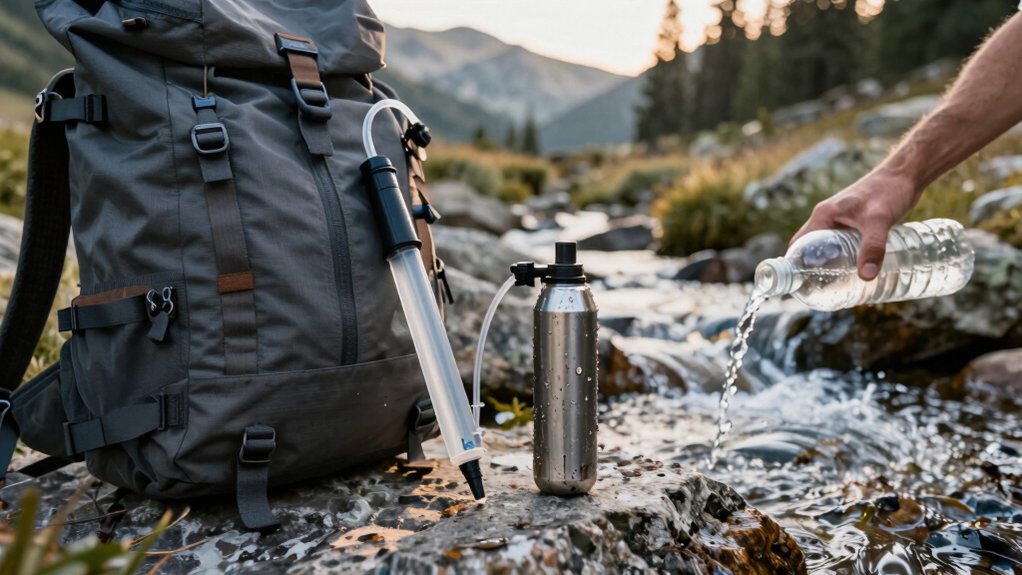
For hiking, pick a filter when water looks clear and you’re after lightweight, fast flow: microfilters (approximately 0.1–0.2 μm) stop bacteria and protozoa but not viruses. Choose a purifier when sources are unknown or risky: ultrafilters or chemical/UV purifiers (approximately 0.02–0.04 μm or treatments) will handle viruses too. However, they cost more and may be slower or heavier.
Pre-filter turbid water, track cartridge life, and boil if advisories arise. More specifics follow if you want them.
Quick Overview
- Filters (0.1–0.2 μm) remove protozoa and most bacteria; however, they usually do not stop viruses.
- Purifiers (≈0.02–0.04 μm or chemical/UV) remove or inactivate viruses, bacteria, and protozoa.
- Choose a filter for pristine springs and short trips; choose a purifier for questionable or high-risk sources.
- Pre-filtering turbid water and backflushing extend device flow rate and cartridge lifespan.
- Boiling (≥1 minute, ≥3 minutes above ~2,000 m) is a reliable fallback when viral risk or advisory exists.
Pore Size & Pathogens Chart
Wondering how pore size maps to real risks on the trail? You’ll use pore size to judge pathogen removal: ~0.1–0.2 μm filters stop protozoa and bacteria but not viruses; ~0.02–0.04 μm ultrafilters/purifiers remove viruses too.
Match gear to source: pristine spring—microfilter; questionable source—purifier or filter+chemical. Pre-filter debris to prevent clogging and to keep chemical/UV treatments effective.
Practical chart:
| Pore Size Range | Pathogens Removed | Best Use |
|---|---|---|
| 0.1–0.2 μm | Protozoa, Bacteria | Pristine streams, lightweight day hikes |
| 0.02–0.04 μm | Protozoa, Bacteria, Viruses | High-risk sources, thru-hikes, group water |
Choose based on water clarity, trip length, and acceptable risk.
Filter Lifespan & Flow Rates
How long will your filter last and how fast will it get you water? You’ll choose based on expected use: high sediment clogs faster, clean alpine streams extend lifespan, and advertised flow rate drops as cartridges load. Think in liters or days, not marketing claims.
- For fast-flow needs, prefer hollow-fiber or squeeze systems; initial flow rate is high, and you get water quickly on the move.
- For long trips, check cartridge lifespan in liters; backflushable filters regain much flow and extend lifespan.
- If the source is silty, pre-filter or strain to protect flow rate and avoid premature replacement.
- Track liters treated and pack spare cartridges for multi-day hikes to avoid surprises in performance and lifespan.
Boil-Before-Use Advisories
Even with a good filter or purifier, you’ll sometimes need to boil, especially after known viral risk, heavy human/animal traffic, or suspected chemical spills. Boiling after filtration can be useful; however, remember trapped particulates can shield microbes. Therefore, pre-filtering then bringing water to a rolling boil for one minute (or three at high altitude) is safest.
If you’ve used chemical treatments, let contact time finish before boiling. Use practical techniques like stirring while heating and covering the pot to speed the process.
When To Still Boil
When should you boil even if you’ve got a filter or purifier? Boil when advisories say so: after flooding, sewage overflows, or known outbreaks; filters or purifiers can fail or be overwhelmed. If water looks cloudy with heavy sediment, boiling after pre-filtering closes risk gaps that clogged membranes or UV shadowing create.
Follow local guidance on boil time: usually one minute at a rolling boil, three at high altitude. Boiling also addresses chemical concerns indirectly: it won’t remove toxins, but it prevents illness from microbes when chemical testing isn’t available. Boil if your device is damaged; you suspect improper treatment; or you’ve collected from unknown sources near livestock or human activity.
When in doubt, boil: it’s reliable, cheap, and simple.
Boiling Post-Filtration Risks
Why might you be told to boil water after using a filter or purifier? You’ll hear boil-before-use advisories when sources are suspicious: heavy animal activity, sewage, or upstream human camps. This is because filters can miss viruses and purifiers can fail if turbid water blocked treatment.
You should treat boil timing as part of risk control. Boil immediately after treatment if contamination is fresh or if you can’t verify device function. In practice, filter first for particulates, then purify or boil; don’t rely on delayed boiling.
Expect flavor changes after boiling: flat or metallic notes are common. Aerate by shaking or pouring between containers to restore taste. Follow advisories; they reflect situational risk, device limits, and your recent water-handling history.
Boil For Virus-Prone Sources
Boiling is the safest backstop for water sources that might carry viruses. If you’ve been warned to “boil before use,” follow that guidance without hesitation. You’ll bring water to a rolling boil for at least one minute (or three minutes above 2,000 m/6,562 ft); this reliably inactivates viruses that filters miss.
In the field, prioritize clear containers and pre-filter turbid water to improve heat transfer and reduce boil time variance. After boiling, cool and store water in clean, sealed containers to avoid recontamination. That post sterilization handling is as important as the boil itself.
Treat advisories seriously: virus risk from human-impacted sources isn’t worth gambling with on a hike.
Boiling After Chemical Exposure
Ever wondered if a simple boil fixes water that’s been contaminated with chemicals? You shouldn’t assume boiling after chemical exposure removes toxins; it doesn’t neutralize most industrial solvents, pesticides, or heavy metals. If an agency posts boil before use advisories after a spill, that’s about microbes, not chemicals.
Boiling will kill pathogens but can concentrate non-volatile contaminants as water evaporates. In the field, your best move is avoidance: skip suspicious sources, use known-safe springs, or carry a purifier designed for chemicals or activated-carbon treatment. If you suspect chemical contamination and have no alternatives, exit the area and seek official guidance. Treat boil-before-use notices as microbiological warnings, not chemical clearances.
Practical Boil Techniques
When a boil-before-use advisory is issued, you should treat it as a microbiological emergency and act quickly: collect clear water in a clean pot, bring it to a rolling boil for at least one minute (or three minutes above 2,000 meters/6,562 feet). Then let it cool covered before storing in a sanitized container.
After boiling, skim any scum and note water color changes: brown or green tints mean sediment or organics. Clarify with a cloth or prefilter before boiling if needed. For boiling safety, keep a windbreak, use a stable pot, and don’t leave children unattended.
Cool boiled water undisturbed, transfer with clean utensils, and label containers if advisories last. If turbidity persists, filter first then boil.
Boil Time And Altitude
You already know how to handle a boil-before-use advisory and how to clarify turbid water first. Now let’s look at how altitude changes how long you need to keep water at a rolling boil. At higher elevations, water boils at lower temperatures, so you’ll extend boil time to compensate.
Use a consistent boil technique: bring a full, vigorous rolling boil, then maintain for at least 1 minute under 2,000 meters (6,561 ft) and 3 minutes above that. If guidance is strict, add 1 additional minute per 1,000 meters as a conservative rule. Combine this with pre-filtering turbid water to let heat reach microorganisms.
Altitude adjustments are simple, reliable, and don’t require gear; they are ideal when filters or purifiers aren’t available.
Frequently Asked Questions
Can I Use a Purifier on Glacial Melt Without Pre-Filtering?
Yes, you can use a purifier on glacial melt without pre-filtering; however, you shouldn’t always do so. Glacial melt carries lots of fine silt that can clog or reduce the effectiveness of chemical or UV purifiers. Therefore, you’ll want at least basic pre-filtering (cloth, bandana, or sediment trap) to protect the unit and ensure proper contact time.
In practice, quickly strain heavy particulates first. Then, purify for safe, reliable drinking.
Will Filters Remove Bad Tastes or Odors From Water?
Mostly no; filters won’t reliably handle bad tastes or odors. You’ll get taste improvement from sediment removal and preserved minerals. However, organic compounds, chemicals, and many odors pass through.
For odor elimination and full taste correction, you need activated-carbon stages or a purifier with carbon treatment: or chemical/UV plus carbon. In practice, pair a mechanical filter with a carbon element to both clean particulates and improve flavor.
How Do I Disinfect My Filter After Suspected Contamination?
You disinfect the filter by flushing and soaking: Backflush with clean water. Run a bleach (1 tsp bleach per quart) or dilute iodine/antimicrobial solution through per manufacturer. Then soak cartridges 30–60 minutes.
Rinse thoroughly until no chemical smell remains. Let air-dry fully. For post contamination sanitation, replace disposable cartridges if smell or flow issues persist. Follow maker’s specific how to disinfect filter instructions to preserve performance and safety.
Are Chemical Purifiers Safe for Children and Pregnant People?
Yes, chemical purifiers can be safe for children and pregnant people when you follow chemical safety and pediatric guidelines. Use manufacturer dosages, respect contact or hold times, and avoid concentrated exposure. Some products, like chlorine dioxide, are preferred over iodine for pregnancy. Rinse treated water if recommended, and consult a healthcare provider for infants or high-risk pregnancies.
When in doubt, opt for certified purifiers or filtered-plus-treated systems for added safety.
Can I Carry Both Filter and Purifier Weight-Effectively?
Yes, you can carry both weight-effectively. Balance weight tradeoffs by choosing a lightweight filter (Sawyer, LifeStraw) and a compact purifier (Aquamira drops or small UV pen).
Use the filter for cloudy, particulate water. Use the purifier for suspect sources or virus risk. Compare usage scenarios to decide what stays packed. Carrying both gives flexible protection with minimal added mass if you pick ultra-light options and share gear on group trips.
Conclusion
When you’re choosing between a water filter and a purifier for hiking, pick the right tool for the conditions: filters give fast, tasty water by removing bacteria and protozoa. Purifiers add virus protection but can be slower or need chemicals.
Always check pore sizes, flow rates, and remaining lifespan. Boil when sources are viral-risky or chemically contaminated. Practice simple, reliable boiling techniques and adjust times for altitude so you never gamble with your health.
