Standard 10 Inch Water Filter Cartridge Sizes Explained
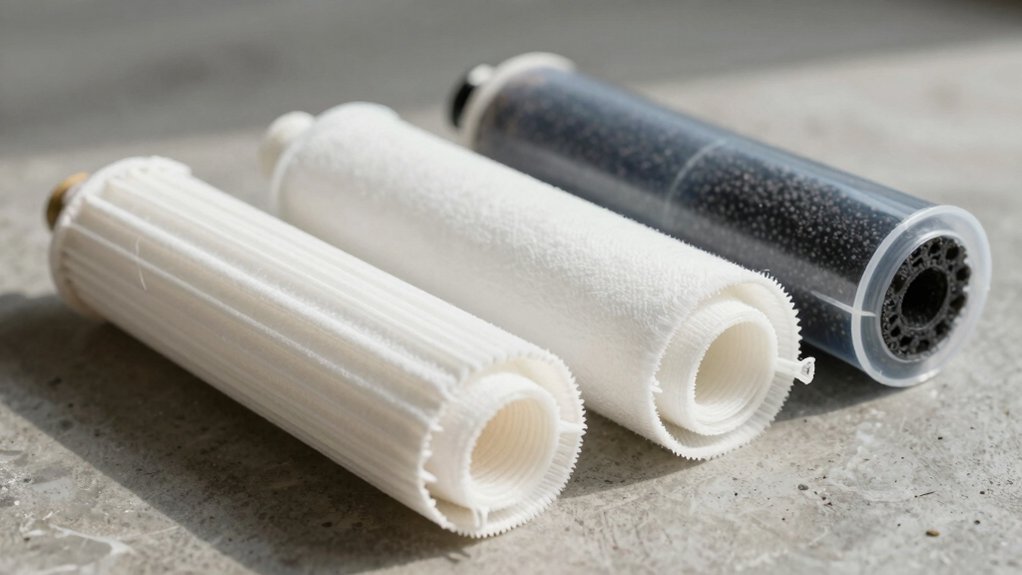
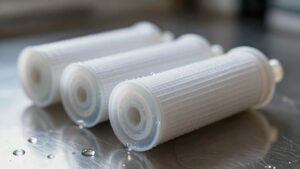
You’ll find standard 10-inch cartridges have a 1.125–1.25″ ID, a 2.5–2.75″ OD and a nominal 10″ length. They’ll fit most housings with ~4.5″ OD bodies; verify ID/OD and core seating for proper seal. Choose micron ratings (1, 5, 10 µm) based on particulate size and pressure-drop tradeoffs. Check end-cap style, shoulder height, and O-ring placement for compatibility.
Keep going and you’ll learn specific end-cap dimensions, thread and bayonet details.
Quick Overview
- Standard 10-inch cartridges typically measure 10″ length, 1.125–1.25″ inner diameter (ID), and 2.5–2.75″ outer diameter (OD).
- Housing dimensions are about 11.4–11.5″ length and ~4.5″ OD to accommodate standard 10″ cartridges.
- Verify cartridge ID/OD and core seating to ensure proper fit, sealing, and flow in the housing.
- Choose micron ratings by application: 1 µm (fine), 5 µm (sand/rust), 10 µm (carbon block). Absolute vs nominal affects performance.
- Match end-cap style (flat, recessed, raised, threaded, bayonet), bore, and shoulder measurements to avoid leaks and compatibility issues.
0″ Cartridge Diameter Chart
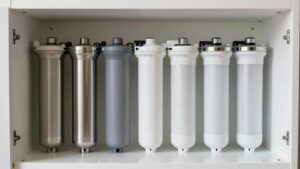
When selecting a 10-inch cartridge, focus on core and overall diameters: most cartridges present a 1.125–1.25 inch inner core and a 2.5–2.75 inch outer diameter. Housings are roughly 4.5 inches OD and 11.4–11.5 inches long. You’ll verify ID/OD to assure fit; the core is critical for seating while OD dictates media capacity and flow.
Don’t confuse this with an irrelevant topic or any unrelated concept. Dimensional compatibility drives performance and replacement decisions. Measure existing cartridges or consult manufacturer specs; standard 10-inch replacements typically cover 2.0–2.85 inch ODs. Below is a compact reference for quick checks.
| Dimension | Typical Value |
|---|---|
| ID | 1.125–1.25 in |
| OD | 2.5–2.75 in |
| Cartridge Length | 10 in |
| Housing OD | 4.5 in |
| Housing Length | 11.4–11.5 in |
Micron Ratings & Fits
How fine do you need your filtration to be? You’ll choose micron ratings based on target contaminants and system flow: 1 µm for fine particulates, 5 µm for sand/rust/silt, 10 µm for carbon block applications, and industrial grades for specific chemistries.
Micron compatibility matters because nominal vs. absolute ratings change performance and lifespan. Lower microns increase pressure drop and reduce capacity.
- Match micron rating to contaminant profile and desired service life.
- Confirm cartridge fits the housing ID/OD tolerances to avoid bypass.
- Balance flow rate with micron size to maintain system pressure.
- Use manufacturer specs to verify micron compatibility and warranty adherence.
Select cartridges that optimize filtration efficiency while maintaining reliable cartridge fits.
End Cap Types and Measurements
Now you’ll review end cap types and measurements that determine compatibility with standard 10″ housings. Pay attention to dimensions, including cap depth, threaded vs. bayonet fittings, O‑ring placement options, and common materials like polypropylene, ABS, and stainless steel.
I’ll also show how to measure cap depth and verify seal locations. This information will help you select the right replacement or upgrade.
End Cap Dimensions
What end cap style fits your system and how does its geometry affect sealing and flow? You’ll evaluate end cap durability and end cap compatibility against housing ports, gasket types, and flow channels. Measure outer diameter, inner bore, and shoulder height to confirm axial alignment with 2.5-inch housings and 1-1/8-inch inner bores typical of 10-inch cartridges.
Note flat, recessed, and raised styles: flat caps seat against flat gaskets; recessed caps accept O-rings; raised caps mate with slip-fit fittings. Check material hardness and lip thickness for pressure cycling and abrasion resistance. These determine service life under 80–100 PSI.
Also confirm dimensional tolerance to avoid leaks or flow restriction and to ensure interchangeability across Pentek-style and similar market housings.
Threaded Vs Bayonet
Having confirmed end cap geometry and sealing features, you’ll next compare threaded and bayonet end caps to determine which mating style matches your housing ports, gasket types, and flow channels.
You’ll evaluate threaded compatibility by checking thread pitch, engagement depth, and torque limits. Threaded caps suit sealed, high-pressure fittings and offer predictable axial alignment. For bayonet geometry, measure lug width, radial clearance, and rotational engagement angle. Bayonet caps enable rapid push-and-twist service and accommodate slight axial play without seal failure.
Choose based on installation frequency, available wrench access, and housing port design: threaded for mechanical robustness in confined assemblies; bayonet for quick-change retail and maintenance markets. Verify manufacturer tolerances to ensure interchangeability and warranty compliance.
O-Ring Placement Options
Where do O-rings sit on 10-inch cartridge end caps, and how does placement affect sealing performance and serviceability? You’ll find O-rings located on recessed grooves of either the cap face (intra-cap) or the outer skirt (radial). Each affects compression profile and leak resistance.
Face-mounted O-rings give direct axial compression for higher static seal integrity; skirt-mounted types favor ease of installation and alignment in bayonet housings. Specify O-ring compatibility with housing port geometry and verify seal material—EPDM, Buna-N, or Viton—against feed-water chemistry and temperature.
Measure groove width, depth, and gland clearance to ensure proper squeeze and avoid extrusion. For aftermarket sourcing, prioritize cartridges with documented groove dimensions to ensure cross-brand interchangeability and predictable service intervals.
Common End Cap Materials
After you’ve confirmed O-ring placement and material compatibility, examine the end cap itself. Its composition and dimensions directly affect seal reliability, chemical resistance, and ease of service. You’ll commonly see thermoplastic end caps (PP, ABS, nylon) and molded elastomeric types (EPDM, Buna-N) chosen for cost, chemical profile, and temperature range.
Stainless steel and aluminum appear in industrial grades where mechanical strength and solvent resistance matter. When selecting, match end cap material to system chemistry and regulatory needs; food-grade polypropylene suits most municipal and RO uses while stainless handles aggressive media.
Understand end cap manufacturing tolerances: mold shrinkage, bore concentricity, and surface finish influence fit and leak risk. Specify materials and tolerances to minimize service downtime and warranty exposure.
Measuring End Cap Depth
How deep is the end cap and why does that depth matter for seal integrity and flow dynamics? You measure end cap depth from the mating face to the deepest recess that engages the housing or o-ring. Accurate end cap depth ensures consistent compression of seals; it prevents bypass and preserves rated flow. Use calipers and repeat measurements at multiple radial positions. Variations over 0.5 mm indicate manufacturing tolerance issues.
For cartridge end cap depth, record both face-to-face depth and any stepped features that locate the cartridge. Specify tolerances in procurement documents: typical market spec is ±0.2 mm for OEM applications. When qualifying suppliers, compare hydraulic tests against measured end cap depth to correlate depth deviations with pressure drop or seal failures.
Frequently Asked Questions
Can I Use 10 Cartridges in Outdoor/Freeze-Prone Locations?
Yes, you can use 10-inch cartridges outdoors, but you’ll need freeze protection and proper housing. You’ll insulate or heat-wrap housings, drain and shut off lines before freezes, and choose cold-rated materials.
For DIY filtration installs, plan maintenance scheduling to avoid winter failures. Replace cartridges before freezing seasons. Market-aware buyers favor insulated, NSF-rated housings and proactive maintenance planning to preserve cartridge life and system integrity.
Are There Antimicrobial or Silver-Impregnated Options Available?
Yes, you can get antimicrobial options and silver impregnated filters in 10-inch cartridges. Manufacturers offer silver-impregnated filters and other antimicrobial options to inhibit bacterial growth in sediment and carbon blocks; this extends service life. You’ll want NSF-tested products, specified silver loading, and compatibility with your 2.5-inch housings.
Check flow rate, contact time, and approved applications for potable water to ensure regulatory and performance needs are met.
How Do I Dispose of Used Filter Cartridges Responsibly?
You should dispose of used filter cartridges responsibly: follow manufacturer instructions, drain and dry cartridges, and separate recyclable components.
Check cartridge recycling programs and local recycling options for plastic housings and metal end caps; some brands offer mail-back or drop-off cartridge recycling programs.
For non-recyclable components, use municipal hazardous or bulk waste pickup per water filtration disposal rules. Document disposal for commercial accounts and consider certified recycling partners to minimize landfill impact.
Can I Cut or Modify Cartridges to Fit Non-Standard Housings?
You can cut or modify cartridges for non-standard housings, but you shouldn’t do it casually. Cutting cartridges often compromises seal integrity, flow dynamics, and rated micron performance; this voids warranties and certifications.
If you must adapt, use precision trimming, proper end-cap adapters, and NSF-compliant materials. Verify pressure and temperature limits. Market-wise, buying a correct-size or modular adapter is usually safer, cheaper, and preserves performance and liability protections.
Do Replacement Cartridges Void My System’s Warranty?
Generally, replacement cartridges won’t automatically void your system’s warranty, but you should check your manufacturer’s terms. Using non-approved parts can void your warranty. You’ll want to confirm replace warranty clauses and any required installation by certified technicians.
Also, verify outdoor suitability if your unit is exposed to weather. Warranties often limit coverage for outdoor use or freeze damage. Keep receipts and document compatibility to support any future claims.
Conclusion
You now know the key dimensions and features that define standard 10″ water filter cartridges, so you can select the right unit for your system without guesswork. Pay attention to micron rating, end cap style, and O‑ring placement; they determine fit, flow, and contaminant capture.
Check end cap measurements and material compatibility for pressure and chemical resistance. Use threaded vs. bayonet info to match housings, and measure depth precisely before ordering.