Reverse Osmosis Pros and Cons for Drinking Water
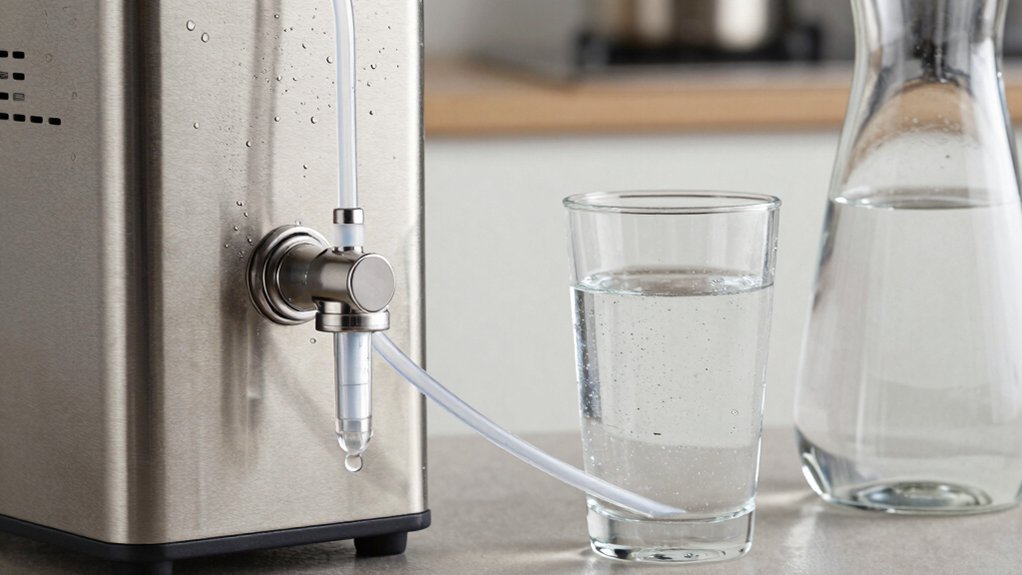
You’ll get very low TDS and high purity drinking water with RO. It reliably removes salts, metals, organics, and microbes, but you’ll need pretreatment, periodic membrane cleaning, and energy for pressurization.
Expect concentrate (brine) disposal challenges; there is high TDS waste and potential sewer or septic restrictions.
Additionally, there are corrosion and transport needs, plus taste changes from mineral removal and modest recovery efficiency. Choose system variants and maintenance to balance purity, recovery, and environmental compliance. Keep reading to learn practical tradeoffs and solutions.
Quick Overview
- Pro: RO removes 95–99% of dissolved salts, heavy metals, and many contaminants; it produces very high-purity drinking water.
- Con: RO strips beneficial minerals, which can alter taste. It can slightly reduce dietary mineral intake.
- Pro: Modern RO systems (including HERO) can achieve high recovery and efficient contaminant removal with low energy use.
- Con: RO generates a concentrated brine waste stream; this requires proper disposal to avoid environmental impacts or regulatory violations.
- Pro/Con: RO requires pre-treatment, regular maintenance, and occasional membrane replacement to sustain performance and safety.
TDS Reduction Comparison Chart
How much dissolved solids does your reverse osmosis system remove? You should compare variants by expected TDS reduction, recovery, and operational constraints. Use the table below to prioritize options based on feedwater and goals.
| Variant | Typical TDS Reduction |
|---|---|
| Standard Single-Pass RO | 85–99% (e.g., 100 ppm → 10–25 ppm) |
| Two-Pass RO | 98–99.5% (polish second pass) |
| Under-Sink RO | 95–99% (550 ppm → ~25 ppm) |
| High Efficiency RO (HERO) | Comparable TDS, higher recovery |
Select systems to balance membrane fouling risk, recovery rate, and energy efficiency. For high TDS or industrial needs, choose two-pass or HERO with pretreatment. For homes, single-pass or under-sink typically meets
Membrane Rejection Rates
After comparing TDS reductions across RO variants, you will want to examine membrane rejection rates because they define which specific contaminants are removed and at what efficiency. You should assess rejection percentages for salts, heavy metals, organics, and microbes. Note that nominal RO membranes commonly achieve >95–99% for many solutes.
Monitor membrane aging effects: decline in rejection correlates with gradual pore changes and compromised selectivity. Implement fouling control: pre-filtration, periodic cleaning, and proper flux to maintain rated rejection. Validate performance with periodic permeate testing rather than relying on age alone.
Quantify rejection by ion and molecule, not just TDS. Track rejection trends to detect membrane aging. Use fouling control protocols to preserve selectivity. Correlate influent variability with rejection shifts. Replace membranes based on performance metrics.
Wastewater / Brine Disposal Limits
You’ll need to account for the significant brine volume RO systems produce, which can be several gallons of wastewater per gallon of permeate depending on recovery ratio. Check local disposal regulations and sewer discharge limits before connecting an RO unit, since high-salinity effluent may violate municipal or septic permits.
If sewering isn’t allowed, assess septic compatibility and the environmental salinity impact of any alternative disposal method to avoid harming soils or downstream ecosystems.
Brine Volume Generated
Why does reverse osmosis produce wastewater, and what limits should you expect when disposing of brine? You generate brine volume because RO rejects concentrated salts and contaminants. Typical household systems waste 3–4 gallons per gallon produced, while high-recovery units approach 1–1.5:1.
You should quantify expected waste based on feed TDS, temperature, and recovery setting. Disposal options are limited by volume and contaminant load: municipal sewers accept dilute brine in many areas; septic systems usually don’t; and evaporation or deep-well injection suit high-salinity effluent at scale.
Monitor conductivity and flow. Adapt recovery to balance product water yield against membrane fouling risk. Design for periodic flushing and check manufacturer specs to avoid exceeding disposal capacity.
Local Disposal Regulations
Regulations for disposing RO brine vary by municipality and can strictly limit both volume and contaminant concentrations. You need to verify local effluent standards before routing reject water to sewer, storm drain, or groundwater.
You’ll assess system rejection rate, TDS, and specific ion concentrations against municipal limits to achieve regulation compliance. Measure brine composition periodically with calibrated instruments and document results for inspections.
Where limits are restrictive, consider brine minimization (recirculation, permeate recovery) or pretreatment to remove regulated constituents. Permits may require sampling frequency, analytical methods, and discharge reporting; noncompliance can trigger fines or mandated corrective action.
Coordinate with local authorities to confirm acceptable disposal pathways and incorporate local disposal requirements into system design and operational protocols.
Sewer Discharge Limits
When discharging reverse osmosis reject to a municipal sewer system, you must meet numeric limits for volume, total dissolved solids (TDS), specific ion concentrations, and prohibited substances to avoid violations and potential fines. You should characterize RO brine composition and flow rate. Then, compare against local sewer discharge permits and sewer authority ordinances.
Key metrics include maximum instantaneous and daily flow, TDS/EC thresholds, chlorides, sulfates, heavy metals, pH, and temperature. You’ll need monitoring, sampling records, and periodic reporting to demonstrate compliance.
Pretreatment, dilution, or blending may be required to meet limits; document chain-of-custody and corrective actions for excursions. Coordinate with utility engineers early to define acceptable wastewater disposal routes and permit modification procedures.
Septic System Compatibility
If your facility or home discharges RO concentrate to a septic system instead of a municipal sewer, you must evaluate compatibility by characterizing brine chemistry, hydraulic load, and septic system capacity. You should measure TDS, chloride, sodium, nitrate, and pH to predict corrosivity and microbial inhibition.
Calculate daily brine volume relative to septic tank retention time and drainfield infiltration rates to avoid hydraulic overload. Consider pretreatment (softening, partial recovery) to reduce salt and scale precursors. Verify local regulations and designer specifications; many systems aren’t rated for concentrated wastewater brine disposal.
Monitor effluent quality and inspect drainfield permeability periodically. If parameters exceed design limits, redirect concentrate to sewer, implement advanced recovery, or downsize RO rejection to maintain septic system compatibility.
Environmental Salinity Impact
Brine from reverse osmosis systems raises local salinity and can harm soil structure, groundwater quality, and aquatic ecosystems. You should quantify concentrate composition and discharge rates before disposal. You’ll assess environmental salinity increases by measuring total dissolved solids, specific ions (Na+, Cl-, SO4 2-), and conductivity in concentrate relative to background. Regulatory limits and site-specific receptors dictate allowable loads; exceedances can impair irrigation, septic function, and freshwater biota.
Implement brine management practices: volume minimization via recovery optimization, dilution only where permitted, evaporation ponds with liners in arid zones, or connection to municipal wastewater facilities that accept high-salinity streams. Document monitoring, modeling, and contingency procedures to demonstrate compliance and minimize cumulative salinity impacts.
Concentrate Transport Needs
How will you guarantee concentrate from an RO system is transported and discharged within legal and environmental limits? You must quantify concentrate disposal volumes and constituent loads. Then match transport frequency and containerization to regulatory thresholds (salinity, metals, TDS).
Design containment and piping for secondary containment, corrosion resistance, and leak detection. Evaluate on-site pre-treatment or brine minimization (recovery optimization, pressure-retarded osmosis) to improve energy efficiency and reduce disposal burden. For offsite disposal, verify permitted haulers, disposal facility acceptance criteria, and chain-of-custody documentation.
Monitor effluent quality continuously and maintain records for compliance inspections. Implement contingency plans for spills, rejected loads, and seasonal flow changes to avoid violations and protect receiving waters and soils.
Frequently Asked Questions
How Often Should RO Filters and Membranes Be Replaced?
You should replace pre-filters every 6–12 months. The RO membrane should be replaced every 2–4 years. Post-filters (carbon) should also be replaced every 6–12 months as part of a strict replacement schedule.
Maintenance frequency depends on feed water quality, system usage, and TDS levels. Check pressure, flow, and permeate TDS monthly. If TDS rises or flow drops notably, replace the membrane sooner. Keep records to validate evidence-based maintenance frequency.
Does RO Water Lack Essential Minerals for Daily Health?
RO water is low in minerals and can reduce mineral sufficiency from drinking water; however, it rarely affects your overall daily nutrient intake if you eat a balanced diet. You’ll get most calcium, magnesium, and trace elements from food.
If you rely heavily on RO water and have dietary restrictions, monitor intake and consider mineralized filters or supplements. Check blood levels and consult a clinician for personalized assessment.
Can RO Systems Be Installed in Apartments or Rented Homes?
Yes, you can install RO systems in apartments. Apartment installation is feasible with under-sink RO units that need a cold-water feed, drain connection, and small storage tank.
For rental compatibility, choose non-invasive models or countertop/under-sink units using quick-connect fittings and removable faucet adapters to avoid drilling. Verify landlord approval and local plumbing codes. Ensure you keep original fittings to restore the unit on move-out.
Are Countertop or Under-Sink RO Systems Better for Small Households?
Under-sink systems are generally better for small households because you’ll gain under sink space saving and higher daily output with a hidden tank.
Countertop mobility suits renters who need portability and easier installation; however, it yields lower capacity and slightly higher waste ratios. You’ll choose under-sink for continuous flow, quieter operation, and larger membranes.
Pick countertop when you need temporary installation, easy removal, and minimal plumbing changes.
How Noisy Is an RO System During Normal Operation?
You’ll hear minimal noise during normal operation, mostly a quiet hum from the booster pump and occasional flow clicks when tanks fill.
Noise discussion: typical sound levels range 30–50 dB for passive systems and 40–60 dB with pumps.
Vibration considerations: mount pumps on rubber isolators, secure fittings, and use anti-vibration pads to cut structure-borne noise.
Regular maintenance reduces rattles and flow turbulence, keeping operation unobtrusive.
Conclusion
You’ll find reverse osmosis gives you the strongest TDS reduction and highest membrane rejection rates, so it’s technically superior for producing low-mineral drinking water. However, you’ll also generate concentrated brine that raises disposal, sewer discharge, and local regulatory challenges. Volume and salinity impacts can exceed septic-system tolerances and require transport or treatment.
Balance your water-quality goals against environmental and legal constraints. Quantify brine generation and disposal costs before committing to RO.