Reverse Osmosis Glossary Terms
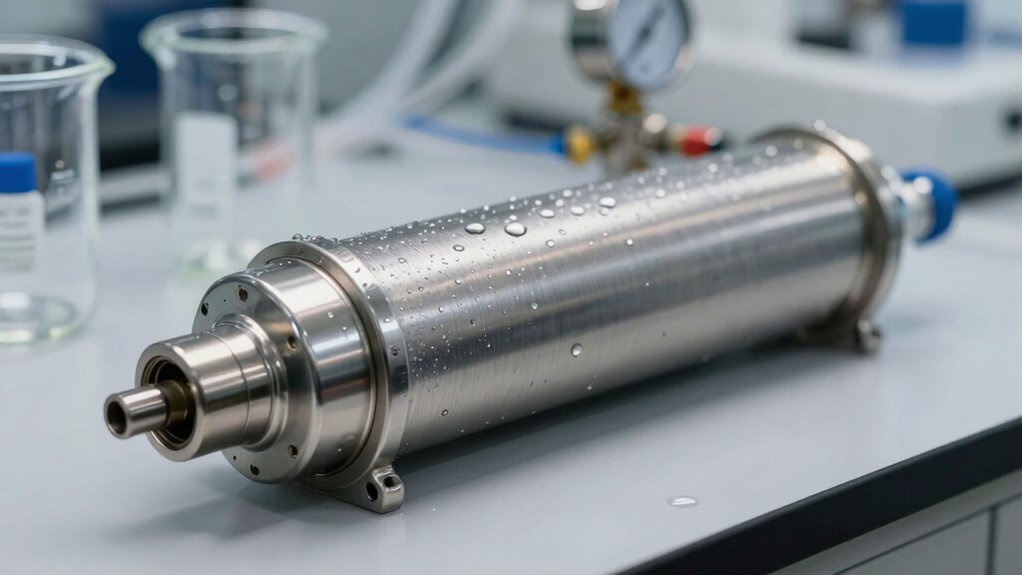
You’ll find key RO terms for evaluating membrane rejection, pretreatment, vessel orientation, and maintenance: rejection (salt, organics, particulates), flux, recovery, concentrate, permeate, fouling, antiscalant, pretreatment stages, permeate conductivity, element age, pressure vessel, endcap, feed spacer, and hydraulic head.
Use these to verify operating pressure, temperature, pH, and pretreatment integrity. Compute rejection from feed/permeate conductivity and plan vessel mounting and access. Keep going and you’ll uncover practical checks and orientation details to apply.
Quick Overview
- Permeate: the purified water that passes through the membrane, typically monitored by conductivity and flux.
- Concentrate (Reject): the brine stream retaining rejected salts, organics, and particulates concentrated by the membrane.
- Salt Rejection (%): percentage of dissolved salts removed, calculated from feed and permeate conductivity.
- Recovery: fraction of feed water converted to permeate. This balances recovery with fouling and scaling risk.
- Feed Pretreatment: sediment, carbon, and antiscalant steps protect membranes from fouling, chlorine, and particulate damage.
Membrane Rejection Rates (%)
Membrane rejection rates quantify the percentage of specific contaminants an RO membrane removes from feed water. You’ll typically see salts rejected between about 85% and 99.8% depending on membrane type, ion valence, and operating conditions. You assess rejection by monitoring permeate conductivity, flux, and concentrate concentration; changes indicate fouling or chemical tolerance limits exceeded.
Maintain pretreatment and dosed antiscalants for fouling mitigation. Observe pH and pressure to protect polyamide membranes. Use multi-stage designs if feed TDS and recovery demands require higher net rejection. Consult manufacturer specs for temperature and chlorine exposure limits to avoid irreversible loss of rejection performance.
| Contaminant | Typical Rejection | Notes |
|---|---|---|
| Salts (ionic) | 85–99.8% | Ion valence matters |
| Organics | 90–98% | MW dependent |
| Particulates | ~100% | Pre-filter protects membranes |
Salt Rejection Quick Checklist
Checklist: Confirm feed pressure, temperature, and pH are within the membrane’s specified ranges before evaluating salt rejection, since deviations directly lower rejection performance. Then verify pretreatment integrity (sediment, activated carbon, antiscalant dosing) and inspect for fouling or chlorine exposure that can permanently reduce rejection.
You’ll proceed methodically: Measure feed and permeate conductivity to calculate salt rejection, log operating conditions, and compare to baseline. Check element condition and membrane rotation records; frequent rotation evens wear and helps identify failing elements. Follow this quick checklist:
- Verify feed/permeate conductivity and compute rejection percentage.
- Inspect pretreatment filters, antiscalant dosing, and chlorine protection.
- Review membrane rotation, element age, and fouling history.
Act on outliers immediately to restore target salt rejection.
Pressure Vessel Orientation Requirements
You’ll need to orient pressure vessels to match flow patterns and service access because orientation affects element loading, sealing, and hydraulic performance. Choose horizontal or vertical configuration based on available space, mounting and support requirements, and inlet/outlet alignment to minimize stress and ensure proper feed distribution.
Design mounts and clearances so operators can perform routine maintenance, element removal, and leak inspection without compromising vessel alignment.
Vessel Orientation Importance
Why does vessel orientation matter in an RO system? You’ll find vessel orientation directly affects flow distribution, element seating, and the ability to perform maintenance access without disassembly.
Orienting pressure vessels correctly ensures feed and concentrate paths align with designed headers; this minimizes dead zones that promote fouling and uneven flux across spiral-wound elements. You’ll reduce differential pressures that can cause membrane compaction or element bypass when vessels are set per manufacturer torque and support guidelines.
Practical layout planning also preserves clearance for pre- and post-install inspections, element removal, and pressure testing. During commissioning, verify orientation marks, support saddles, and piping runs so routine service tasks: membrane swaps, leak checks, and filter changes are safe, rapid, and reproducible.
Horizontal vs Vertical
When you choose horizontal or vertical pressure vessel orientation, consider how flow distribution, element support, and maintenance access will be affected. Horizontal vessels often simplify element removal and piping runs in low-clearance rooms; however, they can promote uneven permeate channeling and settling of particulates along the lower element side. Vertical vessels improve symmetric flow distribution and reduce dead zones; yet, they require taller space and different saddle/support arrangements.
You should assess fouling risk, particulate load, and cleaning method. Horizontal orientation may need more frequent targeted cleaning of the lower element. Vertical placement favors uniform crossflow and easier flushing of solids. Also, factor membrane element length, permeate tube alignment, and service clearances to ensure predictable flux, minimal channeling, and reliable performance.
Mounting And Support
Mounting and support decisions determine how pressure vessels behave under load, how you access membrane elements, and how flow and cleaning operations perform. You’ll evaluate mounting options: horizontal racks, vertical stands, or modular frames based on site footprint, maintenance access, and stress distribution.
Specify support hardware that transmits vessel loads to structure without inducing bending moments at end caps. Use saddles, clamps, and vibration isolators sized to vessel diameter and material. Anchor points must allow thermal expansion and permit lifting for element replacement.
Inspect supports for corrosion, alignment, and pad flatness during commissioning. Document orientation limits and torque for clamps in the maintenance manual. Properly selected mounting options and support hardware extend membrane life and reduce operational downtime.
Inlet/Outlet Alignment
Having set supports and anchor points for pressure vessels, you now need to align inlet and outlet ports so flow paths and access remain predictable during operation and maintenance. You’ll orient vessels so the inlet alignment matches feed piping centerlines; this minimizes elbows and unintended stress on fittings. Confirm axial and radial positions with a template or laser to ensure consistent manifold coupling.
For outlet alignment, set permeate and concentrate exits to clearances that avoid interference with adjacent vessels and allow straight runs where practical. Use removable couplings and alignment keys to preserve orientation during removal or replacement. Record alignment angles and elevations on as-built drawings. Rigidly held alignment reduces torsion, leak risk, and uneven membrane loading during pressurization cycles.
Maintenance Access Requirements
Because regular inspection and membrane replacement depend on clear access, orient pressure vessels so service ports, endcaps, and lifting handles face the technician’s typical approach route. You’ll plan vessel spacing to allow unobstructed removal of membrane elements; provide at least the manufacturer’s recommended clearance and a stable footing for lifts.
Position ports at ergonomically reachable heights and align piping runs to avoid interfering with access. Use durable component labeling on each vessel endcap and adjacent piping to identify flow direction, element position, and part numbers for quicker swaps. Provide removable panels or hinged brackets where necessary, and ensure shutoff valves and pressure gauges are accessible without disassembling the assembly.
Document the access layout in maintenance procedures and update after any system modification.
Frequently Asked Questions
How Often Should RO Membranes Be Chemically Cleaned?
You should chemically clean RO membranes typically every 3–12 months, depending on feed water quality and performance decline. Monitor differential pressure, flux, and rejection. When flux drops 10–20% or pressure rises significantly, initiate cleaning.
Set membrane cleaning intervals based on fouling rates, seasonal changes, and pretreatment effectiveness. Maintain records to adjust frequency of chemical cleanings and optimize membrane life while minimizing downtime and chemical usage.
Can RO Systems Desalinate Brackish Groundwater to Drinking Standards?
Yes, you can desalinate brackish groundwater using RO; it’s a suitable desalination method. You’ll design RO systems for feed TDS, pretreat for fouling/scaling control, and set recovery to meet drinking water standards.
You’ll monitor rejection, flux, and permeate TDS, adjusting membranes or stages if necessary. With proper pretreatment, membrane selection, and operational control, RO will consistently produce water meeting regulatory drinking water standards.
What Safety Precautions Are Needed When Handling Antiscalant Chemicals?
You must wear chemical-resistant gloves, goggles, face shield, and aprons. Ensure good ventilation when handling antiscalant chemicals. Follow written safety training, SDS instructions, spill procedures, and proper storage: cool, labeled, and secondary containment. Use dosing pumps to minimize manual contact.
Keep eyewash and shower accessible. Dispose of waste per regulations. You’ll log exposures, maintain PPE, and stop work if you lack safety training or spill control measures.
How Does Water Temperature Affect Permeate Production Rate?
Higher water temperature increases permeate production rate because temperature impact reduces viscosity and raises membrane permeability. You’ll see faster viscous flow dynamics, higher flux, and improved water flux per membrane area.
Expect roughly 2–3% flux increase per °C until other limits (scaling, fouling) intervene. You should adjust recovery and pretreatment as temperature rises; monitor rejection changes; and recalibrate pumps and controls to maintain target permeate quality and system stability.
Can RO Permeate Be Stored Long-Term Without Microbial Growth?
Yes, but you’ll need strict RO permeate storage hygiene and microbial risk mitigation to prevent regrowth. Store permeate in clean, opaque, food-grade tanks with tight seals. Maintain low residence time, control temperature, and use periodic disinfection: UV or chlorination with dechlorination post-treatment.
Routine monitoring is essential, including TDS and HPC. Flush lines, avoid dead legs, and replace or sanitize storage components on schedule to keep microbial counts negligible during long-term storage.
Conclusion
You’ve now got the essentials to specify, install, and maintain RO pressure vessels correctly. Use membrane rejection rates and the salt rejection checklist to pick the right elements. Always follow the manufacturer’s orientation and inlet/outlet alignment specs. Choose horizontal or vertical mounting based on site constraints and support access.
Provide clear mounting, secure supports, and unobstructed maintenance access so you can service seals, housings, and elements safely and efficiently.