1/4 Inch Vs 3/8 Inch Water Line Tubing Sizes Explained
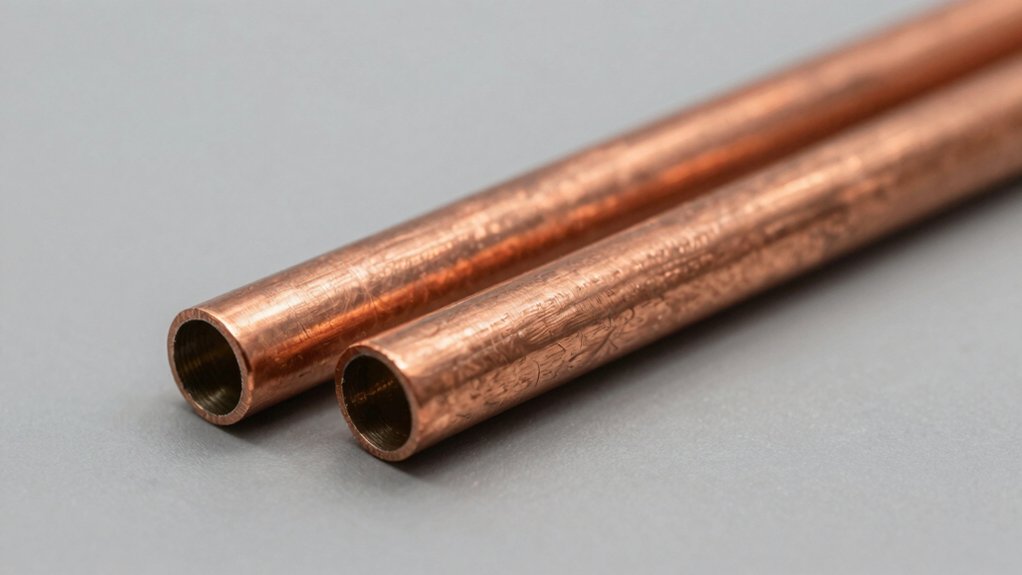
Choose 3/8″ tubing when you need substantially higher flow and lower pressure drop. Its 0.375” (9.53 mm) ID vs 0.25” (6.35 mm) gives about 52% larger area and much less head loss on long runs.
Use 1/4″ for short, low-demand runs or tight spaces and when fittings require smaller OD. Match thread type, ferrule style, and seal material to avoid leaks. Torque to spec to prevent ferrule crush. Keep reading for practical sizing, fitting, and sealing tips.
Quick Overview
- 3/8″ ID (0.38 in / 9.525 mm) has about 52% larger inner diameter than 1/4″ ID (0.25 in / 6.35 mm). Larger ID increases flow capacity and reduces pressure drop and head loss over longer runs.
- 1/4″ tubing restricts flow, raising friction loss and limiting simultaneous outlet performance. Choose diameter based on required flow, line length, and available system pressure to balance throughput and pressure.
- Match fittings, thread type, seals, and torque specs to avoid leaks, ferrule damage, or incompatible adapters.
Inner Diameter Comparison Chart
How much difference does inner diameter make? You’ll see a measurable impact: 1/4″ is 0.25″ (6.35 mm) I.D.; 3/8″ is 0.38″ (9.525 mm) I.D. This results in ~52% larger. Use the table below for quick comparison.
| Size | Inner Diameter (in) | Inner Diameter (mm) |
|---|---|---|
| 1/4″ | 0.25 | 6.35 |
| 3/8″ | 0.38 | 9.525 |
| Difference | 0.13 | 3.175 |
That dimensional change alters flow capacity, surface area, and friction loss. For design considerations, pick 3/8″ when run length or flow demand increases. Choose 1/4″ for tight routing. Don’t fall for installation myths that small diameter always suffices; undersizing causes failures when demand exceeds capacity.
Max Flow vs. Pressure
Because flow capacity and pressure are interdependent, you must balance tubing diameter and system pressure to achieve maximum usable flow without excessive drop. You’ll target max flow while controlling pressure dynamics: larger 3/8″ tubing reduces friction loss and sustains higher usable flow over longer runs, while 1/4″ tubing limits flow and increases pressure drop under demand.
- Calculate required flow and permissible pressure loss to select tubing diameter.
- For short runs, 1/4″ may meet low-demand max flow targets; verify against 30 GPH or measured GPM limits.
- For higher throughput, 3/8″ preserves pressure dynamics; this reduces head loss and ensures consistent delivery.
- Longer runs or simultaneous outlets demand upsizing to prevent pressure collapse and operational failure.
Fittings Compatibility and Torque
Check thread type before mating fittings to ensure straight threads, NPT, or BSP interfaces align with your tubing size and adapter.
Tighten compression nuts to the manufacturer’s torque spec; hand-start then wrench to avoid crushing the ferrule. Choose seal materials compatible with your fluid and temperature. Use adapters only where necessary and avoid overtightening, which can strip threads, deform tubing, or cause leaks.
Thread Type Match
Which thread profile and pitch you choose will determine whether fittings seal and hold under pressure. You must match thread type (NPT, BSPP, BSPT, or metric) exactly to avoid leakage and stress concentrations. Inspect pitch, major/minor diameters, and thread angle with gauges; do not assume interchangeability between similarly sized tubing.
Consider material compatibility: brass, stainless, and plastic threads behave differently under torque and thermal cycling. Hard metals on softer plastics require inserts or bonded seals to prevent deformation. Use compatible sealants: PTFE tape for tapered threads; anaerobic sealant for straight metal threads; only where recommended.
Torque limits depend on thread class and material. Follow manufacturer specs to ensure mechanical retention without stripping or cracking.
Compression Nut Torque
When you tighten a compression nut, you control the seal integrity and the mechanical load on both the ferrule and tubing. Apply the correct torque to compress the ferrule enough to bite the tube without overstressing threads or collapsing soft tubing. You should use a calibrated torque wrench or a repeatable hand technique to reach manufacturer-specified compression torque.
Start with finger-tight; then apply incremental turns while monitoring for tube deformation and alignment. Verify thread safety by inspecting engagement length and avoiding cross-threading. Damaged threads reduce clamp force and cause leaks.
For mixed 1/4″ and 3/8″ systems, apply size-specific torque values because wall thickness and ferrule design differ. Recheck torque after initial pressurization and again after thermal cycling or vibration.
Seal Material Compatibility
How should you choose seal materials and torque to ensure reliable joints across 1/4″ and 3/8″ water-line systems? You select seals based on media, temperature, and mating surface hardness. Use EPDM for potable water and nitrile for hydrocarbon-exposed lines. PTFE works where chemical inertness and low friction are required.
Match seal cross-section to fitting seat geometry to preserve seal compatibility and avoid extrusion under torque. Apply torque values that compress the seal without deforming tubing: lower torque for softer vinyl or more flexible tubing; higher for stiffer poly tubing, but stay within manufacturer limits. Verify compression visually and with leak testing. Re-torque after initial pressure cycling. Document seal material, torque spec, and observed tubing flexibility for maintenance records.
Adapter Use Guidelines
Why choose the right adapters and torque settings? You need predictable adapter compatibility to preserve flow, prevent leaks, and avoid stress on 1/4″ or 3/8″ tubing transitions.
Select adapters rated for the tubing OD, material, and operating pressure; mismatch increases friction loss and reduces system capacity. During installation, follow manufacturer torque specs: hand-start fittings, then apply calibrated torque wrenches to specified values to compress seals without deforming tubing.
Watch tubing routing: avoid sharp bends, kinks, or compression points near fittings that create focal stress and flow restrictions. Use support clamps and strain relief to maintain alignment.
Verify seals under working pressure and re-torque per service intervals. Document adapter types and torque values for maintenance and troubleshooting.
Overtightening Risks
Ever tightened a fitting until the threads felt solid, only to later find a cracked ferrule or crushed tubing? You risk over tightened fittings when you exceed recommended torque or mix incompatible materials. Overtorquing deforms ferrules, compresses soft vinyl or poly tubing, and induces thread damage that creates leaks or weakens joints.
Use a torque wrench or calibrated hand force; follow manufacturer specs for 1/4″ versus 3/8″ fittings, and match ferrule and nut materials to tubing. Inspect threads and ferrules before reuse; replace any with nicks, galling, or distortion. Hand-start threads to avoid cross-threading. Then apply measured torque. Controlled tightening preserves seal integrity, prevents catastrophic failure, and maintains expected flow and pressure characteristics.
Frequently Asked Questions
Can I Retrofit 1/4″ Tubing Into a System Designed for 3/8″?
You can, but retrofit compatibility is limited; installation challenges are real. You’ll reduce flow capacity, increase friction loss and risk pressure drop over long runs. The system may underperform or fail under peak demand. Use adapter fittings, shorten runs, and accept lower GPH or redesign segments to 3/8″.
Verify material compatibility and test pressures after installation. Document changes and monitor for leaks, flow and temperature impacts.
How Does Tubing Material Affect Taste in Potable Water?
Tubing material affects taste by leaching compounds that cause off-flavors. You’ll notice the taste impact if materials aren’t certified for potable use. Prioritize material compatibility with drinking water standards to avoid chemical interference from plasticizers or metals.
You’ll also weigh durability concerns; degraded or aged tubing increases leachates. Choose NSF/ANSI-rated materials, replace suspect lines promptly, and flush new runs to minimize initial taste issues and long-term contamination.
Are There Visible Signs a Tube Is Undersized or Failing?
Yes, you’ll see visible wear, bulging, kinking, reduced flow and leak indicators when a tube is undersized or nearing function failure. Aging components show discoloration, cracking, stiffness or soft spots.
You’ll notice pressure loss, sputtering outlets, or leaks at fittings under load. Inspect run length, feel for heat build-up and check flow rates; persistent drops or recurrent leaks signal imminent failure and need for upsizing or replacement.
Can I Run Hot Water Through These Tubing Sizes Safely?
Yes, you can run hot water through these tubes if you follow install guidelines and respect pressure ratings. You’ll monitor safety concerns: higher temperatures accelerate material degradation and can alter material taste.
Choose tubing rated for your operating temperature and pressure. Avoid long runs that increase heat stress, use proper fittings, and inspect for softening or leaks. Replace tubing if you detect odor, discoloration, or reduced performance.
What Are Common Clamp Types for Securing 1/4″ and 3/8″ Tubing?
Common clamp types for securing tubing are worm-drive hose clamps, spring (constant-tension) clamps, ear (Oetiker) clamps, nylon cable ties, and compression fittings. You’ll choose based on tubing material, pressure, and accessibility: worm-drive gives adjustable metal banding. Spring clamps maintain tension with temperature changes; ear clamps provide tamper-proof crimps. Cable ties suit low-pressure runs, and compression fittings seal without deformation for reliable, serviceable connections.
Conclusion
You’ll usually pick 3/8″ tubing when you need higher flow at similar pressure, and 1/4” when space or low-volume delivery matters. Match fittings and thread types precisely; use correct seal materials; and torque compression nuts to manufacturer specs to avoid leaks.
Use adapters only when pressure/flow loss is acceptable. Never overtighten; stress and deformation reduce seal life. Follow these technical rules and you’ll maintain safe, predictable performance and easy field serviceability.