How to Identify Standard Ro Membrane Housing Types
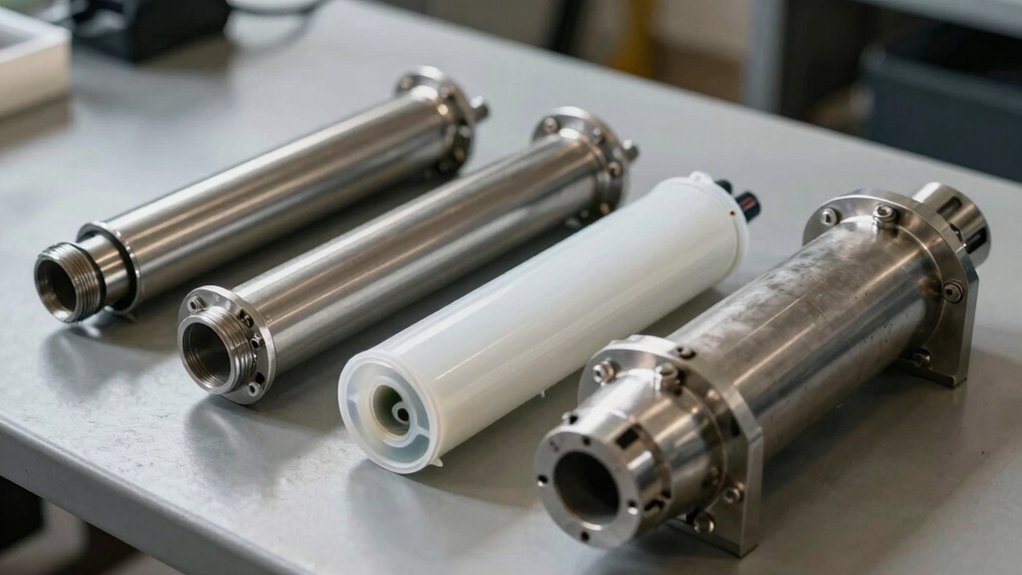
You can ID RO membrane housings by checking membrane size (1812 vs metric) and matching membrane diameter/length to housing OD and length. 1812 is approximately 1.8″×12″; housings are about 77–110mm OD and length is approximately 330mm.
Verify port location and diameter, measure the membrane O‑ring inner diameter and cross‑section to match the endcap gland, and confirm housing material and stamped pressure class for system compatibility.
Continue for guidance on seal materials, temperature limits, and corrosion considerations.
Quick Overview
- Check membrane size code (e.g., 1812) and compare actual membrane OD/length to housing internal dimensions.
- Match membrane OD to housing outside diameter range (77–110mm common for 45mm membranes).
- Verify endcap port locations, port diameter clearance, and axial alignment before installation.
- Confirm housing material and stamped working/test pressure match system operating pressure and temperature.
- Record membrane O-ring inner diameter, cross-section, and elastomer type to ensure correct seal compatibility.
0mm Vs 1812 Dimensions
How do millimeter-based housing specs compare to the common “1812” label? You’ll evaluate mm vs 1812 dimensions by mapping imperial membrane sizes to metric housing metrics. The 1812 membrane is approximately 1.8″ × 12″ (≈45mm × 305mm). Housings list outside diameters as 77mm, 97mm, 110mm and length 330mm. Match diameter clearance and port locations before installation.
| Spec | 1812 (imperial) | Metric housing example |
|---|---|---|
| Membrane dia. | 1.8″ (~45mm) | Requires 77–110mm OD vessel |
| Membrane len. | 12″ (≈305mm) | Housing length 330mm standard |
| Pressure rating | 125–250 PSI | Material-dependent: FRP/PP/SS ratings |
You’ll confirm port threads and differential pressure limits. mm vs 1812 dimensions aren’t interchangeable without verification.
Membrane O-Ring Dimensions
Why do O-ring dimensions matter for RO membrane housings? You need an exact membrane O-ring size to ensure a proper seal between the membrane element and housing endcap. Incorrect diameters or cross-sections cause bypass, leaks, or element damage.
- Measure inner diameter, cross-section thickness, and cord length to confirm dimensions compatibility with the housing groove.
- Match material profile (standard EPDM or specified elastomer) to groove geometry; a missized ring won’t compress correctly.
- Verify tolerances against housing spec sheets for residential 1812 and larger commercial housings to prevent installation issues.
You should document measurements and supplier specs before ordering replacements. Precise dimensions compatibility prevents unplanned downtime and maintains hydraulic integrity without overengineering.
Pressure Rating and Materials
You’ll assess housings by their pressure-rating classes (low, medium, high) and match them to system operating pressures and safety margins. Compare common materials—polypropylene, FRP, stainless steel, glass—and note their temperature limits and corrosion resistance for your water chemistry.
Also, specify compatible seal compounds and O-ring materials (EPDM, Viton, Buna-N) to ensure leak-free performance across temperature and chemical conditions.
Pressure Rating Classes
Wondering which housing material matches your system’s pressure needs? You’ll classify housings by pressure-rating classes (low, medium, high) tied to intended application and material safety data.
Low-pressure class (residential PP) suits under-sink, tankless RO with typical feed pressures; follow installation steps that limit surge and thermal stress.
Medium-pressure class (PVC, some stainless steel) covers commercial point-of-use and small industrial systems; it requires rated fittings and periodic inspection.
High-pressure class (FRP, heavy stainless) supports multi-element arrays and long membranes; it is designed for sustained elevated pressures and wide temperature ranges. When selecting, verify stamped working pressure, test pressure, and compatible O-ring compounds.
Match class to system peak pressures, include safety factors, and document material safety and maintenance protocols for compliance.
Common Housing Materials
Now that you’ve matched pressure classes to system needs, compare the materials that deliver those ratings: polypropylene (PP), fiberglass-reinforced plastic (FRP), stainless steel, PVC, and tempered glass. You’ll evaluate strength, longevity, chemical resistance, and application fit.
Choose PP for residential 1812 housings: lightweight, food-grade, elastic, cost-effective, but limited pressure and wear life. Select FRP for industrial, high-pressure multi-element vessels; it has superior burst resistance and larger diameters. Use stainless steel where corrosion resistance and moderate high pressure are required; note size and brittleness constraints at low temperatures.
Deploy PVC for low-cost, small-capacity systems; expect lower pressure limits. Consider tempered glass for visual inspection and niche uses while accepting fragility. Two word discussion ideas guide specification checks and procurement decisions.
Temperature Compatibility Limits
How does temperature affect a housing’s pressure rating and material choice? You must assess temperature limits against expected feedwater conditions because allowable pressure declines as temperature rises. For polypropylene and PP housings used in residential systems, stay below manufacturer temperature limits (typically EPDM O-rings is generally good at these temperatures.
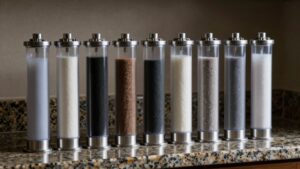
FRP and stainless steel tolerate wider temperature ranges. FRP retains strength at low temperatures; stainless steel sustains higher pressures at elevated temperatures but can become brittle when very cold. Transparent glass tubes handle moderate temperature ranges but are brittle under thermal shock.
Specify operating temperature; then consult pressure–temperature curves and material compatibility charts to select a housing that meets both mechanical and chemical constraints.
Corrosion Resistance Factors
Why should you match housing material and pressure rating to the chemical makeup of your feedwater? You must prevent accelerated degradation by aligning corrosion mechanisms with material selection and pressure capacity. Evaluate chloride, oxygen, pH, and biocide levels. Chloride-driven pitting attacks stainless steel, while alkaline conditions stress plastic housings.
Select FRP or high-grade stainless where metal tolerances to chlorides and pressures are critical; polypropylene suits low-pressure, low-corrosive residential feeds. Confirm pressure rating exceeds operating spikes plus safety margin. FRP handles higher ranges than PP; stainless sits between.
Design for service conditions: temperature, suspended solids, and chemical exposure influence corrosion rate and seal longevity. Document material compatibility and metal tolerances, and specify inspection intervals to detect early corrosion and preserve RO performance.
Seal And O-Ring Options
Which seal compound and O-ring profile will give you the reliable, pressure-rated seal your RO housing needs? You’ll choose seal materials based on housing type and system pressure: EPDM for residential low-pressure polypropylene and PP housings; nitrile (Buna-N) for moderate pressures and oil-exposed systems; and Viton or FFKM for high-temperature or chemical-resistant stainless steel and FRP installations.
Match O-ring sizes to groove dimensions and membrane port geometry. Incorrect O-ring sizes cause extrusion or blowout at rated pressure. Verify durometer and gland tolerance for dynamic vs. static seals. For transparent glass tubes, use softer compounds to accommodate thermal expansion. Always confirm manufacturer pressure ratings and perform leak testing at maximum operating pressure before commissioning.
Frequently Asked Questions
What Fittings Adapt a Residential Housing to Commercial Piping?
You’ll use threaded adapters and union fittings to mate residential housings to commercial piping. Identifying membrane and housing compatibility is essential. You’ll fit 1/8″ FNPT or NPT ports to larger commercial lines using brass or stainless reducing unions, 1/8″ FNPT-to-1/4″ push-connect, and 1/8″ FNPT-to-1/2″ NPT adapters.
Use pressure-rated nipples, couplers, and check valves. Ensure material compatibility (PP to brass/SS) and match pressure and temperature ratings for safe operation.
Can Housings Be Used for Filtration Other Than RO?
Yes, you can use housings for filtration beyond RO if you’re identifying membrane types and checking housing material compatibility. Match element diameter/length and port sizes; ensure polypropylene, FRP, stainless, or glass tube materials suit chemical, pressure, and temperature demands.
Verify O-ring and connection compatibility. Note limits: PP and PVC handle low-pressure filters, FRP or stainless support high-pressure or industrial media, and glass is visual but fragile.
How Often Should Housing O-Rings Be Replaced?
You should replace housing O-rings every 12 months under typical residential use. Increase frequency to every 6 months for high-pressure, high-temperature, or chemical exposure. For O-ring maintenance, inspect quarterly for cuts, flattening, or hardening. Lubricate with food-grade silicone grease during reassembly.
Always use correct EPDM or specified material replacements and torque housings per spec to prevent extrusion. Keep replacement frequency records for reliability and leak prevention.
Are Transparent Housings Safe for Potable Water Systems?
Yes, transparent housing safety for potable water compatibility is possible; however, it depends on material and certification. You should confirm the glass or clear polymer is food-grade, pressure-rated for your system, and NSF/ANSI certified for drinking water.
Transparent housings let you visually inspect membranes, but they can be more fragile and may age under UV or chemical exposure. Install with appropriate fittings, avoid thermal shock, and replace if cracking or clouding appears.
Do Housings Come Pre-Assembled With Membranes?
Usually they don’t come pre-assembled with membranes; you’ll install membranes during setup. Follow disassembly procedures only when replacing or inspecting elements to avoid damage and leaks.
Verify membrane compatibility with the housing diameter, length, port type and material (PP, FRP, stainless) before ordering. Use proper O-rings and torque to spec. For tankless or specialty housings, confirm element form factor and pressure ratings to ensure safe, reliable operation.
Conclusion
You’ve now got the key checks to identify standard RO membrane housings: measure 0mm vs 1812 dimensions, confirm membrane O-ring sizes, and verify pressure rating, material, and temperature limits.
Assess corrosion resistance and choose compatible seals and O-ring compounds for your application. Cross-reference pressure classes and materials with system requirements before installation.
Doing these precise, quick inspections prevents leaks, premature failure, and safety hazards while ensuring consistent membrane performance.