How to Identify Faucet Thread Size for Adapters
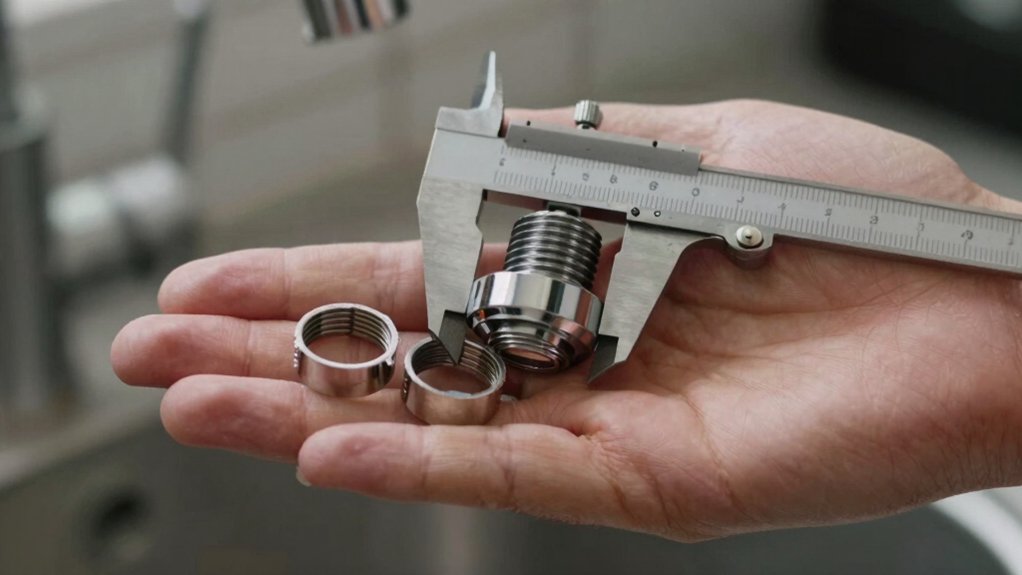
You can identify your faucet thread size by measuring the outer diameter (for male) or inner diameter (for female) with calipers. Then, count threads per inch or measure pitch in millimetres. Note whether threads are tapered (NPT/BSPT) or parallel (BSPP/metric) since tapered ones seal by interference, while parallel need a washer or O-ring.
Compare OD and pitch to a BSP, NPT, or metric chart to pick an adapter. Keep going to learn measuring tips and conversion tricks.
Quick Overview
- Measure the outer diameter (male) or inner diameter (female) with calipers to get the proper size reference.
- Count threads over one inch (TPI) or measure thread pitch in millimetres to distinguish imperial vs metric.
- Determine whether threads are tapered (NPT/BSPT) or parallel (BSPP/NPS) to select the correct sealing method.
- Inspect whether the connection seals with an O‑ring/washer (parallel) or by thread interference (tapered).
- Compare measured OD and pitch to a thread chart (BSP, NPT, metric) or try reference adapters for a final fit.
Tap Thread Size Chart
Wondering which thread size fits your faucet? You’ll use a compact chart to cross-check OD, TPI, and common applications: measure OD with calipers, confirm pitch with a thread gauge for thread gauge accuracy, and note taper vs parallel. Use metric conversion when comparing drill sizes or export fittings. Below is a quick reference to typical faucet taps.
| Tap Type | Common Size | Typical Use |
|---|---|---|
| BSP | 1/2″, 3/4″ | Shower hoses, basin tails, bath taps |
| NPT | 1/8″, 1/4″, 3/8″, 1/2″ | Filter housings, RO, booster pumps |
Match measured OD and TPI to the chart; check taper (NPT) and verify with drill/table specs before ordering adapters.
Metric vs. Imperial Threads
How do you tell metric and imperial threads apart on a faucet or adapter? You’ll first measure diameter and pitch: metric uses millimeters (e.g., M14x1.5) while imperial uses inches and threads per inch.
Note whether threads are parallel or tapered, since NPT/NPS and BSP varieties affect imperial conversions and sealing. For reliable metric compatibility or imperial conversions, measure male OD or female ID with calipers. Then confirm pitch with a gauge or by counting threads over a known length.
- Check diameter in mm versus inches to rule out system.
- Verify pitch (mm) or TPI for exact match.
- Confirm taper vs parallel to select correct adapter.
This method prevents mismatches and ensures proper adapter selection.
Aerator Thread Pitch Table
Now you’ll use an aerator thread pitch table to match common thread types and convert metric vs imperial sizes quickly. Measure pitch and diameter on the male or female fitting. Then compare those values to the chart to identify the correct adapter.
Keep a size conversion chart handy for fast cross-referencing between BSP, NPT and metric threads.
Common Thread Types
Threads tell you which aerator or adapter will fit your faucet, so start by identifying the thread type: parallel (BSPP/NPS), tapered (NPT/BSPT), or metric. Then check the pitch and diameter. You’ll use thread standards to match connectors and avoid leaks. Pipe fittings rely on correct mating of parallel or tapered forms.
Inspect male OD or female ID with calipers; then count threads per inch or measure pitch in millimetres. Parallel threads (BSPP/NPS) need a seal washer or O-ring. Tapered threads (NPT/BSPT) tighten to create a pressure seal. Note common sizes: 1/2″ and 3/8″ supply lines and various BSP/NPT sizes. Record pitch before buying adapters to ensure compatibility.
Metric Vs Imperial
When you’ve identified whether a thread is parallel or tapered and measured diameter and pitch, you’ll next compare metric and imperial aerator pitches to pick the correct adapter. You’ll use an aerator thread pitch table to match your measured pitch to common standards: metric sizes (for example M14x1.5) versus imperial TPI patterns used in NPT/BSP variants.
Check diameter first; then confirm pitch against the table. Metric adapters list pitch in millimetres, while imperial adapters list threads per inch. Don’t assume interchangeability; close diameters can still have different pitches.
Once you’ve matched diameter and pitch, choose a metric adapter for millimetre threads or an imperial adapter for TPI threads to ensure a leak-free fit and avoid cross-threading or thread damage.
Thread Pitch Measurement
How do you accurately measure aerator thread pitch to pick the right adapter? You’ll first determine whether the thread is parallel or tapered. Then apply a simple measurement method.
Use a caliper to record the outside diameter for male threads or the inside diameter for female threads. Next, measure thread pitch: count the number of threads across a known length (usually 1 inch for imperial or 1 cm for metric) or use a thread gauge.
Compare your results to an aerator thread pitch table showing common pitches (e.g., 11, 14, 19 TPI for BSPP or metric pitches like 1.0, 1.25, 1.5 mm). Accurate thread pitch measurement method prevents mismatched adapters and ensures leak-free connections.
Male Vs Female Threads
Which side are you looking at: the exposed stub or the recessed socket? This will determine whether you measure male or female aerator threads and how you read the pitch. When you face a male thread, measure the outside diameter and count threads per inch or millimeter. For a female thread, measure the inside diameter and match pitch.
You’ll note whether threads are parallel or tapered since tapered NPT seats differently than BSPP or NPS. This two-word discussion ideas about thread compatibility and seal methods matters: NPT tapered threads seal by interference, while parallel threads need gaskets or O-rings. Record OD/ID, pitch, and taper type before choosing an adapter to ensure a proper fit and leak-free connection.
Size Conversion Chart
Wondering which thread size fits your faucet or adapter? Use a clear size conversion chart that maps common standards: BSP, NPT, metric—to outer diameters and thread pitches. The table should list BSP 1/2″ (≈20.4–20.9mm) and BSP 3/4″ (≈25.9–26.4mm). It should also include NPT 1/8″–3/8″ with corresponding OD values and metric examples like M14x1.5.
Include TPI or mm pitch: UN/UNF options (12–24 TPI), NPT taper pitches, and BSPP pitch values. Don’t let topic drift or unrelated chatter dilute the chart; keep entries precise: thread type, nominal size, measured OD, pitch, and typical applications. A compact, accurate aerator thread pitch table speeds identification and ensures you pick the correct adapter.
Measuring Tools Needed
Now that you have a compact size conversion chart, gather a handful of simple tools to measure aerator threads accurately. You’ll need a digital caliper for outside and inside diameters, a small ruler for quick checks, and a thread pitch gauge to read TPI or millimeter pitch.
A flashlight and magnifier help inspect worn or corroded threads. Keep a tape measure for overall lengths and a set of reference adapters to confirm fit. When using measuring tools, note whether threads are tapered or parallel before checking thread pitch. Tapered NPT will require angle awareness.
Record diameter and pitch together; that two-value combo determines whether you choose BSP, NPT, or a metric adapter.
Frequently Asked Questions
Can I Use Tape or Sealant on Faucet Adapters?
Yes, you can use tape or sealant on faucet adapters to prevent leaks. You should apply PTFE tape to the faucet thread, wrapping clockwise for tapered threads (NPT) so it seats properly. Use pipe dope or liquid thread sealant for metal adapter materials or where vibration occurs.
Avoid excessive tape on small fittings and do not use sealant on fittings requiring an O-ring. Tighten to manufacturer torque for a reliable, leak-free connection.
How Do I Measure Damaged or Corroded Threads?
You’ll inspect damaged or corroded threads visually. Clean them with a wire brush and penetrating oil. Then use a caliper to measure outer or inner diameter for identifying thread wear.
To measure thread pitch, fit a matching gauge or count crests over an inch (or convert mm) and divide. If threads are too ruined, trace mating part dimensions or replace the fitting. Don’t force mismatched adapters; they’ll leak or strip.
Are Booster Pumps Affected by Adapter Choice?
Yes, booster pumps can be affected by adapter choice. You’ll need to ensure faucet compatibility and match threading standards so flow isn’t restricted or seals don’t leak.
Wrong adapters can create pressure drops, turbulence, or leaks that stress the pump. Use correct NPT or BSP sizes, confirm parallel vs tapered threads, and employ proper gaskets or thread sealant. That preserves pump performance, prevents cavitation, and avoids premature wear.
Do Adapters Change Water Flow or Pressure?
Yes, adapters can affect faucet flow and pressure impact, but usually only slightly. If an adapter reduces internal diameter or adds restrictions, you’ll see reduced flow and some pressure drop. Poorly sealed or mismatched threads can cause leaks or turbulence, further lowering performance.
Choose straight, full-bore adapters sized to the supply; avoid unnecessary reducers. Use proper thread type, and you’ll minimize any measurable impact on faucet flow and pressure.
Where Can I Get Custom or Rare Thread Adapters?
You can get custom adapters and rare threading from specialty suppliers and machinists: Contact local machine shops, plumbing specialty stores, or online custom-manufacturing platforms like Protolabs, Xometry, and Etsy shops that do metalwork.
You’ll want to provide precise thread specs (BSP/NPT/metric, diameter, pitch, taper). Ask for material, plating, and pressure ratings. Prototype small batches first.
Keep a record of measurements for future orders to ensure repeatable compatibility.
Conclusion
You’ve now got the tools and know-how to identify faucet thread sizes for adapters confidently. Measure thread diameter and pitch with calipers or a pitch gauge. Note whether threads are male or female, and consult metric vs. imperial charts to match standards.
Verify aerator pitch and type against the conversion chart before buying an adapter. With careful measurement and the right reference tables, you’ll select the correct adapter and avoid leaks, cross-threads, or wasted purchases.