How to Hydrate for Hot Weather and Sweating
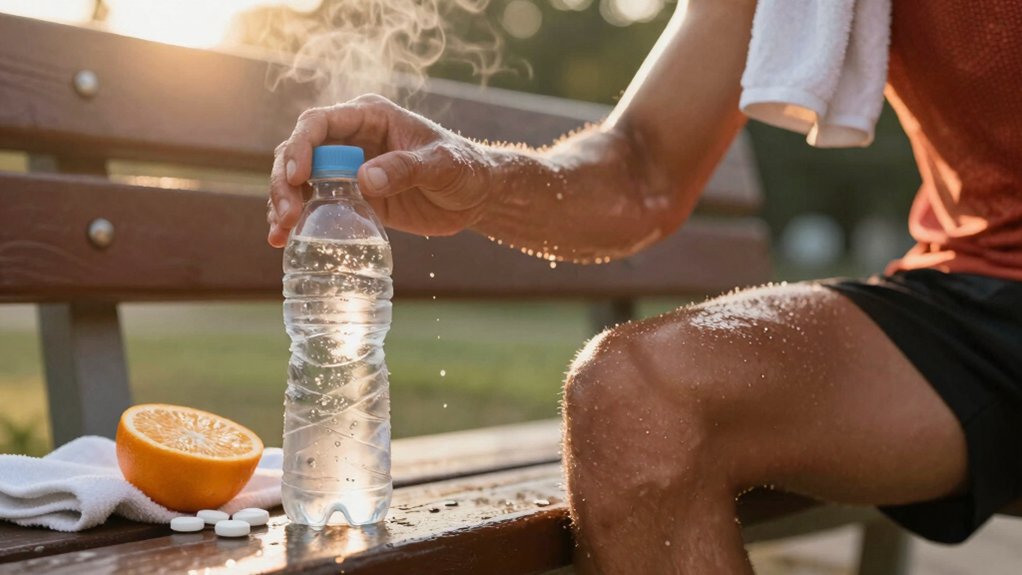
You should drink more than your usual 2–3.7 L/day in heat: add about 0.5–1 L if you’re resting and 0.7–1 L per hour when active. Never exceeding ~1.4 L/hour. Pre-hydrate 0.5–0.7 L two to three hours before exposure.
Replace sweat sodium (300–700 mg/L) and potassium (200–400 mg/L) with electrolyte drinks. Measure sweat loss via weigh-ins and rehydrate ~150% of loss over 2–4 hours. Keep going for practical steps and mixes.
Quick Overview
- Drink a baseline 2–3.7 L/day, increasing by 0.5–1 L/day when resting in hot conditions.
- During active work or exercise in heat, consume 24–32 oz (0.7–1 L) per hour; do not exceed 48 oz/hour.
- Pre-hydrate with 0.5–0.7 L of fluid 2–3 hours before heat exposure or exercise.
- Use electrolyte drinks with ~300–700 mg sodium and 200–400 mg potassium per liter if you sweat heavily.
- Measure sweat loss by pre/post-session weight. Replace about 100–150% of loss over the next 2–4 hours.
Fluid Needs by Temperature
How much you need to drink depends on the heat and your activity: In moderate conditions adults typically need about 3.7 L (men) or 2.7 L (women) of total fluids daily. However, when temperatures top ~32°C (90°F), you should increase intake substantially to match sweat losses. You’ll add roughly 0.5–1 L/day in hot humid weather. During work or exercise, expect 24–32 oz (0.7–1 L)/hour and don’t exceed ~48 oz/hour.
Pre-hydrate 0.5–0.7 L 2–3 hours before exposure. Don’t get distracted by irrelevant topics or off topic advice; follow measured rates and monitor weight change, urine color, and symptoms.
| Condition | Guidance |
|---|---|
| Baseline | 2–3.7 L/day |
| Hot rest | +0.5–1 L/day |
| Active heat | 24–32 oz/hr |
| Max/hr | ≤48 oz |
| Pre-hydration | 0.5–0.7 L (2–3 hrs) |
Electrolyte Mix Ratios
After matching fluids to temperature and activity, you’ll also need to replace the electrolytes lost in sweat: mainly sodium, with smaller amounts of potassium, magnesium, and calcium, so your rehydration is effective and safe. Aim for sodium concentrations around 300–700 mg per liter of replacement fluid during prolonged sweating.
Include 200–400 mg potassium and modest magnesium/calcium to support muscle and nerve function. Use sweat accuracy (not guesswork) to adjust amounts: if you cramp or feel lightheaded, raise sodium slightly. Prefer measured mixes or commercially formulated options rather than improvising with only sugar and water.
- Target 300–700 mg Na/L for most hot-weather activity
- Add 200–400 mg K/L for balance
- Include 10–50 mg Mg/L
- Keep Ca modest (10–40 mg/L)
- Monitor symptoms and adjust for electrolyte balance
Sweat-Rate Measurement Protocol
Before you measure sweat rate, you’ll prepare by hydrating normally, noting recent fluid/food intake and medications, and wearing consistent clothing and gear that you’ll use in the field.
Follow a clear measurement procedure: pre- and post-session body weight, timed activity duration, and accounting for urine and fluid consumed. This will allow you to calculate sweat loss (weight change plus fluids in minus urine) per hour.
After the test, use that result to plan targeted rehydration with water and electrolytes to replace about 100–150% of measured sweat loss over the next few hours.
Pre-Test Preparation
Want to get an accurate sweat-rate measurement? For reliable results, follow a clear pre-test preparation routine. Start well-hydrated for 24 hours and avoid heavy alcohol or diuretics the day before.
Fast two hours before the test or stick to water only, so gastrointestinal weight won’t skew numbers. Record body mass in minimal, consistent clothing and gear: use the same lightweight items for pre- and post-test weighing. Measure and note fluid intake and urine output during the test window.
Keep environmental conditions stable: similar temperature, humidity, and exercise intensity to your usual exposure. Rest briefly before the baseline weight. Repeat post-exercise weighing immediately to minimize evaporation and measurement error.
Clothing And Gear
Now that you’ve prepared your hydration and weighing routine, pick clothing and gear that keep measurements consistent and minimize fluid loss unrelated to sweating. Choose lightweight, breathable clothing materials (merino, polyester blends, or lightweight nylon) that wick moisture without trapping ambient moisture. Avoid heavy cotton that soaks up fluid and skews mass changes.
Use the same outfit for each test to improve repeatability. Select simple, minimal layers and note any fasteners or pockets that can hold water. Prefer durable, well-fitting gear—hat, shoes, and pack—so wear and stretch won’t change test conditions. Gear durability prevents unexpected absorption over repeated trials.
Label items, document their condition, and replace anything that degrades; this protects measurement accuracy and your safety.
Measurement Procedure Steps
When you start the sweat-rate measurement, follow a consistent, stepwise procedure so your results reflect true fluid loss rather than measurement noise. First, record baseline weight in minimal clothing and note recent fluid and food intake; this reduces confounding from gut contents.
Wear the same clothes and perform a standardized activity and duration in the same environment to capture comparable sweat rate data. Measure post-activity weight, accounting for any urine, and towel-dry before weighing to avoid surface moisture errors. Log ambient temperature and humidity because they affect sweating and electrolyte balance.
Repeat measurements across days or sessions to average variability. Use the results compassionately to guide personalized hydration plans and safe electrolyte replacement.
Calculating Sweat Loss
How do you turn your weight-change measurements into an accurate sweat-rate figure? Weigh nude or in dry, minimal clothing before and after activity, recording time and fluid intake. Subtract post-exercise weight from pre-exercise weight; add fluid consumed during the session, and divide by exercise duration to get liters per hour.
Account for urine losses and any obvious external fluid: sweat on clothing. Follow a standardized sweat rate protocol: consistent clothing, scale, and conditions to compare tests. Use results to guide drinking plans and electrolyte balance decisions: if your rate is high or sessions exceed an hour, plan for electrolyte-containing fluids.
Repeat tests across conditions (temperature, intensity) to build an individualized, practical hydration strategy that protects performance and health.
Post-Test Rehydration
Why drink immediately after your sweat-rate test? You’ve just measured fluid losses under controlled conditions. Prompt rehydration restores balance, limits cramps, and reduces heat-stress risk.
After pre-test preparation and standardized weighing with the same clothing and gear, replace about 150% of measured sweat loss over the next 2 to 4 hours to account for ongoing losses and urine. Start with electrolyte-containing fluids if sweat was heavy or salty; plain water’s fine for modest losses. Sip steadily; don’t gulp to allow absorption.
Monitor urine color and body weight; aim to return to pre-test weight within 24 hours. If symptoms persist (dizziness, severe cramps), seek medical advice. Use your test data to plan future fluid schedules during hot work or exercise.
Frequently Asked Questions
Can I Hydrate Too Much and How Dangerous Is It?
Yes, you can hydrate too much. Overhydration risks include dilutional hyponatremia that can cause nausea, headache, confusion, seizures, coma, and even death.
Watch for overhydration signs: persistent nausea, headache, swelling, confusion, and low urine concentration. You should drink steadily but not excessively; match fluids to activity and sweat losses. Include electrolytes during heavy sweating, and seek medical care if severe symptoms appear. Be cautious and practical.
Are Sports Drinks Better Than Water for Everyday Heat Exposure?
No, for everyday heat exposure you’ll usually stick with water. Sports drinks help in prolonged, intense activity. Sports science shows electrolyte-containing drinks replace salts lost during heavy sweating and during long workouts; however, they add calories and sodium you don’t need for routine heat.
Don’t buy hydration myths that everyone needs sports drinks all day. Drink water steadily, use sports drinks selectively for extended exertion, and be mindful of overhydration.
How Does Alcohol Affect Hydration During Hot-Weather Activities?
Alcohol worsens dehydration during hot-weather activity: alcohol’s diuretic effect increases urine loss, so you lose fluids faster than you replace them. It also impairs cooling responses by reducing sweating efficiency and altering blood flow; this raises heat illness risk.
Practically, match every alcoholic drink with equal water. Avoid drinking before or during heavy work, and rehydrate with electrolyte solutions if you’ve been drinking or feel dizzy, nauseous, or crampy.
What Signs Indicate Older Adults Need Medical Hydration Help?
You should watch for classic signs of dehydration in seniors: dry mouth, decreased urine output or dark urine, dizziness, confusion, rapid heartbeat, low blood pressure, muscle cramps, and fainting.
Age-related hydration concerns include blunted thirst, medications, and mobility limits that mask symptoms. If you notice sudden confusion, persistent vomiting or diarrhea, or inability to drink, get immediate medical hydration; these require urgent professional treatment.
Can Certain Medications Change My Hydration Plan?
Yes, certain medications can change your hydration plan. Diuretics, ACE inhibitors, ARBs, lithium, and some antipsychotics affect fluid and electrolyte balance; so you’ll need medication interactions reviewed and hydration adjustments tailored.
Talk with your clinician or pharmacist about dosing, salt intake, and monitoring (weight, urine, symptoms). They’ll recommend safe fluid targets, timing around meds, and when to seek care if you get dizzy, confused, or have severe cramping.
Conclusion
You’ve now got practical steps to measure sweat, match fluids to temperature, and replace electrolytes effectively. Use the sweat-rate protocol to personalize intake. Weigh before and after exercise and aim to limit body-weight loss to under 2%.
Rehydrate with water plus an electrolyte mix matching your losses; adjust for clothing, activity, and heat. Be kind to your body: start hydrated, monitor signals, and tweak your plan as conditions or needs change.