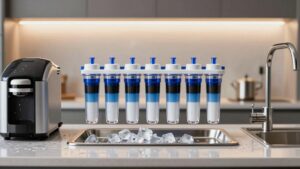
How to Flush a Reverse Osmosis System
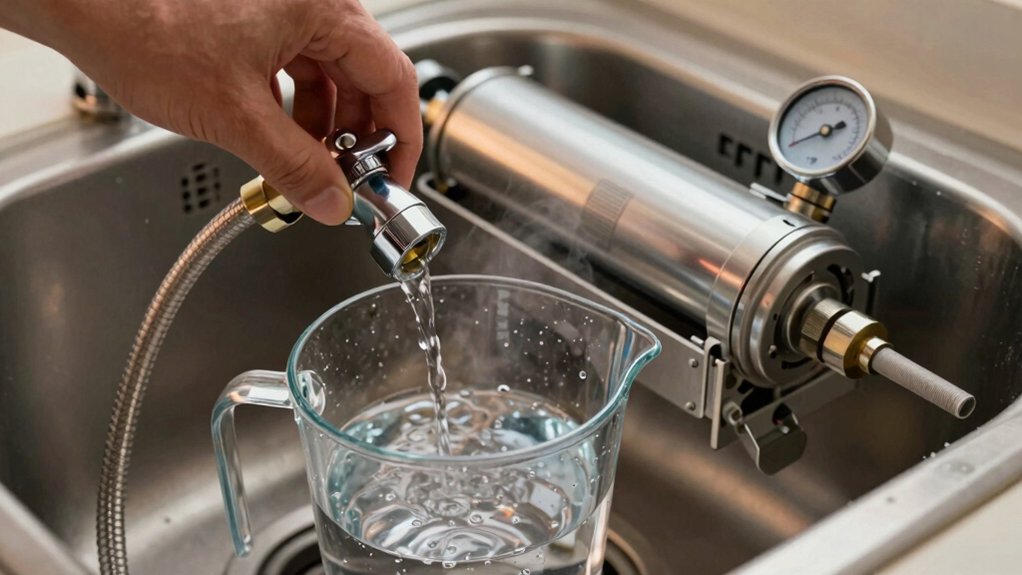
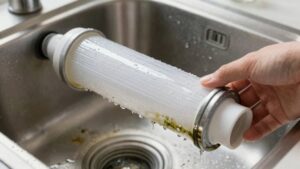
You’ll purge an RO by running controlled flush cycles before and after use: open the flush or bypass valve and run permeate or feed water for a set time or volume to clear surface foulants. Track liters and pressures to match design flux. Choose interval or continuous schedules per system class. Measure stage flows and adjust restrictors to rebalance recovery.
Monitor and limit chlorine exposure with tests and sensors to protect membranes and users. Continue onward to learn procedural details.
Quick Overview
- Run a controlled flush cycle using permeate or feed water long enough to purge surface foulants before and after use.
- Measure and record flush volume and duration to match the system’s designed flux; this will protect membrane life.
- Verify each stage’s flow during flush with timed collection or flow meters. Adjust restrictors or bypasses if needed.
- Monitor free chlorine at feed and product taps. Neutralize if above limits, and stop if readings exceed safety thresholds.
- Wear appropriate PPE. Ventilate during chemical operations; rinse thoroughly. Document flush parameters and any incidents.
Flush Volume & Time
How much water does your RO need to clear the membrane before and after use? You’ll flush enough water to purge surface foulants. Manual or automatic cycles use permeate or feed water to clear membranes; this reduces fouling and corrosion.
Consider non-technical considerations like downtime and user effort. Weigh cost tradeoffs between frequent short flushes versus longer scheduled flushes.
| System Type | Trigger | Typical Flush |
|---|---|---|
| Standard RO | Shutdown | Short automatic purge |
| Optimized | Interval | Permeate flush, longer volume |
| High‑Performance | Continuous/scheduled | Reject flush, higher volume |
| Manual (150 GPD) | Restrictor removed | 30 minute runtime |
Follow pressure guidelines and record volumes. Optimize flush duration to protect membrane life and minimize waste.
‑Stage Membrane Flow Rates
After you establish flush volumes and timing, examine stage membrane flow rates to ensure each element meets design flux and recovery targets. You’ll verify stage flow at each membrane housing during a flush to confirm membrane rates match specifications and that flush volume per stage prevents channeling or fouling.
Use flow meters and timed collection to compare measured L/min against rated membrane rates. Adjust bypasses, restrictors, or flush valves to rebalance stage recovery and maintain target flux.
- Measure influent and permeate flow for each stage during a controlled flush.
- Record flush volume per stage for the duration used in maintenance.
- Compare measured stage flow to membrane rates on datasheets.
- Correct deviations by adjusting restrictors, valves, or replacing degraded elements.
Chlorine Exposure Limits
When flushing membranes, you’ll need to control chlorine to meet established safe exposure limits: short-term peak and chronic averages. Assess short-term risks: respiratory irritation, membrane oxidation, and long-term effects: membrane degradation, potential health impacts.
Account for sensitive populations such as children, pregnant people, and immunocompromised users. Implement routine monitoring with test strips or meters and use neutralization or bypass procedures to maintain concentrations within allowable ranges.
Safe Exposure Limits
Chlorine exposure limits define the maximum concentrations and contact durations you should allow during RO system flushing and chemical cleaning to protect operators and preserve membrane integrity. You’ll set safety thresholds based on manufacturer membrane chlorine tolerance and regulatory occupational limits; record both ppm and maximum contact time.
During preparation, verify chemical strengths with a calibrated test kit and plan dilution steps to stay below thresholds. Implement exposure monitoring: continuous badges or periodic air/water sampling where aerosolization or splashing occurs.
Provide PPE, local exhaust, and eyewash stations; post signage with permitted concentration and action steps. If readings exceed limits, stop the procedure. Flush the system with low-chlorine water, reassess dilution, and only resume once monitoring confirms compliance.
Short-Term Risks
How quickly will exposure cause harm? You’ll experience acute effects from high chlorine concentrations within minutes to hours depending on dose and route. If inhalation or skin contact occurs during flushing, stop work, ventilate the area, and decontaminate exposed skin with water for at least 15 minutes.
For eye exposure, irrigate immediately and seek medical attention. Use personal protective equipment: gloves, goggles, and respirator rated for chlorine during chemical cleaning or when bypassing flow restrictors. Monitor concentrations with a sensor; suspend operations if readings exceed occupational short-term exposure limits.
Don’t treat unrelated symptoms as an irrelevant topic or dismiss signs as off topic. Document incidents, report per protocol, and run a full rinse cycle before returning the system to service.
Long-Term Effects
Why should you care about long-term chlorine exposure? You must control residual chlorine to protect long term stability of the RO membrane.
Establish a monitoring and mitigation routine: measure free chlorine before feed enters the prefilter, verify neutralizer function, and log readings monthly. Maintain chlorine below manufacturer-specified limits (typically polyamide membranes) to reduce membrane aging and performance loss.
If readings exceed limits, isolate the system; flush feed lines, replace depleted carbon or neutralizer media, and retest before resuming service. Integrate these steps into scheduled flushing and chemical cleaning cycles to preserve membrane integrity.
Document actions and membrane flux trends to detect accelerated aging and plan timely membrane replacement.
Sensitive Populations
Controlling residual disinfectants at the feed stage directly affects who can safely use the treated water. Therefore, you should evaluate exposure limits for sensitive populations before resuming service. Measure free chlorine at feed and product taps; maintain levels below 0.2 mg/L for immunocompromised users and infants unless specific guidelines require lower limits.
If measurements exceed thresholds, isolate the feed, purge lines, and perform targeted flushing until readings stabilize. Document each measurement, flush volume, and time to demonstrate compliance and protect user safety. Train operators to recognize signs of over-chlorination and to follow emergency procedures that prioritize providing alternative clean water sources.
Verify residuals with calibrated instruments before returning the system to service to minimize health risks.
Monitoring And Control
When will you know chlorine levels are safe? You’ll monitor residual chlorine before and after flushing using a calibrated DPD test or digital sensor. Record readings: pre-flush, mid-flush (every 5–10 minutes), and post-flush.
If measurements exceed 0.1 ppm for RO membranes, stop use and neutralize with sodium bisulfite; prolonged chlorine exposure accelerates membrane degradation. Inspect membrane integrity after any exceedance, documenting spot checks and element pressure differentials.
Set alarm thresholds on controllers for 0.05 ppm (warning) and 0.1 ppm (shutdown). Calibrate sensors monthly and replace test reagents per manufacturer guidance. Log all actions in maintenance records and follow chemical-cleaning protocols only after confirmed chlorine removal to prevent irreversible membrane degradation.
Frequently Asked Questions
How Often Should I Flush a RODI System Before and After Each Use?
You should flush a RODI system before and after every use. This flush frequency guarantees membrane protection and optimal output. For broader maintenance scheduling, flush drinking-water units every 3–6 months. Additionally, perform chemical cleaning every 7–8 months under normal conditions.
Use manual or external-flow-restrictor flush methods for routine cycles. Reserve chemical or careful physical cleaning for scheduled maintenance to extend membrane lifespan and reduce wastewater.
Can I Manually Flush Using the Black Waste Line Ball Valve?
Yes, you can manually flush using the black waste line ball valve. Use manual flushing to open the waste line and allow full flow; then close when clear. Confirm valve operation and avoid cross connection by keeping waste discharge separate from potable lines.
Isolate feed and monitor outflow until debris clears; then reassemble. Test for leaks and restore normal flow restrictor settings before resuming regular use to protect the membrane.
When Should I Perform Chemical Cleaning Versus Standard Flushing?
Use standard flushing for routine maintenance every 3–6 months. Perform chemical cleaning when cleaning intervals reach 7–8 months, performance drops, or scale/fouling persists despite flushing. You’ll add chemical cleaners to half-fill the cleaning tank, circulate with the pump for short cycles, monitor pH, and keep solution ≤40°C. Then soak and finally rinse.
Limit cleaning solution pressure to 0.35 MPa and log dates and results for tracking.
How Do I Flush a 150 GPD Unit Using the External Flow Restrictor?
You remove the external flow restrictor, run the unit for thirty minutes, then reinstall the restrictor per the maintenance schedule to minimize flushing risk.
Shut off feed water, disconnect the waste line, pull the restrictor, and reassemble the temporary open waste path. Restore feed and run for 30 minutes, then shut off, reconnect the waste line, and reinsert the restrictor.
Verify seals, pressure, and leaks before returning to service.
What Safety Precautions Apply When Handling Membrane Cleaning Chemicals?
You must follow safety labeling and proper chemical storage rules: wear PPE (gloves, goggles, apron). Store chemicals in labeled, ventilated, secondary-contained cabinets and segregate incompatible agents. Read SDS and label instructions before mixing; use spill kits, eye wash, and emergency shower nearby.
Control temperature (≤40°C) and limit pressure during cleaning. Ventilate the work area. Dispose of wastes per regulations and log inventory, exposures, and maintenance actions.
Conclusion
You’ll flush the reverse osmosis system long enough to purge contaminants while keeping membrane stress and chlorine exposure within safe limits. Start by following the membrane’s specified flow-rate and flush-volume guidelines. Monitor chlorine to stay below exposure limits, and limit flush duration to minimize short- and long-term risks.
Pay special attention to sensitive populations. Document volumes and times, and adjust procedures based on measured output quality and manufacturer instructions to ensure safe, effective flushing.