How Often to Replace a Shower Filter Cartridge
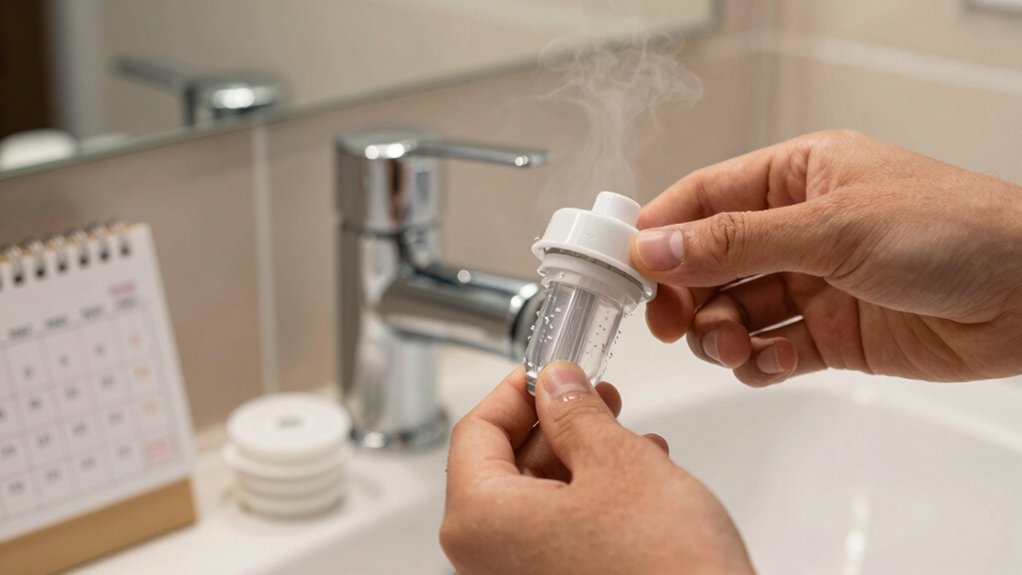
You should plan to replace your shower filter cartridge roughly every 2–6 months under typical household flow and water quality. Low-flow systems with soft, low-sediment water can stretch cartridges to a year or more. High-flow or hard, sediment-rich supplies may need changes every 1–3 months. Finer-micron cartridges trap more but clog faster.
Watch for reduced flow, pressure drops, rising hardness/TDS, or visible buildup. Follow those signs for winter shortening and more detail.
Quick Overview
- Replace cartridges every 3–6 months at typical household flow (2–2.8 GPM) depending on water quality.
- Low-flow systems (≈0.4–0.5 GPM) with soft, low-sediment water can extend cartridges to 1–3 years.
- Smaller micron ratings (1–3 µm) clog faster and need more frequent replacement than 5–10 µm sediment cartridges.
- During winter hardness spikes, shorten intervals to 1–3 months; monitor pressure for clogging.
- Check weekly TDS/hardness or watch for reduced flow/pressure. Replace sooner if readings or performance worsen.
Filter Lifespan by GPM
Across different shower filters, flow rate (GPM) has a direct, measurable effect on cartridge life: lower GPM increases contact time and can extend lifespan to years in low-flow systems. Higher GPM accelerates loading and often limits life to months. You should measure your home GPM and watch signs such as pressure drop and discoloration to judge replacement.
Water quality (hardness, sediment) shortens filter lifespan. Soft, low-sediment feeds can push some units to 1–3 years at 0.4–0.5 GPM, while 2–2.8 GPM often means 3–6 months. Track gallons or install a low-flow head to extend life. Be pragmatic: follow model specs, test water, and replace at first evidence of reduced performance.
| Hope | Reality |
|---|---|
| Long life | Clogged sooner |
| Confidence | Check water quality |
Micron Rating Quick Chart
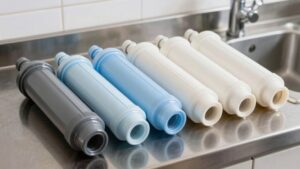
Flow rate affects cartridge life, and micron rating determines what particles your filter actually removes at those flows. Use a quick chart approach: smaller micron ratings capture finer sediment but clog faster at high GPM. Larger ratings pass fine particles but last longer. Match rating to your water: 5–10 µm for sediment control, 1–3 µm for fine particulates and some bacteria reduction, 0.5–1 µm for near-membrane performance (rare in shower use).
Check manufacturer flow specs; exceeding recommended GPM cuts effective life. Replace more often if you run at high pressure or have visible turbidity. A pragmatic quick chart helps you balance clarity, longevity, and skin safety. This way, you’ll replace cartridges neither too soon nor too late.
- Feel informed
- Avoid surprises
- Protect skin
Seasonal Winter Water Hardness Spike
In winter, you’ll often see harder water as cold temperatures and altered treatment flows increase calcium and magnesium concentrations. So, expect faster scale buildup on your cartridge. That scale cuts flow and filter life; monitor mineral load or TDS and watch for pressure drops.
If you notice elevated hardness or slower flow, plan to replace cartridges toward the short end of recommended intervals: often every 2–3 months.
Winter Hardness Causes
Why does water get harder in winter? You’ll see a winter hardness seasonal spike because colder temperatures and treatment changes concentrate dissolved minerals. Utilities often cut back source mixing or conserve reservoir levels in winter; this raises calcium and magnesium concentrations.
Groundwater contribution shifts too: frozen surface layers force more reliance on deeper, mineral-rich aquifers. Chemical treatment adjustments—less coagulation or altered lime softening—also change hardness levels delivered to your home. You can expect measurable increases in hardness units (mg/L as CaCO3) during cold months in many regions.
Practically, monitor local utility reports or test strips monthly in winter. If you detect a clear seasonal spike, plan more frequent cartridge checks and shorter replacement intervals to maintain filter performance.
Scale Buildup Rates
Having seen how colder months and treatment shifts raise hardness, you’ll notice scale forms faster on fixtures and inside filters during winter. You should expect measurable increases in scale buildup rates as solubility and treatment changes concentrate calcium and magnesium.
In practice, that means your filter lifespan shortens: mineral layers coat media faster, reducing active sites and adsorption capacity. Track local utility hardness reports and weigh seasonal patterns against household use. If hardness rises by 20–40% in winter, plan replacements at the shorter end of recommended intervals.
Inspect cartridges monthly for white crust and reduced performance indicators. Replacing proactively when mineral accumulation appears preserves chlorine and sediment removal, prevents irreversible fouling, and avoids emergency changes that risk contaminant release.
Cartridge Flow Reduction
Notice how your shower’s flow drops sharply during winter when hardness spikes: colder water and seasonal treatment changes drive more calcium and magnesium into your feed. Those minerals precipitate on and inside the cartridge, blocking pores and channels. You’ll observe cartridge flow fall even if overall pressure stays constant; that flow reduction signals reduced effective media surface area and rising head loss across the element.
Quantify the change: measure inlet pressure and outlet flow before and during the spike to separate supply issues from fouling. When flow reduction exceeds manufacturer tolerances or your shower output drops noticeably, replace the cartridge. In hard-water months, consider shorter intervals (about 2 months) and more frequent inspections to maintain performance and protect skin and fixtures.
Mineral Load Monitoring
How do you spot a seasonal spike in mineral load before it shortens cartridge life? Watch TDS or hardness test strips weekly during late fall and winter. A consistent rise (even 10–20 ppm or visible hard-water residue) signals higher mineral load. Combine readings with practical checks: faster scale on nozzles, gritty feel on skin, and a measurable drop in flow rate despite clean inlets.
Log results to correlate spikes with reduced filter lifespan. Documented increases let you adjust replacement cadence proactively. Don’t rely on smell or color alone; minerals are odorless and often invisible until they clog. Use portable meters or strips, record dates and shower counts, and treat winter readings as a risk factor for accelerated cartridge exhaustion rather than a final replacement trigger.
Winter Replacement Timing
The weekly TDS and hardness checks you logged for mineral-load monitoring give you an early warning system for winter spikes that can shorten cartridge life. When groundwater or municipal sources concentrate minerals in cold months, you’ll see hardness rise and TDS climb; that signals you should shorten your winter timing for replacements.
Evidence shows hard water can halve filter lifespan; therefore, move from a typical 3 to 6 month schedule to 1 to 3 months if readings jump or you notice pressure loss. Prioritize models rated for high-sediment performance, flush sediment-prone lines, and set reminders tied to seasonal data rather than calendar months.
Pragmatically, treating winter as a distinct maintenance window preserves chlorine and heavy-metal capture and avoids premature clogging.
Frequently Asked Questions
Can I Reuse a Rinsed Cartridge Safely?
No, you shouldn’t rely on a rinsed cartridge; cartridge reuse can pose safety concerns. Rinsing may remove surface debris, but it won’t restore exhausted media or eliminate trapped contaminants and biofilm.
Evidence-based practice is to replace per manufacturer intervals or sooner if performance drops. For pragmatic hygiene, use replacements or subscription services. Occasional rinsing helps inspect for damage, but it doesn’t make a spent cartridge safe or effective again.
Do Replacement Cartridges Expire Unused?
Yes, replacement cartridges can expire unused. You should check certification standards and longevity testing dates. Filter material can degrade or harbor microbes over time.
Factor cartridge compatibility and installation tips when buying. Track maintenance scheduling and replacement frequency against water quality testing. Consider cost considerations and environmental impact if you stockpile spares.
Keep them sealed, stored cool/dry, and use older units first to ensure effective performance.
Are Filter Warranties Void if I DIY Replace?
Usually no; you won’t void warranty implications if you DIY replace cartridges as long as you follow manufacturer instructions and use approved parts. DIY risks arise when you modify the housing, use third-party cartridges the maker forbids, or cause damage during installation.
Keep receipts, follow torque and seal guidelines, and document the process. That evidence supports claims if a warranty dispute over workmanship or premature failure occurs.
Can Shower Filters Remove Bacteria or Viruses?
No, shower filters generally won’t reliably remove bacteria or viruses. You should view them as reducing chlorine, sediments, and some heavy metals. Discussion ideas should focus on adding certified microbiological treatment (UV or NSF-rated barriers) if pathogen removal is needed.
For safety, follow strict filter maintenance, change cartridges per specs, and monitor performance. If contamination is a concern, test water and install appropriate disinfection designed for microbes rather than relying on shower filters alone.
How Do I Dispose of Used Cartridges Environmentally?
You should choose proper disposal options to minimize environmental impact: rinse and dry the cartridge, separate recyclable parts (metal/plastic) if removable, and recycle them through local facilities or manufacturer take-back programs.
For mixed or contaminated cartridges, dispose via household hazardous waste collection. Don’t burn or dump them. Keep records of disposal and use mail-back or subscription services when available to ensure responsible, evidence-based end-of-life handling.
Conclusion
You should replace your shower filter cartridge based on flow, micron rating, and seasonal hardness changes. Track your GPM and note when flow or spray pattern declines. Most cartridges last 3–6 months at typical household flow; they last shorter with higher GPM or finer micron ratings.
Watch winter for temporary hardness spikes that accelerate scale. If you see increased buildup or reduced flow, change the cartridge immediately. Monitor mineral load and set a winter replacement check to prevent performance loss.