How Freezing Affects Camping Water Filters
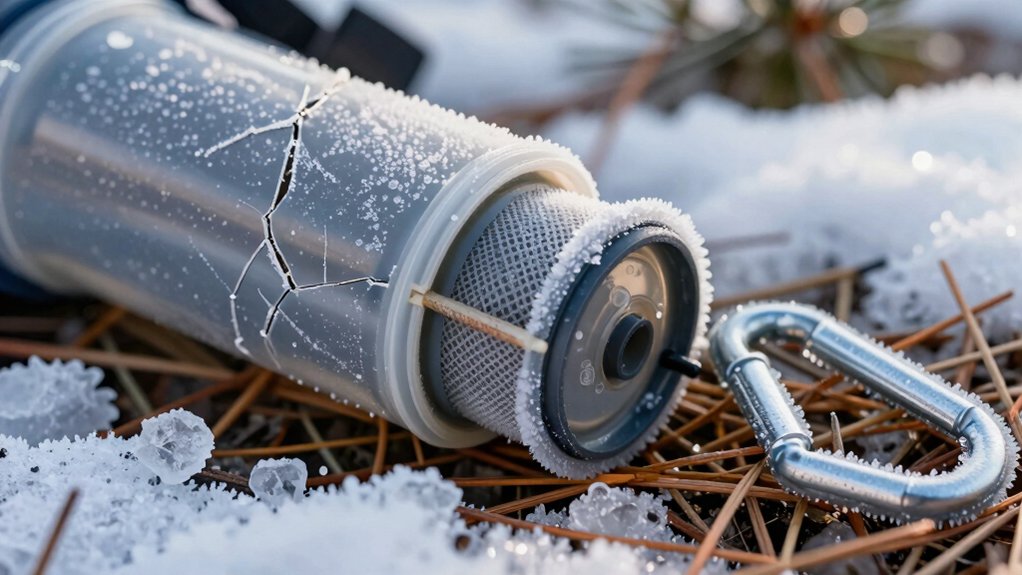
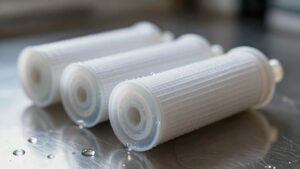
If you expose a camping water filter to freezing (≤32°F/0°C), residual water in pores and housings expands about 9% as ice and can crack fibers, ceramics, carbon beds and membranes. This change alters pore sizes and allows microbial passage. Hollow fibers burst, ceramic pores split, carbon beds crack and RO membranes fracture or delaminate. Therefore, never-wetted or fully drained filters are safer.
After a suspected freeze, you should assume compromise and perform integrity checks or replace the filter. Keep going for practical checks, markings, and field fixes.
Quick Overview
- Water left wet inside a filter freezes at 32°F (0°C), and ice expansion (about 9%) cracks fibers, ceramics, and housings.
- Hollow-fiber and ceramic filters develop micro-cracks when frozen; this enlarges pores and allows microbial passage.
- Carbon and sediment cartridges can split or develop new flow channels, which reduces filtration effectiveness.
- Reverse or incorrect installation traps water pockets that freeze and worsen seal or media damage.
- Dry or never-wetted filters avoid freeze damage. If freezing is suspected, run integrity tests or replace per manufacturer.
Freezing Temp Damage Threshold
How cold does it take to ruin a wet camping filter? You should treat 32°F (0°C) as the universal freezing threshold: wet media ice-expands ~9%, cracking fibers, ceramics, and housings and compromising filter integrity.
| Filter Type | Damage Mechanism |
|---|---|
| Hollow fiber | Ice expansion bursts fibers; microcracks |
| Ceramic | Pores split; element fracture |
| Carbon/sediment | Media cracking; flow/pathway change |
| RO/membrane | Drying/cracking; unfiltered passage |
Below 32°F, residual water in pores creates micro-cracks larger than design pore size. This lets contaminants through. Dry or never-wetted filters avoid that risk. You should drain, store in body warmth, and run manufacturer integrity tests (dye/flow) after any suspected freeze to determine replacement.
Filter Pore Size Chart
After covering freeze thresholds and the ways ice enlarges or damages media, you should consider pore size because it determines what a filter will actually stop after any stress. You’ll review nominal and absolute pore ratings (microns), compare hollow-fiber, ceramic, carbon, and membrane elements, and assess how freeze thaw cycles alter effective diameter. A damaged filter pore can permit bacteria or viruses despite original specs.
- 0.1–0.2 µm: Typically blocks bacteria and protozoa; membranes risk cracking with freeze thaw.
- 0.2–5 µm: Hollow fibers/proprietary ceramics block protozoa. Fiber stretching can enlarge pores.
- >5 µm: Sediment/carbon. Susceptible to micro-cracks that allow microbial passage.
Use post-freeze integrity tests or replace per manufacturer data.
Replacement Flow Direction Markings
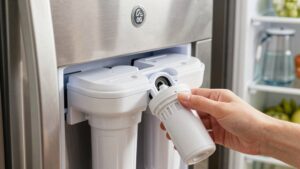
Check the flow arrow orientation on replacements before installation because inline versus cartridge designs require specific flow direction for proper filtration and to avoid bypass or reduced efficacy. Markings can fade or rub off in the field, increasing reverse flow risks that let contaminants pass through compromised or frozen media.
If markings are missing, re-mark direction temporarily with a waterproof marker or tape aligned to housing inlet/outlet to preserve intended flow and integrity.
Flow Arrow Orientation
Why does arrow orientation matter when you replace a filter element? You must align flow arrow orientation with the system’s intended path because reversed flow compromises sealing surfaces, O-ring seating, and element pleat direction.
Replacement flow direction markings indicate media layering and preferential flow channels; installing against those markings can force contaminants into weakened pores created by freeze damage, increasing bypass risk. Tests show misoriented cartridges raise differential pressure and promote channeling; this worsens post-freeze integrity loss.
When you replace elements, verify arrows on both housing and element, torque to spec, and perform a pressure or vacuum check before field use. Consistent orientation preserves designed flow paths, minimizes stress on brittle materials, and reduces the chance of unseen contamination passage after freezing events.
Inline Versus Cartridge
When you swap a cartridge, arrow orientation tells you the intended flow path. With inline assemblies, the markings on housings and tubing add another layer of directionality you must reconcile. You’ll verify inline compatibility by matching arrows on the cartridge, housing, and tubing. Misalignment can force flow against media grain, increasing stress and risk of freeze-induced microfractures.
For cartridge interchangeability, confirm manufacturer-specified flow direction. Some cartridges filter only one way, and others are bidirectional but have reduced performance if reversed. In cold conditions, incorrect installation can trap water pockets that freeze and expand, cracking seals or media. Maintain a checklist: arrow match, thread orientation, and tubing routing.
Document installations and replace any suspect element after freeze exposure per specs.
Marking Durability Concerns
Because markings can abrade, fade, or peel during regular use and freeze-thaw cycles, you should treat flow-direction labels on replacement cartridges and housings as potentially unreliable after cold-weather exposure. Inspect cartridges for physical distortion, micro-cracks, or displaced seals that indicate exposure beyond the manufacturer’s freezing threshold.
If ink or molded arrows are compromised, verify orientation against inlet/outlet geometry, threads, and gasket placement rather than relying on markings. Document any exposed freeze damage; pore integrity can be degraded even if external labels look intact.
In field repairs, mark corrected flow direction with solvent-resistant tape and permanent marker rated for low temperatures. Replace suspect cartridges per manufacturer guidance. Visual confirmation and conservative replacement minimize the risk of compromised filtration performance.
Reverse Flow Risks
Markings that fade or peel increase the chance you’ll install a replacement cartridge backwards, which can let unfiltered water bypass media or force contaminants through compromised seals. You must verify replacement flow direction before use: reverse flow reverses intended pressure gradients, pushing particulates and microbes through damaged media or past one-way seals.
Tests show misaligned cartridges produce measurable bacterial breakthrough even when nominal pore size remains intact. Inspect mating surfaces and alignment tabs; confirm arrow orientation against housing ports. If markings are illegible, perform a bench flow check with clean water and downstream turbidity or dye detection rather than relying on guesswork.
Maintain procedure logs for replacements in cold conditions. Since freeze-induced deformation can make reverse flow failures more likely and harder to detect in the field, it is crucial to be vigilant.
Field Re-Marking Tips
How will you ensure replacement cartridges go in the right way when factory markings have faded? You’ll apply durable, abrasion-resistant marks aligned with flow direction: use a fine-tip indelible paint pen to draw an arrow and “IN/OUT” on plastic housings and cartridge rims.
Test markings after wetting to confirm adhesion; some inks lift when damp. Note field marking quirks: grooves, seams, and textured surfaces hide ink. Scribe shallow reference lines with a screwdriver before inking on stubborn substrates. Protect labels from label wear by overcoating marks with clear nail polish or a thin layer of silicone sealant; these resist freeze-thaw abrasion and UV.
Photograph marked orientation and store the image with your gear list for quick verification in low light.
Frequently Asked Questions
Can You Repair a Frozen Hollow-Fiber Filter Safely?
No, you shouldn’t attempt repair; repair safety is poor for frozen hollow-fiber filters. Ice expansion creates micro-cracks and stretched fibers that aren’t visibly detectable. Restoring structural integrity isn’t reliable. Attempting fixes risks contaminated water passage and false confidence.
Technically, replacement per manufacturer guidance is the safe option. Use validated freeze-resistant models or chemical/UV backups instead. Carry spares and follow drain/store procedures to prevent future damage.
Will Freezing Destroy Chemical Water Treatment Tablets?
No, freezing generally won’t destroy chemical water treatment tablets. They retain efficacy if stored dry.
You’ll want to consider freezing impact on chemical stability: repeated freeze-thaw cycles or moisture exposure can degrade tablets, reducing active concentration. Store tablets sealed in desiccant-packed containers; avoid condensation, and inspect for crumbling or disintegration.
If tablets show physical damage or prolonged moisture exposure, replace them to ensure expected disinfection performance.
How Does Freezing Affect UV Purifier Batteries?
Freezing effects: UV purifier batteries lose capacity and voltage sag; they may fail temporarily in cold. Repeated freeze-thaw cycles can permanently damage cells.
You’ll see reduced run-time and weaker UV output as cold increases internal resistance. Lithium batteries tolerate cold better than alkaline but still suffer.
To mitigate, keep UV purifier batteries warm on your person, use insulating sleeves, store spares in insulated pockets, and avoid exposing batteries to sub-zero temperatures.
Can Freezing Make Filters Taste or Smell Different?
Yes, freezing can cause taste change and odor change. Ice expansion cracks media and housings, releasing trapped organics or exposing altered surfaces that leach compounds and off-gassing volatiles.
Micro-cracks enlarge pores, permitting microbial breakthrough that produces tastes or smells. Cold also slows flow, concentrating residues. You should replace compromised filters per manufacturer guidance; or disinfect and flush thoroughly. Consider alternate purifiers if freeze damage is suspected.
Should I Disinfect a Filter After Thawing?
Yes, you should disinfect after thawing to restore performance and address possible microbial growth. Inspect for cracks, leaks, or media damage. If compromised, replace. If intact, flush with clean water; then apply manufacturer-recommended disinfectant (chlorine, chlorine dioxide, or heat) and run treated water through until safe.
Safety considerations: Document cycles, avoid reuse after multiple freezes per guidance, and retain backups if integrity is uncertain.
Conclusion
You’ve seen that freezing can crack housings, burst seals, and deform pores once water expands. This damage often happens below about 0°C (32°F); however, specifics vary by material and pore size. Check manufacturer specs and pore charts, note flow-arrow orientation, and replace cartridges so arrows match system flow.
Don’t rely on faded markings; re-mark clearly. Avoid reverse flow and reuse after suspected freeze damage. It can let contaminants through and reduce filter life.