Home Water Testing Checklist for New Homeowners
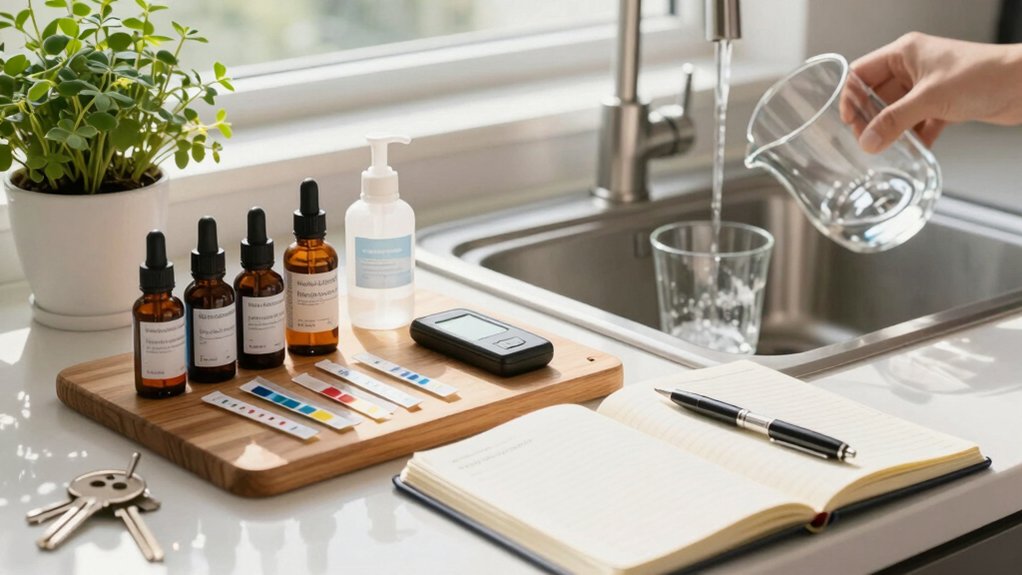
You should test your new home’s water for lead, pH, and alkalinity right away and on a schedule afterward. Use sequential 1‑liter draws with 0.15% nitric acid for lead diagnostics, and include a flush/high‑flow sample to check particulates. Send chain‑of‑custody samples to a certified lab.
Compare results to your local action level and check pH and alkalinity for corrosivity risk. Regular testing frequency depends on plumbing age and treatment changes; more detail follows.
Quick Overview
- Test for lead using sequential first-draw and 1-L samples to detect service-line, plumbing, or particulate sources.
- Check pH and alkalinity to evaluate corrosivity and buffering. Send to a lab if results suggest corrosion.
- Screen for bacteria (coliforms), nitrates, and local contaminants of concern based on well or utility history.
- Use certified labs, chain-of-custody procedures, and EPA-approved methods (e.g., ICP-MS for metals).
- Review local action levels and utility service-line inventories to prioritize remediation and replacement timelines.
Lead/Lag Test Results
How do you know if your home’s lead problem comes from the service line or the internal plumbing? You follow a diagnostic sampling protocol: use sequential (five‑liter) draws and preserve samples with 0.15% nitric acid for EPA Method 200.8 (ICP‑MS). If lead rises steadily across liters then falls, that LSL curve indicates the service line. If elevated only in first draw, suspect internal plumbing. Use flush sampling to assess particulate release at high flow.
| Sample Type | Diagnostic Use |
|---|---|
| Sequential (5×1 L) | Reveals LSL curve vs internal sources |
| Flush / High flow | Detects particulate lead from disturbed scales |
| First draw | Indicates stagnation release from fixtures |
Collect chain‑of‑custody samples; use certified labs; and interpret results for precise lead sourcing.
Local Lead Action Levels
Anyone reviewing local lead action levels should know they vary by jurisdiction and purpose: public water systems follow EPA rules and state adaptations, while local health departments or utilities may set stricter thresholds for customer notification, remediation, or service-line replacement. You’ll compare the federal 15 ppb action level to lower local regulations that trigger testing, alerts, or replacement programs. This is especially important when you’re moving into a new home. Check utility reports and local health guidance; some areas mandate sampling of at-risk taps or prioritize schools and childcare.
Confirm your utility’s action level and any supplemental local regulations. Ask about service-line inventories, replacement timelines, and funding. If levels exceed limits, follow prescribed sampling, remediation, and notification steps.
Corrosivity (pH & Alkalinity)
Check your water’s pH to know how acidic or basic it is. Values below about 7 can increase corrosivity and leach metals from pipes. Measure alkalinity too; since carbonate buffering reduces pH swings and helps protect plumbing and fixtures.
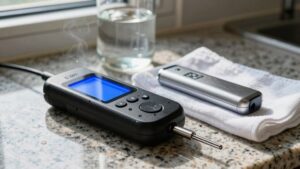
Test pH and alkalinity at least annually or after treatment changes. Use simple colorimetric strips or a handheld digital meter, and send samples to a certified lab if results suggest corrosive conditions.
What pH Measures
Why does pH matter for your home water? pH measures hydrogen ion concentration and tells you if water is acidic, neutral, or basic. That matters because acidic water can corrode pipes and fixtures, increasing lead or copper release. Very basic water can cause scaling and affect taste.
You’ll want a certified lab pH reading rather than a strip when accuracy affects safety or loan requirements. Interpret pH alongside alkalinity: alkalinity buffers pH swings, so low alkalinity means pH can change rapidly and raise corrosion risk. Target ranges depend on source; municipal systems often aim near neutral. If pH is outside recommended limits, treat it (neutralization or correction) and re-test after adjustments and seasonal changes.
Why Alkalinity Matters
How alkaline your water is matters because alkalinity—not the same as pH—acts as the buffer that stabilizes pH and controls corrosivity in your plumbing. You should test alkalinity to assess alkalinity balance, which indicates the water’s capacity to resist pH shifts from treatment, runoff, or disinfection.
If alkalinity’s too low, pH can swing and increase corrosivity. If it’s too high, scaling and treatment inefficiencies can occur. Use certified lab results to guide adjustments: lime, soda ash, or acid feed systems are common corrective options depending on goals.
For practical corrosion control, pair alkalinity data with pH and conductivity readings. This way, you can choose targeted, documented remedies that protect fixtures and water quality.
Effects On Plumbing
Alkalinity sets the stage for how pH behaves, and when pH swings outside the neutral range it directly affects metal corrosion and scale formation in your plumbing. Low alkalinity and low pH make water aggressive; this accelerates corrosion of copper, iron and lead-bearing solder and fixtures. That raises the importance of lead testing if your home has older plumbing.
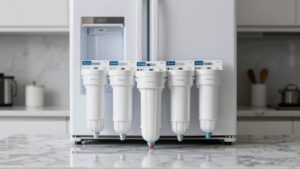
High alkalinity with high pH promotes scale, reducing flow and insulating heat transfer surfaces. You should inspect water heater impacts: scale lowers efficiency and shortens tank life, while corrosive water increases anode consumption and leak risk. Measure pH and alkalinity as part of routine chemistry checks. Address imbalances with neutralizing filters or corrosion inhibitors to protect pipes and appliances.
Testing Frequency Guideline
Because pH and alkalinity directly control water corrosivity, you should test them more often than most other chemistry parameters: at least quarterly for homes with older plumbing, recent plumbing work, or visible signs of corrosion. You should test every 6–12 months for typical systems. You’ll establish a baseline and catch trends before scale or pinhole leaks appear. Use consistent sampling intervals: same tap, time of day, and season to reduce variability and make comparisons meaningful.
If you treat water (neutralizers, softeners, or acid feed), test monthly after adjustments until levels stabilize. Increase testing frequency after repairs, source changes, or if you notice staining, metallic taste, or reduced flow. Document results and act when pH falls below 7.0 or alkalinity drops below recommended ranges for your plumbing materials.
Simple Test Methods
Want to catch corrosive water before it damages pipes and fixtures? You can screen for corrosivity with simple pH and alkalinity checks. Use a calibrated handheld pH meter or reliable test strips. A pH below 7.0 suggests acidity that can leach metals.
Measure alkalinity (as mg/L CaCO3) to see buffering capacity; low alkalinity plus low pH increases corrosion risk. Record results; if acidic, pursue corrective steps like neutralizing filters or blending. Corrosive water raises concerns for lead testing because acidic conditions mobilize lead from plumbing.
Also, monitor water hardness since soft, acidic water can be more corrosive. For private wells or loan-required testing, use certified lab confirmation when initial home tests indicate risk.
Frequently Asked Questions
Do I Need a Certified Lab for Loan-Required Tests?
Yes; you’ll need a certified lab for loan required tests. Lenders (VA, FHA, USDA) mandate certified lab analysis and sometimes third-party sampling to ensure accuracy and chain-of-custody.
Don’t use DIY strips. Order a sterile, lab-approved kit, follow sampling steps, and send raw samples to the lab. Check your lender for specific analytes and reporting formats so results meet their requirements and avoid loan delays.
How Often Should I Test for Seasonal Nitrate Changes?
You should test for seasonal nitrate changes at least every 12 months and additionally after heavy rainfall, spring thaw, or nearby fertilizer application.
Routine water testing twice a year: spring and fall, captures seasonal peaks. More frequent monthly checks are wise if you’re near agriculture or past contamination.
Use certified lab sampling, follow sterile procedures, and compare results to nitrate/nitrite standards to guide treatment or further monitoring.
Can I Sample From My Water Softener Bypass Line?
No, you shouldn’t sample from your water softener bypass line if you need an accurate result. Sampling validity drops because bypass plumbing can harbor biofilm. Bypass line contamination skews bacteria and chemical readings.
For valid results, sample from a cold, direct tap upstream of treatment or follow your lab’s instructions for raw-water samples. Clean the faucet, use sterile bottles, and ship promptly to a certified lab.
What Tests Are Recommended Near Agricultural Land?
You should test for nitrates/nitrites, coliform bacteria, pesticides, and pesticide runoff indicators. You should also test for heavy metals (arsenic, lead) and sulfate. Include total dissolved solids, pH, and hardness to assess soil contamination influence. Additionally, test for gross alpha radiation if local geology warrants.
Use certified lab kits and follow sterile sampling steps. Retest seasonally or after heavy rains. Document results for lenders or remediation decisions.
Are DIY Test Kits Acceptable for Property Transfers?
No, you shouldn’t rely on DIY testing alone for property transfers. DIY testing gives quick screening for bacteria, pH, or nitrates. However, lenders and regulations usually require lab certification.
Use DIY testing only for preliminary checks. Follow up with a certified lab for official results and chain-of-custody sampling. For loans or legal transfers, order a certified lab kit, follow sampling procedures exactly, and submit samples to ensure compliance.
Conclusion
As a new homeowner, use lead/lag results and local action levels to prioritize fixes. Monitor pH and alkalinity to spot corrosivity that harms pipes and raises metal levels. Regular testing after plumbing changes, seasonal shifts, or annually lets you act on evidence: adjust pH, add corrosion control, or replace fixtures.
Rely on certified labs for metals and confirm simple at-home tests only flag concerns. Take practical, timely steps to protect health and your plumbing.