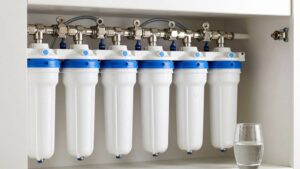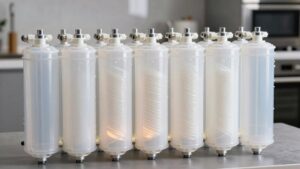
Gravity Water Filter Element Sizes and Compatibility Reference
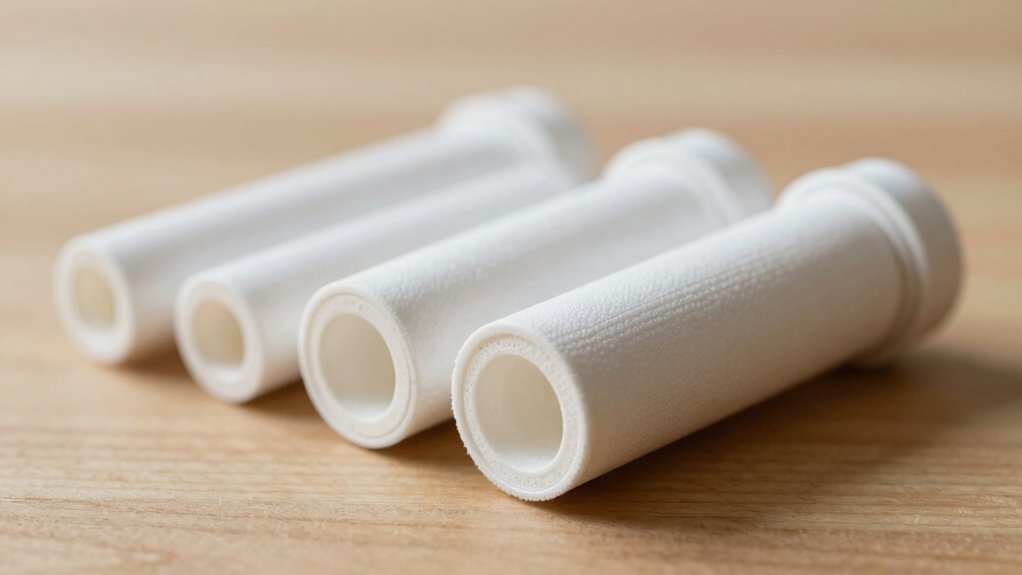
You’ll match gravity filter elements by diameter, thread, micron rating, and O‑ring specs to ensure flow and a reliable seal.
Small portable elements use ~28 mm (1.1″) or 2.50″ OD. Larger backpack systems center on ~6″ with 28 mm necks. Industrial units scale to feet.
Choose micron size for target contaminants vs flow. Carry AS568 O‑ring sizes and nitrile/Viton spares. Measure ID and cross‑section with a caliper, and store seals cool. Keep going to see practical selection and replacement steps.
Quick Overview
- Common portable elements use 28 mm (≈1.1″) threaded necks or 2.50″ OD cartridges for direct replacement compatibility.
- Larger backpacking gravity filters often use ~6″ diameter elements with a 28 mm threaded interface for higher flow.
- Choose micron rating to match contaminants: smaller microns remove bacteria/microplastics; larger microns increase flow.
- Verify O-ring size/material (AS568-214, -115, -010 or metric equivalents) and groove tolerances for proper sealing.
- Store and replace O-rings by exact ID/CS/material. Target 15–30% compression, and use NSF-approved lubricant sparingly.
Filter Diameter & Thread Types
How wide should your gravity filter element be depends on the application: small portable systems typically use ~28mm (about 1.1″) or 2.50″ OD standardized elements for direct bottle/bladder and countertop fitments. Larger portable/backpacking filters center on ~6″ diameters with 28mm threaded necks for compatibility with squeeze-bags and drinkware. You select diameter based on system interface and flow needs; follow diameter standards to ensure filter compatibility across housings and accessories.
For municipal or industrial use, diameters scale much larger and follow design constraints for even media distribution.
| Diameter | Typical Use |
|---|---|
| 28mm / 1.1″ | Bottle/bladder fitment |
| 2.50″ OD | Countertop/standard elements |
| ~6″ | Backpacking gravity filters |
| 1–15 ft | Industrial/municipal units |
Micron Ratings & Flowrates
Why does micron rating matter? You need to match micron ratings to target contaminants: smaller microns remove bacteria and microplastics; larger microns speed flowrates. Check filter diameter and dimensions. Narrower elements often reduce throughput.
Thread types and sizes affect element selection and sealing. Confirm compatible o ring and common o ring sizes before swapping elements. Consider material compatibility for chemical exposure and storage care to preserve membrane life.
Relief when you get clean, fast water. Frustration avoided by right-sizing elements. Confidence from simple measuring and maintenance.
Tips: Measure o ring and use a replacement seal that fits threads. Monitor specified flowrates (e.g., 4.2 gph) and plan element pairs for desired performance.
Compatible O-Ring Dimensions
You’ll need the right O‑ring sizes and materials to keep seals leak‑free across different filter elements. We’ll list common inch and metric dimensions and how to measure ID, OD, and cross‑section. You’ll also get a material compatibility guide (EPDM, Buna‑N, silicone, Viton) with replacement tips and storage/care practices to prevent hardening or swelling.
Follow the measuring and selection steps below to match replacements precisely and extend element life.
Common O‑Ring Sizes
Wondering which O‑ring sizes fit your gravity filter elements? You’ll most often encounter three standard sizes: AS568-214 (2.24 x 3.53 mm cross‑section, ID 14.0 mm), AS568-115 (1.78 x 3.53 mm, ID 7.62 mm), and AS568-010 (1.78 x 2.62 mm, ID 2.62 mm) used on caps, housings, and spigot assemblies. These common o ring references simplify replacement and inventory.
For compatibility seals, match inner diameter and cross‑section to the groove tolerances specified by the element or housing manufacturer. Metric equivalents (e.g., 7 mm, 14 mm IDs) appear on some systems; measure the groove rather than guessing. Keep spare kits with multiple sizes and nitrile/Viton options for field service, and inspect O‑rings for cuts, flattening, or hardening before reuse.
Material Compatibility Guide
Which O‑ring materials suit different gravity filter environments depends on chemical exposure, temperature, and required service life. You’ll select elastomers by matching media and operating conditions: EPDM resists hot water, chlorine, and many acids. NBR (nitrile) handles oils and standard cold-water applications. FKM/Viton covers high temperatures and aggressive chemicals. Silicone suits cold flexibility but has poor fuel resistance. PTFE offers widest chemical compatibility but needs backing for sealing.
For material compatibility, verify with your filtration branding spec sheet; manufacturers often list approved compounds and service intervals. You should also consider durometer, surface finish, and compression set. Use manufacturer-recommended parts to preserve warranty, cross-reference part numbers, and replace O‑rings during element swaps or annual maintenance.
Measuring O‑Ring Dimensions
Now that you know how elastomer selection affects performance and warranty, measure O‑rings precisely so replacements match both material and size. Use a caliper to record inner diameter (ID), cross‑section (CS) and, if applicable, outer diameter (OD). Note tolerances to ±0.1 mm for critical seals. Record material code (EPDM, NBR, FKM) alongside dimensions to ensure O-ring compatibility with chlorinated or hot water and filter media.
Inspect grooves and mating surfaces. Measure groove width and depth to confirm proper compression and squeeze. Photograph orientation and note whether the seal is face, radial, or axial. Store measurements with the element model number to simplify future seal replacement and procurement.
Replacement Seal Tips
How should you pick replacement O‑rings for gravity filter elements to ensure a reliable seal and long service life? Use exact O ring dimensions from the original gasket: cross‑section (width), inner diameter, and material hardness (shore). Match replacement seal material to water contact needs: EPDM for chlorine resistance, silicone for low‑temperature flexibility, and Buna‑N for oil exposure.
Measure inner diameter on the filter housing bore and add cross‑section to get outer diameter; verify tolerances ±0.1 mm. Buy AS568 or metric equivalents when available to ensure consistent sizing. Inspect groove depth and choose a cord or molded O‑ring that compresses 15–30% for static seals. Keep spares of common sizes for your Phoenix, Berkey, and ProOne-compatible elements.
Storage And Care
Where should you keep spare O‑rings and prepared filter elements to maximize lifespan and readiness? Store them in a cool, dry, dark place away from UV and chemicals. Use labeled, airtight containers or zip bags with desiccant to control humidity.
For storage maintenance, keep O‑rings flat and not stretched. Avoid contact with solvents or petroleum-based products that degrade elastomers. Rotate prepared elements on a first-in, first-out basis and record dates.
For care routines, rinse elements with clean water before first use and after long storage. Inspect for cracks, compression set, or biofilm. Lubricate O‑rings sparingly with NSF‑approved silicone grease when assembling to ensure proper seal. Follow manufacturer temperature limits and discard any component showing physical or odour changes.
Frequently Asked Questions
Can I Mix Filter Brands in the Same Gravity System?
Yes, you can often mix filter brands in gravity filtration, but check filter brands compatibility first. You’ll want matching element sizes, flow rates, and seal types to avoid leaks or reduced performance.
Confirm manufacturer cross-compatibility and certifications (NSF/NABL) for intended contaminants. Staggered lifespans and different pore ratings can change flow and removal efficiency; therefore, monitor output, replace elements per specs, and perform periodic water quality checks.
How Often Should I Sanitize the Filter Housings?
You should sanitize the housings every 3–6 months. Increase sanitization frequency after heavy use, contamination events, or long storage. For housing maintenance, disassemble and scrub with a mild bleach solution (50–200 ppm free chlorine). Rinse thoroughly and air-dry before reassembly.
Inspect gaskets and threads each cycle, and replace worn parts. Keep a log of sanitization frequency and system use to adjust intervals based on water quality and deployment conditions.
Do Replacement Filters Come With Mounting Hardware?
Usually no; replacement filters rarely include mounting hardware. You’ll get the filter element only, so check replacement size compatibility before ordering to ensure proper fit with your housing or system.
Manufacturers sometimes sell kits that bundle brackets, gaskets, or screws separately. If you need mounting hardware inclusion, buy a replacement kit or contact the vendor for compatible parts. Verify dimensions and thread types to avoid installation issues.
Are There Travel-Friendly Compact Filter Element Options?
Yes, you’ll find travel friendly, compact options like 7-inch ProOne G3.0 elements and British Berkefeld 7-inch cartridges that pack light and fit small housings.
Check compatibility considerations: thread type, diameter, and system brand (Berkey/Phoenix/ProOne) before buying. LifeStraw Peak and small gravity bags offer ultra-compact membrane solutions too.
However, confirm flow rate, micron rating, and replacement availability so your compact filter meets performance and fit requirements on the road.
Can I Store Unused Filters Long-Term Without Degrading?
Yes, you can store unused filters long term if you follow best practices. Keep unused filters sealed in original packaging, dry, cool (15–25°C), and away from UV/light and chemicals. Label purchase and expected replacement dates; rotate stock FIFO.
Don’t freeze ceramic elements. Avoid compressed storage that deforms housings. Periodically inspect seals before use. This advice is technical, practical, and irrelevant to other topics.
Conclusion
You now know how to match gravity filter diameters, thread types, micron ratings, flow characteristics, and compatible O‑ring dimensions so replacements seal reliably.
Measure inner and outer diameters and cross‑section. Choose materials (EPDM, silicone, Buna‑N, Viton) based on chemical and temperature exposure. Confirm micron and flow tradeoffs.
Keep spare seals; clean and lubricate with approved grease. Store parts dry and protected. Replace worn O‑rings promptly to maintain performance and prevent leaks.