Food Grade Tubing for Drinking Water Explained
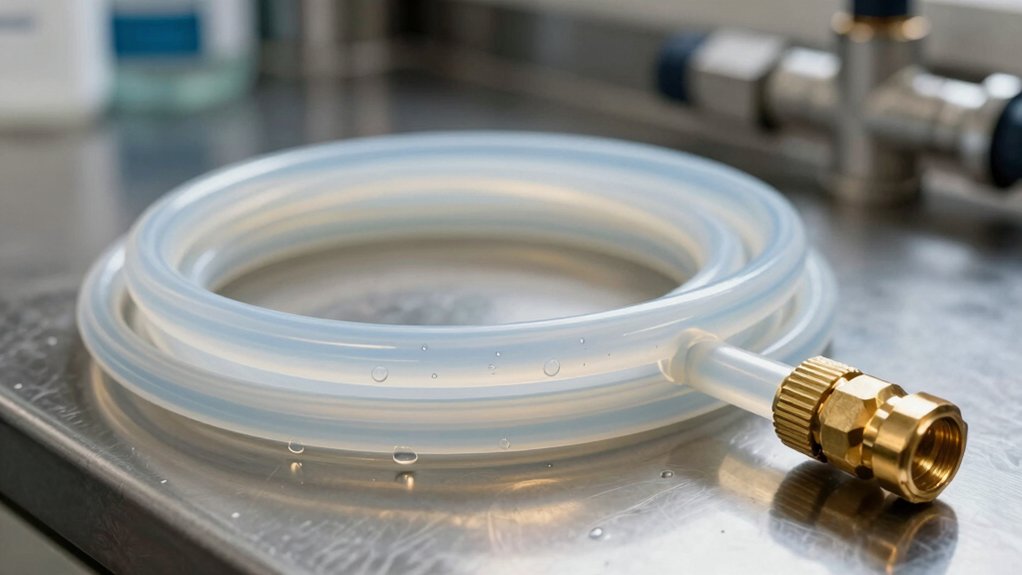
Choose FDA- and NSF‑61‑compliant silicone tubing for drinking water. Avoid standard PVC unless it’s explicitly labeled potable. Match inner diameter to your flow and viscosity needs (1/4″–2″ typical). Verify manufacturer data sheets for maximum continuous and allowable intermittent temperatures. Confirm extractables, metals testing, lot traceability, and corrective action procedures.
Account for temperature effects on flexibility. Derate working pressure with a 10–30% safety margin. Continue for detailed checks and specs.
Quick Overview
- Use FDA-compliant silicone or tubing certified for potable water (NSF/ANSI 61) for any drinking-water contact.
- Avoid PVC for potable lines unless explicitly rated for drinking water; reserve unapproved PVC for non-potable reuse lines.
- Match tubing diameter to required flow and viscosity. Common household branches are 1/2″–2″; convert inches to mm as needed.
- Verify temperature ratings, intermittent limits, and derating. Apply a 10–30% safety margin for peak temperatures.
- Confirm certification details, extractables/metals test reports, lot traceability, and supplier corrective-action documentation.
PVC vs. Silicone Diameter Chart
How do you choose the right diameter when switching between PVC and silicone tubing for drinking water systems? You’ll match flow requirements and compliance. PVC isn’t FDA-approved for potable contact; you’ll reserve PVC for non-potable field reuse lines and use silicone where drinking water, FDA compliance, and USP-Class VI concerns apply. Use color coding to distinguish permitted uses and avoid cross-connection.
| Imperial (inch) | Metric (mm) |
|---|---|
| 1/4″ | 6.35 |
| 3/8″ | 9.525 |
| 1/2″ | 12.7 |
| 3/4″ | 19.05 |
Select diameter by viscosity and flow rate. For household branches, consider 1/2″–2″. Prioritize silicone for long-term pressure, temperature, and contamination-control requirements.
NSF-61 Certification Checklist
Because NSF/ANSI 61 governs materials that contact potable water, you’ll need a clear checklist to verify that tubing, fittings, and any component parts meet the standard’s material, leachate, and structural requirements. Start by confirming product certification numbers, scope (potable water), and the certifying body. Then review test reports for extractables, metals, and organic compounds. You’ll inspect lab reports for water purity impacts and verify phthalate/BPA absence.
Additionally, confirm manufacturing QC, lot traceability, and corrective action procedures that protect consumer safety.
- Certification number, scope, and certifying body
- Extractables/metal/organic compound test reports
- Manufacturing QC, cleaning, packaging records
- Traceability, recall and corrective action documentation
Max Operating Temperature Ratings
You’ll need to verify both the maximum continuous temperature and the allowable intermittent temperature limits for any tubing specified for drinking water. Check manufacturer material temperature ratings and cross-reference those limits with the chemicals present, since temperature can accelerate leaching or degradation and alter chemical compatibility.
Also confirm how elevated or low temperatures affect flexibility and working pressure. This ensures the tubing retains performance and compliance in your application.
Maximum Continuous Temperature
Maximum continuous temperature, often listed as the Max Operating Temperature, defines the highest temperature at which tubing can safely convey fluids continuously without degrading mechanical properties, leaching chemicals, or failing certification limits. You should use this rating to match material selection with process temperatures and sanitization cycles.
You’ll rely on this value to confirm temperature stability and chemical compatibility under continuous duty. Select materials whose Max Operating Temperature aligns with your worst-case operating and cleaning conditions to preserve NSF/ANSI 61, NSF/ANSI 51, and FDA compliance. Documented ratings must be verified by manufacturer data sheets and third-party test reports.
Exceeding the rating accelerates aging, increases leachables risk, and can void certifications and warranties; don’t assume short tolerances.
Intermittent Temperature Limits
How hot can you safely expose tubing for short cycles without compromising its properties? You must assess intermittent limits as distinct from continuous ratings: short-duration exposures raise allowable peak temperatures but still require validated material performance.
Specify time-at-temperature, cycle frequency, and acceptable degradation endpoints (tensile loss, hardness change, extractables increase). Use manufacturer test data and relevant certifications (NSF/ANSI 61, NSF/ANSI 51, FDA 21 CFR 177.2600, USP Class VI) to confirm compliance under intermittent stress.
Document test protocols (ramp rates, dwell time, recovery) and apply safety factors used for working pressure and thermal aging. Record inspection intervals and replacement triggers.
In procurement, require written intermittent limits and evidence they won’t produce unacceptable leachables or compromise potable-water suitability.
Material Temperature Ratings
Why does a tubing’s listed temperature limit matter for your system’s safety and compliance? You must adhere to the maximum operating temperature to ensure material integrity, maintain temperature stability, and satisfy NSF/ANSI and FDA requirements. Exceeding that limit degrades mechanical strength, accelerates aging, and can compromise chemical resistance. This increases leachables and microbial risk.
Specify tubing with a max operating temperature aligned to your process peak plus safety margin; document test data and certifications (NSF/ANSI 61, USP Class VI, or FDA as applicable). For high-temperature applications, choose silicone or specified polymers with validated thermal performance.
Define maintenance intervals based on thermal cycling history. Require suppliers to provide extractables testing at the stated maximum temperature.
Temperature And Chemical Compatibility
Having established the importance of matching tubing temperature limits to your process, now consider how chemical exposure interacts with those limits to affect material performance and compliance. You must evaluate maximum operating temperature ratings alongside chemical compatibility charts; elevated heat can accelerate degradation, reduce temperature stability, and increase leachables.
Assess tubing for chemical inertness to common sanitizers, disinfectants, and treatment additives. Materials that meet NSF/ANSI 61 and USP Class VI often provide validated resistance at rated temperatures. Use manufacturer data to verify continuous and short-term peak temperatures under chemical load. If exposure approaches limits, specify higher-rated materials (e.g., silicone or specific high-purity polymers), implement monitoring, and document test evidence to satisfy regulatory and safety audits.
Temperature Effects On Flexibility
What happens to tubing flexibility as you approach its maximum operating temperature? You’ll see materials soften, reducing hoop strength and increasing axial elongation. Silicone retains flexibility almost to its max-rated temperature, while polyethylene and PVC stiffen or creep sooner.
Design against loss of mechanical performance by using tubing rated above your service temperature and verifying NSF/ANSI 61 or FDA compliance. Assess color retention at elevated temperatures: discoloration can indicate polymer degradation, and monitor for color migration into the fluid, which signals potential additive leaching. Test working pressure and flexibility across the expected temperature range, document results, and specify maximum operating temperature in procurement and validation records.
Maintain traceable certifications and supplier declarations to ensure continued suitability for drinking water use.
Safety Margins And Derating
How closely do you want your tubing to approach its published maximum operating temperature? You should apply a derating factor so operating temperature stays below the material’s tested limit; this preserves mechanical integrity and chemical inertness. Specify a safety margin (commonly 10–30%) in procurement and validate with manufacturer data as well as NSF/ANSI or USP Class VI reports.
Document safe handling procedures for elevated-temperature installs, including thermal expansion allowance, pressure derating, and inspection intervals. Address regulatory gaps by requiring supplier test certificates and retention of test data where standards don’t prescribe margins. Implement temperature monitoring, periodic burst testing, and replacement triggers in SOPs.
Use conservative margins for critical potable systems to maintain compliance and protect water quality.
Frequently Asked Questions
Can Tubing Leach Chemicals Over Long-Term Storage in Warm Conditions?
Yes. You’ll find tubing can leach chemicals during long term storage in warm conditions if materials aren’t certified or if plasticizers, BPA or phthalates are present.
You should specify NSF/ANSI 61/51, USP Class VI or FDA 21 CFR 177.2600 compliance. Verify phthalate-free high‑purity formulations and require extractables testing in saline, alcohol and oil. Controlled storage temperatures and certified materials minimize leaching risk and maintain compliance.
How Often Should Tubing Be Replaced in Residential Water Systems?
You should inspect tubing annually and follow a replacement schedule of 3–7 years for flexible polymers, 10–20 years for hard plastics or copper. Adjust based on material compatibility, system pressure, and temperature exposure.
Replace sooner if you detect discoloration, odors, leaks, or loss of flexibility. Document certifications and testing history; prioritize NSF/ANSI 61 and FDA-compliant materials. Perform proactive replacements when material compatibility with chemicals or treatments is uncertain.
Can Tubing Be Disinfected With Household Bleach Safely?
Yes, you can disinfect tubing with household bleach if you follow proper disinfection methods and bleach safety protocols. You will flush lines, apply a measured 50–200 ppm sodium hypochlorite solution depending on system volume, and hold contact for 30–60 minutes. Then, thoroughly rinse until chlorine is undetectable.
Ensure materials are NSF/ANSI 61-compatible and rinse with potable water. Document concentrations, contact time, and verification testing for compliance and safety.
Are There Color Options That Affect Safety or Compliance?
No, color options generally don’t affect safety impact if the tubing carries proper certifications. You should choose tubing based on NSF/ANSI 61, NSF/ANSI 51, USP Class VI or FDA compliance rather than color.
Manufacturers may use color coding for identification; however, verify masterbatch additives are phthalate‑free and tested for leachables. Always confirm the colored tubing’s certifications, extractables testing, and stated temperature/pressure ratings before approving it for potable or food contact use.
Is Flexible Tubing Compatible With UV Water Purification Systems?
Yes, flexible tubing can be UV compatible if it’s specified and certified for UV exposure. You’ll want tubing with proven UV compatibility, low photodegradation, and NSF/ANSI 61 compliance to avoid leaching under UV irradiation.
Inspect manufacturer data for UV resistance, material (e.g., silicone or specially formulated PVC/polyethylene), temperature and pressure ratings, and test reports. Replace tubing per service-life guidance to maintain system integrity and regulatory compliance.
Conclusion
You’ve seen how material choice, certifications, and temperature ratings directly affect drinking-water tubing performance and compliance. Choose NSF-61 certified tubing sized per the PVC vs. silicone diameter chart. Verify maximum continuous and intermittent temperature limits, and match chemical compatibility to your service fluids.
Factor temperature effects on flexibility and apply safety margins or derating for sustained use. Document specs and test records so installations meet regulatory standards and maintain potable-water safety throughout the tubing’s service life.