Common Faucet Adapter Types for Filters
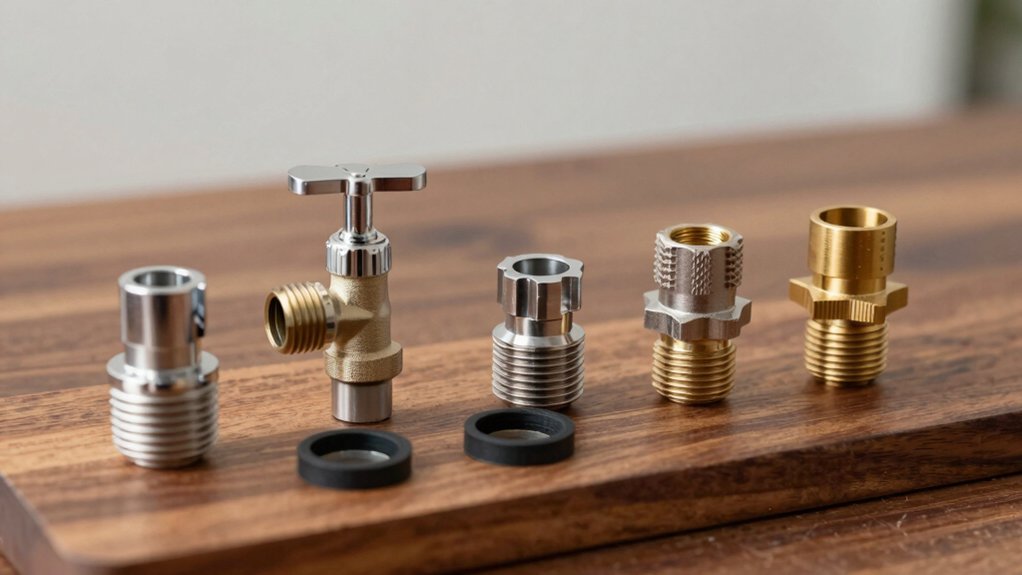
You’ll typically use male or female aerator adapters in common sizes (15/16″-27, 55/64″-27, 3/4″-24 and junior 3/4″), plus specialty hose or quick‑connect converters for filters. Measure thread diameter and pitch. Note male vs female, and pick matching gasket thickness (thin flat for fine threads, O‑ring for larger bores).
Use hand-starting and light torque with a cloth to avoid cross‑threading. Check for flow restrictors or inserts that affect depth and sealing; more specifics follow.
Quick Overview
- Standard male (15/16″-27 / M24) and female (55/64″-27 / M22) thread adapters fit most US faucets for countertop filter connection.
- Junior adapters (3/4″-24 / M20) and specialty sizes accommodate smaller or European-style faucet threads.
- Push-fit and snap-on universal adapters use rubber gaskets to seal irregular spouts without matching threads.
- Thread-reducing adapters and coupling nipples let you step up or down between mismatched aerator sizes and filter fittings.
- Flexible hose or quick-connect adapters convert aerator threads to 1/4″ or 3/8″ push-fit lines for under-sink and inline filters.
Faucet Thread Sizes Chart
Wondering which thread size your faucet uses? You’ll match common sizes (M24/15/16″ and M22/55/64″) to adapters so filters fit reliably. Measure thread diameter and note male vs female threads. This prevents aerator warranty issues from incorrect swaps and reduces sealant use.
| Size | Common Reference |
|---|---|
| 15/16″ (M24) | Regular / Quarter USD |
| 55/64″ (M22) | Junior / Nickel USD |
| 3/4″ (M20) | Alternate Junior |
Use the chart to pick male or female adapters. Avoid unnecessary pipe sealants on factory threads: hand-tight plus minor snugging is standard. If threads differ, choose an adapter one size up or down. Extensions work when depth prevents engagement.
Installation Torque & Gasket Sizes
After you identify the correct thread size, pay careful attention to installation torque and gasket selection to avoid leaks or thread damage. You’ll feel the difference between a snug seal and one that’s overstressed.
Use a torque-limited approach: hand-tighten, then apply a quarter-turn with pliers wrapped in cloth. Match gasket sizes to threads and seating surfaces; thin flat gaskets suit fine threads, and thicker O-rings fit larger bores.
Visualize a flat gasket compressed evenly around the aerator seat. Picture an O-ring seated in a groove resisting axial movement. Imagine a tapered washer aligning with conical faucet spouts. Consider a backup washer preventing extrusion under high torque.
Measure gasket sizes precisely and control installation torque to prevent leaks and damaged threads.
Aerator Insert Compatibility
Check the aerator thread size and whether your faucet uses a male or female insert before selecting an adapter, since mismatched threads will leak or won’t seat.
Inspect for a flow restrictor or plastic insert and measure aerator depth and thread engagement. This ensures the adapter material (brass, chrome-plated, or plastic) will compress gaskets properly and resist corrosion.
Use precise measurements with calipers and note material compatibility to ensure a reliable, low-leak connection.
Aerator Thread Sizes
How do you know which aerator insert will fit your faucet? Measure thread diameter and pitch against standard aerator thread sizes (common US sizes: 15/16″-27, 55/64″-27, 13/16″-27, 3/4″-24). Use calipers and a thread gauge for precise matching. Note whether the insert is straight or tapered.
Select inserts labeled for conversion to 1/4″ or 3/8″ hose fittings when linking to RO/RODI lines. During installation, hand-start threads to avoid cross-threading; apply recommended installation torque, which is usually light, and final snug with cloth-wrapped pliers to protect plating and seat washers.
Verify seal with a pressure test and check for leaks. Keep spare washers and alternate insert sizes for field adjustments.
Male Versus Female
Which aerator type does your faucet use — male or female — and why does it matter? You’ll identify whether threads sit on the spout exterior (male) or inside the spout (female) before choosing an adapter. This male vs female discussion determines whether you need a male-threaded insert or a female-threaded adapter to mate cleanly without leaks.
Measure the thread profile and nominal diameter to resolve thread size vs compatibility discussion: regular (15/16″ male / 55/64″ female), junior (13/16″ male / 3/4″ female), or Tom Thumb®. Match thread pitch and outer/inner diameters. Mismatched sizes won’t seal and can damage threads.
Install by hand-tightening. Inspect for leaks, and use cloth-wrapped pliers only if necessary to avoid cosmetic or thread damage.
Flow Restrictor Presence
Ever noticed a tiny plastic piece inside your aerator that seems to limit flow? You’re looking at a flow restrictor or aerator insert that controls maximum outlet velocity and conserves water. When fitting faucet adapters for filters, confirm whether the aerator insert is removable; many adapters require removal to maintain required inlet pressure for cartridge or RO systems. If the restrictor stays in place, you may see reduced performance, increased backpressure, or longer fill times.
Use a small screwdriver or needle-nose pliers to extract typical plastic inserts, noting orientation for reinstallation. After adapter installation, test flow rate and check for turbulence or leaks that indicate improper seating. Document removed parts so you can restore original flow restrictor for code or conservation compliance.
Adapter Material Types
After removing or inspecting any flow restrictor, you’ll need to consider the adapter material because it governs compatibility with different aerator inserts and affects sealing, wear, and potential corrosion. You’ll evaluate metals (brass, stainless steel), plated alloys, and engineering plastics for mechanical strength, thread tolerance, and chemical resistance.
Brass offers durable threads and good mating to standard aerator inserts; stainless resists corrosion where chlorinated or acidic water is present. Plated alloys can mask base-metal corrosion but may flake, causing compatibility concerns with fine insert threads and seals.
Plastics (ABS, nylon) minimize galvanic reaction and are dimensionally forgiving but can deform under torque, impacting seal integrity. Choose adapter material by matching expected exposure, insert type, and sealing method to avoid leaks and premature failure.
Measuring Aerator Depth
How deep is your faucet’s aerator pocket, and why does that measurement matter for insert compatibility? You need to measure aerator depth to confirm the filter adapter or aerator insert will seat and seal correctly.
Use a caliper or a rigid probe with a ruler: insert until it contacts the internal shoulder, mark the probe, and read depth to the nearest millimeter. Record multiple readings if the pocket tapers. Compare the measured depth to adapter specifications; shallow pockets can prevent full engagement, while overly deep pockets may hide threads and interfere with washer placement.
For consistent installations, document aerator depth alongside thread size. Accurate measuring depth reduces leaks, prevents cross-threading, and ensures the chosen adapter functions as intended.
Frequently Asked Questions
Can Adapters Damage Plated Faucet Finishes Over Time?
Yes, adapters can damage plated finishes over time if they’re improperly fitted or over-tightened. You should prioritize installation compatibility and use the correct size. Hand-tighten to avoid thread gouging.
Wrap jaws with cloth when using pliers, and check for leaks and minor movement regularly. Replace worn seals. Proper leak prevention and routine inspection will minimize abrasion, corrosion, and finish wear while maintaining reliable adapter performance.
Are Adapters Compatible With Pull-Out Sprayer Faucets?
No, adapters compatibility is limited: you won’t reliably fit adapters to pull-out sprayer faucets. Sprayer fitting issues arise because pull-out/pull-down spouts use integrated hoses and nonstandard aerators. This prevents secure threads or causes leaks and hose interference.
You’ll need either the manufacturer’s specific adapter or install a dedicated faucet/feed or under-sink adapter. Test fittings carefully and avoid forcing threads to prevent damage and ensure proper filtration function.
Do Adapters Affect Water Flow Rate Noticeably?
Yes, adapters can reduce faucet flow noticeably if they add restrictions or mismatch adapter compatibility. You’ll see reduced flow when adapters narrow the outlet, include internal valves, or when filtration systems impose backpressure.
Measure flow before and after installation. Choose correctly sized threads and low-restriction adapters. Verify compatible fittings to minimize loss. Proper installation and selecting larger-bore or air-gap compatible adapters preserves flow while maintaining system safety and performance.
Can I Leave an Adapter Permanently Installed?
You can leave an adapter permanently installed if it meets installation permanence needs and local plumbing codes. However, evaluate finish compatibility to avoid corrosion or cosmetic mismatch. Pick brass or stainless adapters for long-term durability. Thread-seal appropriately and hand-tighten to prevent damage.
Check for leaks periodically and replace worn washers. Avoid adapters on pull-out or spray faucets, as movement stresses fittings or damages finishes over time.
Are Replacement Gaskets Included With Adapters?
Usually you’ll get replacement gaskets with many adapters, but not always. Check product listings. You’ll want spares because compatibility concerns (thread size, seat shape, material hardness) often dictate gasket performance.
Inspect included gasket dimensions and material against your faucet and filter fittings. If they don’t match, order proper replacements. Keep a small kit of varied gaskets to prevent leaks and simplify future maintenance.
Conclusion
You’ve seen the key specs that determine which faucet adapter works with your filter: thread size, aerator depth and insert compatibility, gasket and torque requirements, male vs female fittings, flow restrictor presence, and material choice.
Use precise measurements with calipers, note thread pitch and aerator depth, and confirm gasket thickness and installation torque to avoid leaks or damage.
Pick the correct adapter material for durability and water chemistry to ensure reliable, safe filtration.