City Water Vs Well Water Differences for Drinking
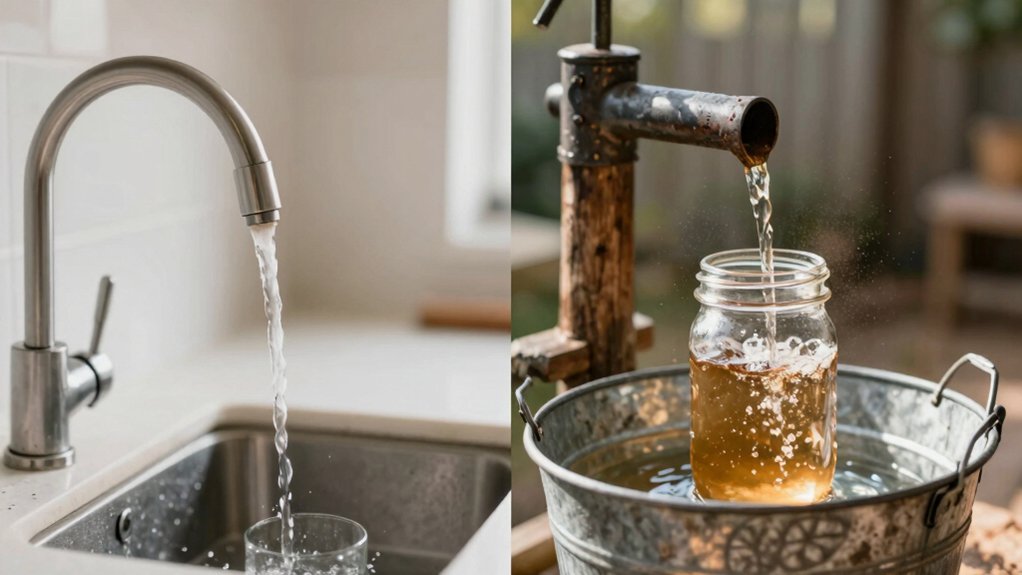
City water is treated, monitored, and usually lower in hardness and nitrates. You rely on the utility for disinfection and corrosion control.
Well water is your responsibility; it is often harder and at greater risk of nitrates, bacteria, or seasonal runoff contamination. Well water needs annual testing plus tests after storms, repairs, or new construction.
If lead, bacteria, or nitrates appear, you’ll need prompt remediation and increased monitoring. Keep testing records and learn more about practical next steps.
Quick Overview
- Source and treatment: City water is centrally treated and chlorinated. Well water is untreated groundwater under owner responsibility.
- Contaminant risk: Wells have a higher risk for bacteria, nitrates, and local contaminants. City tests routinely for regulated contaminants.
- Hardness and minerals: Wells (often >120 ppm) are usually harder and may require softening. City supplies are often ≤60 ppm.
- Regulation and oversight: Utilities follow regulations, monitoring, and public notifications. Private wells have no municipal compliance obligations.
- Testing frequency: City CCRs report monitoring. Well owners should test annually for bacteria and nitrates and after events or repairs.
Typical Contaminant Levels Table
How clean is your tap likely to be? You’ll see clear contrasts: city supplies meet EPA limits and keep disinfectant residuals while wells vary by geology and need homeowner testing for bacteria, nitrates, and arsenic. Consider water hardness and pretreatment costs when choosing treatment.
| Contaminant | City (typical) | Well (typical/risk) |
|---|---|---|
| Hardness (minerals) | ≤60 ppm | >120 ppm (softener often needed) |
| Nitrates | Below MCL (monitored) | Common from runoff; test annually |
| Bacteria | Chlorinated; low positives | Higher risk; test annually |
Use CCRs for city data. Test wells annually for bacteria/nitrate and when geology or land use changes.
Lead Action Levels Summary
Wondering what “action level” means for lead in drinking water? You need to know it’s a regulatory trigger, not a health-based safety cutoff. Municipal compliance sets an action level (commonly 15 ppb in the U.S.) that requires utilities to take steps: corrosion control, public notification, and pipe replacement when lead levels in sampled taps exceed that threshold.
- If sampled household lead levels exceed the action level, the utility must implement corrective measures and increase monitoring.
- If samples stay below the action level, municipal compliance requirements are reduced; however, occasional testing still matters.
- For private wells, no municipal compliance applies. You’re responsible for testing and treating if lead is detected.
Follow evidence-based testing and mitigation to minimize exposure.
Private Well Testing Frequency
You should test your private well at least annually for bacteria and nitrates. Conduct additional checks after heavy seasonal runoff or known nearby contamination. Test again after any well repair or installation. Always test a new home’s well before moving in.
If you suspect contamination, such as an odd taste, smell, or illness, stop drinking the water and test immediately.
Test Frequency Recommendations
When should you test a private well? You should test at least annually for bacteria (total coliform and E. coli) and nitrate to protect drinking water and follow household maintenance routines.
Test every time you notice taste, color, or odor changes; or after nearby construction, flooding, or septic work. Test for arsenic, lead, and volatile organic compounds (VOCs) every 2–3 years or if your geology or land use suggests risk.
Test after repairs, new well construction, or when real estate transactions occur. If you treat water (UV, chlorination, filtration), confirm treatment effectiveness annually or per manufacturer guidance.
Keep records, use certified labs, and act promptly on positive results to maintain safe water and reduce health risks.
Seasonal Testing Needs
Annual testing provides a baseline, but seasonal testing picks up time-linked risks that single annual checks can miss. You should test private wells after spring thaw, post-heavy rains, and during late-summer low flows because contamination patterns shift with hydrology.
Seasonal droughts concentrate contaminants and raise the chance of bacterial or chemical intrusion; conversely, recharge periods can mobilize surface pollutants. Monitor water level and pressure for signs of well depletion, which can introduce sediments and change chemistry. Focus tests on bacteria, nitrates, conductivity, and any local contaminants (e.g., pesticides, arsenic).
If results change between seasons, increase sampling frequency and inspect the wellhead and nearby land use. Seasonal testing gives actionable, time-relevant data for protecting household health.
After System Repairs
How soon should you test your private well after repairs? You should test immediately after any repair that breaches the well seal, pump, or pressure system. Test again after water stabilizes: this usually takes 1 to 2 weeks. Start with bacterial (total coliform and E. coli) and nitrates; add tests for turbidity and any site-specific chemicals (arsenic, pesticides) if repairs involved nearby contamination risks.
Prompt testing addresses post-repair implications for health and system integrity and documents remedial action. Coordinate results with your local health department; where municipal connections or shared sources exist, public-private coordination may be required. Keep records and repeat bacterial testing monthly until consistently safe. Then revert to annual baseline testing unless conditions change.
New Home Testing
After repairs and a confirmed stabilization period, you’ll also need a clear testing plan if you’re moving into a home with a private well. You should schedule baseline well testing immediately: test for bacteria (total coliform and E. coli), nitrates, pH, hardness, and common local contaminants like arsenic.
Repeat comprehensive testing annually. Test bacteria quarterly if you have infants, pregnant occupants, or a compromised immune system. After any nearby land-use change, flooding, or plumbing work, test again. Keep precise records of results and maintenance to track trends and guide treatment decisions.
Incorporate water budgeting into household planning: monitor usage to reduce stress on the well and detect drops that might signal pump or aquifer issues. Consult a certified lab and follow state recommendations.
Following Contamination Events
When contamination events occur, such as flooding, nearby chemical spills, suspicious taste or odor, or positive bacterial tests, you should increase testing frequency immediately and follow a targeted schedule until results consistently show safe levels. After an event, test for bacteria (Total Coliform, E. coli) within 48–72 hours. Then test monthly until three consecutive clean results are obtained.
Add specific analytes (nitrates, volatile organics, metals) based on suspected sources; test at one and three months. If remediation is required, validate treatment effectiveness with post-treatment sampling weekly. Then proceed to monthly sampling, followed by quarterly sampling.
Keep clear records and consult local health authorities for tailored contamination response. Use two-word discussion ideas to prioritize tests and communicate risks with contractors and neighbors.
Long-Term Monitoring Plans
Because groundwater conditions and household plumbing change over time, you should adopt a structured long-term testing plan for your private well that balances routine screening with targeted analyte checks based on local risks and past results. You’ll test for coliform bacteria and nitrate at least annually. You should repeat testing after events like flooding, nearby chemical spills, or well repairs.
Every 3–5 years, screen for metals (arsenic, lead), VOCs, and pesticides if agricultural activity is nearby. Keep records of results and corrective actions to inform future sampling. Integrate testing into system maintenance schedules for pumps, seals, and treatment units. If results change, increase testing frequency and consult state resources or certified labs to verify contamination sources and remediation options.
Frequently Asked Questions
How Does Water Pressure Compare Between City and Well Systems?
City systems generally deliver steadier, higher pressure; well systems can vary. You’ll notice pressure differences when wells rely on pumps and tanks that cycle. Bursts or drops can occur during high demand.
System reliability favors municipal supplies for consistent pressure and backup infrastructure. In contrast, wells need properly sized pumps, pressure tanks, and maintenance to approach that reliability. Regular testing and servicing will reduce pressure variability in well systems.
Can Well Water Systems Run During Power Outages?
Yes, well operation usually stops during power outages unless you have backup power. Your submersible pump or jet pump needs electricity to run; without it, you’ll lose pressurized water.
To maintain supply, you can install a generator, battery backup, or pressure tank sized for short outages. Regular testing and maintenance ensure those backups function when power outages occur and prevent contamination risks from intermittent flow.
Do Either Source Affect Home Appliance Lifespans Differently?
Yes, they can. You’ll see different appliance wear: well water durability concerns arise from higher mineral content that scales boilers, water heaters, and icemakers. This scaling shortens lifespans unless you install softeners and filters.
City water impact often involves chlorine and corrosion from aging pipes, which can degrade rubber seals and metallic components over time. Regular testing, targeted filtration, and timely maintenance will minimize both effects and extend appliance life.
Is Bottled Water Safer Than Treated City Water?
Sometimes, bottled safety can seem higher; but it isn’t inherently safer than treated city water. You’ll get consistent treatment reliability from municipal systems regulated and monitored by the EPA. However, occasional contaminants or taste issues occur.
Bottled water varies by source and regulation. It can lack regular testing transparency and costs more. For reliable protection, check lab reports, certifications, and storage conditions rather than assuming bottled water is always safer.
Can I Legally Connect a Well to Municipal Sewage Systems?
Generally, you can’t directly connect a private well to municipal sewer systems. Well legality and sewer connection rules vary by locality; however, regulations typically prohibit cross-connections that risk contamination. You’ll need permits and inspections to connect household plumbing (including wastewater) to the sewer while keeping the well water supply isolated.
Contact your local health department or utility, obtain required permits, and follow codes to ensure legal, safe sewer connection and well protection.
Conclusion
You’ve seen how city and well water differ in typical contaminants, monitoring, and response. Rely on testing frequency guidance: seasonal checks, post-repair and post-contamination tests, and thorough testing before moving into a new home to catch problems early.
Follow lead action level summaries and maintain a long-term monitoring plan if you use a private well. Regular, evidence-based testing and prompt corrective action are the most reliable ways to keep your drinking water safe.