Camping Water Treatment Decision Tree
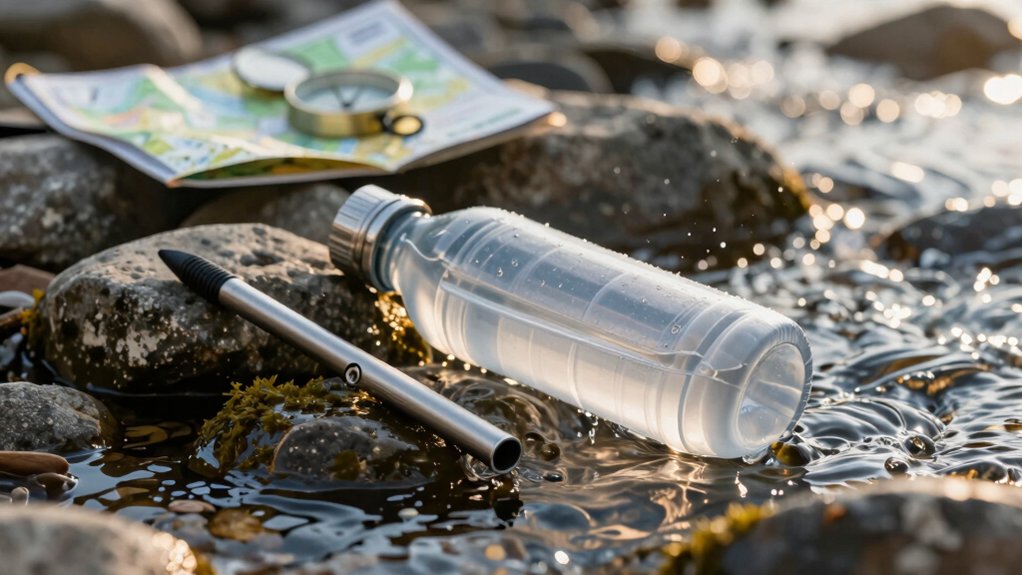
For camping water treatment, choose by pace and group size: If you’re solo or ultralight, pick a low-weight hollow-fiber filter (fast flow, needs regular backflushing).
For groups or dirty water, pick a ceramic unit (slower, cleanable, resists clogging).
Ensure the filter is ≤1 micron absolute to stop Giardia and Cryptosporidium.
Check third-party testing/certification.
Match flow rate (0.5–3+ L/min) to breaks and chores.
Keep a backup disinfectant handy if conditions worsen; you’ll find specifics next.
Quick Overview
- Choose treatment by group size and pace: Solo ultralight favors gravity or chemical; groups favor high-flow pumps or gravity systems.
- Match filter type to conditions: Hollow-fiber for light weight and speed; ceramic for dirty water and cleanability.
- Require ≤1 micron absolute pore size (or validated claim) to reliably remove Giardia and Cryptosporidium.
- Use prefilters or settling for turbid water. Regular backflushing and maintenance are necessary to preserve flow and effectiveness.
- Add chemical disinfection or UV when viruses are a concern. This is also necessary if membrane integrity is uncertain.
Filter Flow Rates Chart
Flow rates matter because they determine how fast you get drinkable water and how well a filter fits your trip plans. You’ll use filter comparison to match pace and group size: pumps and some squeeze filters deliver 2–3+ L/min for fast refills; however, gravity systems trade speed for hands-free bulk.
Consider flow rate implications. Slower units suit solo ultralight hikers or remote purification. Faster units support groups, short breaks, or high-demand tasks.
| Filter Type | Typical Flow |
|---|---|
| Pump / High-flow squeeze | 2–3+ L/min |
| Gravity / Camp systems | 0.5–2 L/min |
Pick based on daily liters needed, maintenance tolerance, and group logistics.
Ceramic vs. Hollow Fiber
Curious which filter material suits your trip? You’ll choose between ceramic vs hollow fiber based on durability, flow, and maintenance.
Ceramic filters are rugged, cleanable, and resist clogging with coarse prefiltering; they’re heavier and slower. Hollow fiber filters are lightweight, fast, and common in backpacking gear, but you’ll backflush them regularly and avoid freezing.
Match choice to conditions: Long trips and group use favor hollow fiber for speed. Remote, abrasive water or long-term installations favor ceramic for serviceability.
- Ceramic: durable, cleanable, slower flow, heavier
- Hollow fiber: lightweight, high flow, needs regular backflushing
Decision tip: prioritize serviceability (ceramic) or weight/speed (hollow fiber)
Protozoa Pore-Size Limits
You’ll want to match filter specs to protozoa sizes. Giardia and Cryptosporidium typically range from about 1 to 15 micrometers; therefore, pore ratings matter. Look for filters with nominal or absolute pore sizes at or below 1 micron. Consider how membrane material (ceramic vs. hollow fiber) affects flow, clogging, and real-world removal.
Check third-party testing and NSF/ANSI certifications to confirm a filter’s minimum effective pore and performance under field conditions.
Protozoa Size Range
How big are protozoa compared with filter pore sizes, and why does that matter when you pick a water treatment? You need to know typical protozoa size and how pore size limits determine removal. Most protozoan cysts and oocysts, such as Giardia and Cryptosporidium, range about 4–15 micrometers. That means filters rated at 1–2 microns reliably capture them. Filters with larger pore sizes may pass smaller cysts.
When you choose gear, match protozoa size to filter pore size limits rather than brand claims. If you expect turbid water, prefiltering helps maintain effective pore performance. For virus protection, remember pore-based filters won’t help; combine methods (chemical or UV) if viral risk exists.
Filter Pore Measurements
Why does pore size matter? You need to match filter pore ratings to protozoa size to stop Giardia and Cryptosporidium. Most protozoa size falls well above 1 micron. Protozoa pore size guidance helps you pick gear that blocks them reliably.
Expect tradeoffs: smaller pores increase flow restriction and require more frequent backflushing or pumping. Compare ceramic vs. hollow fiber designs; ceramic holds up to cleaning and tolerates turbidity, while hollow fiber offers higher flow and lighter weight but clogs faster. Check manufacturer specs for nominal versus absolute micron ratings; nominal may miss smaller cysts.
In practice, choose a filter with an absolute pore rating ≤1 micron for protozoa protection. Balance weight and maintenance needs, and plan for prefiltration in silty water.
Minimum Effective Pore
Having matched pore ratings to protozoa sizes, you now need a clear cutoff for what actually stops Giardia and Cryptosporidium: aim for an absolute pore size of 1 micron or smaller. You’ll choose filters rated at ≤1 µm to reliably block typical cysts and oocysts; anything larger risks breakthrough, especially under pressure or damaged elements.
When comparing products, focus on certified pore size specifications rather than marketing terms like “ultrafine.” Remember that claimed nominal ratings can vary; prefer absolute ratings and third-party validation. Use pore size and protozoa limits as your decision anchors: if a filter meets the ≤1 µm absolute standard, pair it with viral treatment if needed. If not, reject it for protozoa protection.
Membrane Material Effects
Which membrane material you pick matters as much as the stated pore size, because polymer type and construction determine real-world performance against Giardia and Cryptosporidium. You should evaluate membrane material (e.g., hollow-fiber polypropylene, PES, ceramic) since stiffness, fouling resistance, and microdefect tolerance change how pores behave under field stress.
Look beyond nominal pore size to pore structure: uniform, tortuous pores filter consistently; irregular pores let small protozoa slip through despite a promising micron rating. Choose membranes with dense, consistent pore structure for reliability. Prefer materials that resist abrasion and biofouling so pores don’t enlarge over time.
In short, match membrane material and pore structure to expected water quality and maintenance ability to ensure protozoa removal in real conditions.
Testing And Certification
How do you know a filter will actually stop Giardia or Cryptosporidium? You rely on objective testing protocols and clear certification standards. Look for lab-verified pore-size ratings: 1 micron absolute or smaller captures protozoa reliably.
Independent labs test with challenge organisms and flow rates; manufacturers quoting only nominal sizes aren’t enough. Check for NSF/ANSI or EPA-equivalent certification claims and read test reports for log-reduction values. Remember that real-world factors, such as damaged membranes, freeze-thaw, and clogging, degrade performance.
Frequently Asked Questions
Can I Combine UV and Chemical Treatments for Extra Safety?
Yes, you can combine UV and chemical treatments for combination safety. You’ll get UV’s fast inactivation of bacteria, viruses, and protozoa plus a chemical’s residual protection, covering UV vs chemical weaknesses.
Use UV first on clear water. Then add chlorine dioxide or Micropur per instructions and wait the full contact time. Don’t double-dose; follow dosages and prefilter cloudy water so both methods work effectively and safely.
How Long Do Replacement Filters Typically Last in the Field?
Replacement filters typically last from a few days to several months in the field depending on usage and water quality. You’ll replace cartridge-style filters (like Grayl) every 5–10 days with heavy use. High-capacity pump or squeeze filters can treat thousands to 100,000 gallons before replacement.
Prioritize field maintenance: prefilter turbid water, backflush when possible, carry spare filters, and monitor flow rate and taste to know when replacements are due.
Are Chemical Treatments Safe for Children and Pregnant People?
Yes, but you’ll need caution. Chemical safety varies: iodine’s off-limits for prolonged use in pregnancy and young children due to thyroid effects. Chlorine dioxide (Aquamira) and sodium chlorite tablets are generally safer for short-term use and effective against cryptosporidium when used properly.
Minimize child exposure by following dosages. Prefer chlorine dioxide or Micropur for families, and avoid routine iodine use for pregnant people. Consult a clinician for medical concerns.
What’s the Best Option for Alpine Snow Melt Water?
Use a UV sterilizer plus a lightweight filter for alpine meltwater. You’ll get fast, efficient treatment options: prefilter turbidity, run clear water through a Sawyer or squeeze, then use a Steripen for viruses. This maximizes water efficiency and minimizes fuel or chemical needs.
Safety considerations include ensuring water is clear enough for UV, carrying spare batteries, and replacing filters as needed to maintain flow and reliable pathogen removal.
Can Treated Water Be Stored Long-Term in Plastic Bottles?
Yes, you can store treated water long-term in plastic bottles if you follow precautions. Choose durable, food-grade plastic (HDPE or PET) to guarantee plastic durability and avoid leaching. Sanitize bottles before filling, seal tightly, and keep them cool and dark to slow microbial growth.
Label with treatment date and rotate every 6–12 months. For best results, use chlorine dioxide or UV-treated water. Do not reuse single-use bottles.
Conclusion
You’ve got the facts to pick the right filter for your trip. Match flow rate to group size, choose ceramic for durability or hollow-fiber for speed, and prioritize pore size under 0.2 microns to block Giardia and Cryptosporidium.
Know the smallest organism sizes. Check manufacturer pore measurements and factor membrane material into clogging and cleaning needs. Always use certified products and test routinely; reliable performance keeps your water safe and your outing worry-free.