Signs a Water Filter Needs to Be Replaced
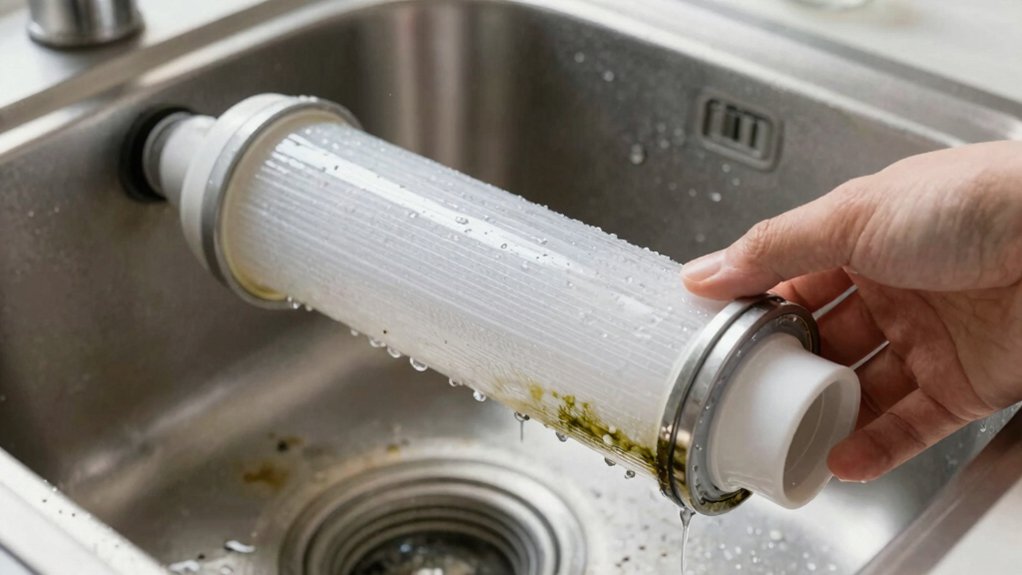
You should replace your water filter when flow slows, taste or odor returns, or the cartridge reaches its rated gallons or six-month service interval.
Watch for noticeable pressure drops, slower filling of pitchers or dispensers, inconsistent flow or delays, and weak shower or faucet output.
These indicate clogging, mineral scale, or biofilm.
Verify by comparing flow to baseline or a new cartridge.
Replace promptly to restore removal efficiency and avoid microbial growth.
Keep going to learn practical checks and schedules.
Quick Overview
- A noticeable drop in water flow rate or slower filling times indicates clogging and reduced filter porosity.
- Persistent bad taste, unusual odors, or metallic flavors signal filter breakthrough and replacement need.
- Visible sediment, discoloration, or particles in dispensed water show the cartridge is saturated or failing.
- Regularly reaching the filter’s rated gallon capacity or six months of use requires replacement.
- Reduced performance during peak use; or flow not restored after flushing points to end-of-life.
Filter Lifespan by Gallons
How many gallons should you expect from a given filter before replacement? You’ll use rated capacities to plan replacements: pitchers 40–100 gal, faucet units a few hundred, refrigerator 500–800, under-sink carbon 1,000–10,000.
Calculate days = rated gallons ÷ daily use. Replace at capacity or when flow/taste degrades. Check availability of replacement parts and warranty coverage when choosing higher-capacity units; scarce parts or short warranties can nullify long lifespans.
| Filter Type | Typical Capacity (gal) |
|---|---|
| Pitcher | 40–100 |
| Refrigerator | 500–800 |
| Under-sink carbon | 1,000–10,000 |
Monitor indicators, water clarity, and pressure. Prioritize timely swaps to protect system components.
Replace Cartridge Every 6 Months
A six-month cartridge replacement schedule is a practical baseline you can use to maintain filtration performance and reduce the risk of contaminant breakthrough. Manufacturers set this interval based on typical flow rates, contaminant loads, and media exhaustion. You’ll limit microbial growth, chemical passage, and capacity loss by swapping cartridges semiannually.
Two-word discussion ideas: maintenance cadence. Subtopic irrelevant to flow rate reduction; this time-based rule applies when no visible signs or indicators appear.
- Track install date and set calendar reminder at six months.
- Replace earlier in high-use or high-contaminant situations.
- Use manufacturer-approved cartridges to maintain rated removal efficiency.
- Record changes and any taste/odor reports for evidence-based scheduling.
Stick to this regimen for predictable, measurable protection.
Check for Flow Rate Reduction
If your faucet or shower suddenly has noticeably lower pressure, that’s a common sign the filter is clogged and needs attention. You’ll also see slower filling times, inconsistent flow output, or increased dispensing delays as trapped particles and mineral buildup restrict passage.
Check these flow changes promptly; restoring proper throughput usually means replacing the cartridge.
Noticeable Water Pressure Drop
Why is your tap suddenly trickling instead of flowing? A noticeable water pressure drop often means the filter media is clogged with sediment, calcium and magnesium deposits, or biological growth, which restricts throughput. You’ll first see reduced flow at faucets, refrigerators, and under-sink dispensers. This aligns with evidence that trapped particulates and hard-water scale impair passage.
Measure flow rate against spec or previous baseline; a persistent decline indicates replacement. Also note correlated signs: unpleasant aeration (gurgling bubbles) or a sudden metallic odor. Aeration can signal trapped air from restricted flow, and odors suggest breakthrough contamination.
Replace the cartridge if flow doesn’t recover after flushing or valve checksing Continued restriction compromises filtration efficiency and can harm downstream fixtures.
Slower Filling Times
When your pitcher, reservoir, or appliance starts taking noticeably longer to fill, check the flow rate: slower filling times often mean the filter’s media is clogging with sediment, mineral scale, or biofilm and is reducing throughput. You should time fills and compare to baseline performance. A consistent, measurable drop indicates reduced porosity or channeling in the media.
Clogging often coincides with other signs like unexpected taste or metallic notes caused by metal deposits from degraded cartridges or hard water scaling. Inspect for visible sediment in housings and follow manufacturer flow-rate specs. If flow is below recommended liters per minute, replace the cartridge.
Replacing on schedule prevents microbial growth, restores throughput, and maintains contaminant removal efficiency.
Inconsistent Flow Output
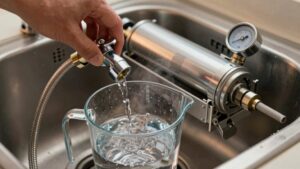
How quickly is your water actually coming out? Measure flow rate over 30 seconds from the same tap: if output drops notably versus baseline or manufacturer specs, your filter may be clogged.
Reduced flow commonly results from trapped sediments, mineral scaling, or exhausted media; evidence shows clogged cartridges restrict throughput before taste degrades. You’ll want to compare results to previous readings or a new cartridge to isolate filter failure from plumbing issues.
Exclude an irrelevant subtopic like exterior faucet damage when diagnosing flow; focus tests on the filter assembly and inlet screens. Keep a simple log of two word discussion ideas such as “flow test” and “baseline read” to track decline and know when replacement is warranted.
Weak Shower Or Faucet
If your shower or bathroom faucet suddenly feels weak, start by measuring flow rate over 30 seconds at that fixture and compare it to the baseline you used for the previous tap. A notable drop usually points to a clogged cartridge, showerhead aerator, or mineral buildup in the filter-fed supply line rather than general plumbing.
You’ll notice a weak blast or inconsistent jet instead of steady pressure. Occasional faucet wobble can indicate internal debris or a failing valve seat aggravated by trapped sediment. Remove and inspect aerators and cartridges for trapped particles or calcium scaling.
If cleaning restores flow, the filter was likely restricting throughput and should be replaced on schedule. If not, inspect supply lines and consider professional diagnosis to rule out valve or pipe issues.
Increased Dispensing Delays
Noticeably slower fill times at your dispenser usually point to a reduced flow rate caused by a clogged or degraded filter. You’re likely experiencing increased dispensing delays when trapped sediment or mineral buildup narrows passages; this forces water to pass more slowly and reduces throughput. Measure flow rate against the manufacturer’s specification: a sustained drop signals end-of-life.
This decline often precedes sensory changes. Don’t wait for inconsistent taste or loss of sparkling clarity to appear. Replace the cartridge if flow is consistently below expected liters per minute or if pressure-sensitive appliances underperform. Routine timing (six to twelve months) and observing dispenser fill times provide objective, evidence-based triggers for replacement. This ensures performance and water quality remain within intended parameters.
Flow Drops During Peak
When your water flow drops only during peak usage times, it’s a strong sign the filter or connected plumbing isn’t keeping up with demand. Measure the flow rate while other fixtures run to confirm a pressure-dependent restriction. You should test flow with and without simultaneous draws (shower, dishwasher) to isolate whether the filter housing or upstream supply causes flow irregularities.
If the restricted flow coincides with peak demand and you observe taste disturbances or intermittent odor changes, the filter media may be saturated or clogged with sediment and mineral buildup. Replacing the cartridge often restores throughput; if not, inspect valves and feed lines for scale or partial blockages. Record pre- and post-replacement flow rates to verify restoration and guide future maintenance intervals.
Frequently Asked Questions
Can I Reuse an Old Cartridge After Cleaning It?
No, you shouldn’t reuse cartridges after cleaning. Reusing cartridges undermines cleaning effectiveness and risks contamination. Manufacturers design cartridges for one-use filtration media that trap particles, bacteria, and chemicals. Mechanical cleaning can’t restore adsorption or microbial barriers.
If you try reusing cartridges, you’ll get reduced performance, possible biofilm release, and a shortened lifespan of downstream components. Replace cartridges per schedule or indicator lights to keep water safe and filters effective.
Do Different Filter Brands Affect Water pH?
Yes, different brands can have varying pH impact. When you do a brand comparison, note that most carbon filters won’t change pH markedly.
Ion-exchange and some mineral-addition cartridges can raise or lower pH slightly. Choose brands with third-party testing and clear specs on alkalinity or acid removal. You’ll want measured data for your water source; pretreatment and filter age also alter the real-world pH effect.
How Should I Dispose of Used Filters?
You should follow manufacturer disposal methods and local recycling rules to limit environmental impact. Many filters contain plastic, activated carbon, and metals; so check if the maker offers mail-back or take-back programs. If not, remove cartridges per instructions. Empty loose media into trash and recycle plastic housings where accepted.
Don’t compost used filter media. Document proper disposal to reduce landfill contamination and potential toxin release.
Can Filters Remove Viruses and Bacteria?
Yes, but it depends. You can use filters designed for virus removal, such as certified ultrafiltration or reverse osmosis with appropriate pore sizes and validated performance, to remove bacteria and many viruses. Standard carbon or sediment filters usually won’t stop viruses.
You should check certifications (NSF/ANSI standards) and maintenance needs because a clogged or expired filter loses efficacy. For infection control, pair filtration with disinfection (UV or chemical) when needed.
Will Warranty Cover Water Quality Issues?
You’ll often find warranty coverage excludes routine water quality issues caused by normal filter wear. Manufacturers typically cover defects in materials or workmanship; they do not cover degraded taste or sediment from extended use. Check terms for clauses on contamination claims and required maintenance.
You should follow replacement schedules, keep receipts, and document problems. Some brands offer recycling filters programs and limited remediation if defective. Contact support promptly to pursue warranty coverage.
Conclusion
You’ll want to replace your water filter on a predictable schedule and whenever performance slips. Follow the manufacturer’s gallon or six-month guideline, but also watch flow rate and pressure: slower fills, inconsistent or weak faucets and showers, and longer dispensing delays signal clogging.
If flow drops during peak use, that’s another clear cue. Replacing the cartridge promptly maintains contaminant reduction and system efficiency. Don’t wait until quality or appliance performance is compromised.
You may also like: Change Water Filters By Type — a related guide worth bookmarking.