How to Check Water Filter Certifications and Recalls
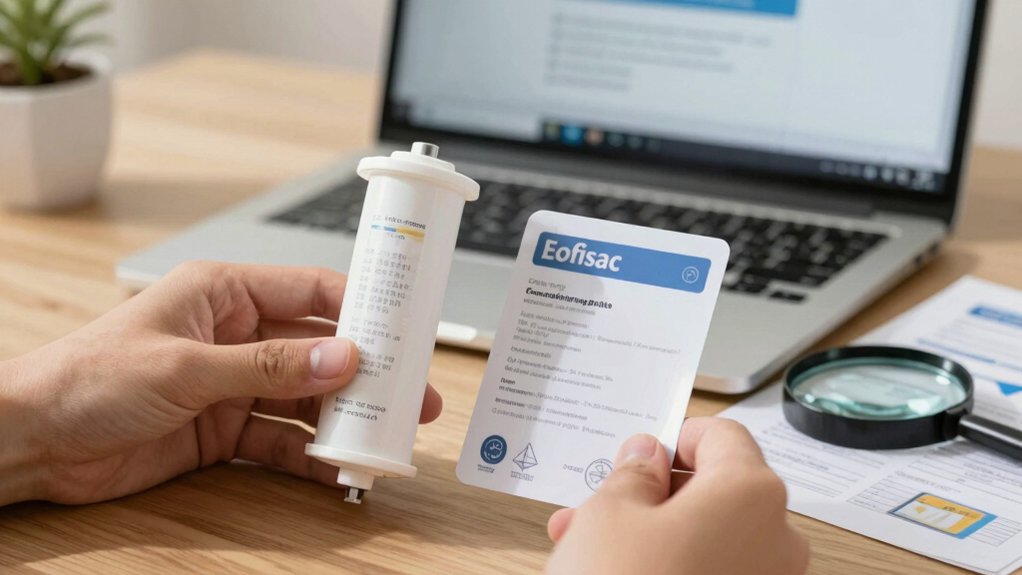
Check a water filter’s safety by confirming NSF/ANSI listings (e.g., 42 for taste, 53 for health, 58 for RO) on NSF, WQA, or IAPMO databases and match them to the model and claim on the packaging. Look for NSF/ANSI 372 or equivalent for lead-free wetted materials.
Review the product’s Performance Data Sheet and owner’s manual for tested capacities and certified life. Search recall databases and manufacturer notices for delistings. Keep documentation and serial numbers handy; keep going to get practical replacement and tracking tips.
Quick Overview
- Look up the filter’s listed standards (e.g., NSF/ANSI 42, 53, 58, 372) to see which contaminants and “lead-free” claims are covered.
- Search certifier databases (NSF, WQA, IAPMO) using model or manufacturer to confirm current listing and scope.
- Check the product’s Performance Data Sheet and owner’s manual for tested reductions, capacity, and certified life.
- Review government and certifier recall pages and news for delistings, safety notices, or replacement-part recalls.
- Keep installation records and part numbers. Then re-check certifications periodically or after major water-quality changes.
NSF/ANSI Standards Comparison
When you’re choosing a water filter, start by matching the NSF/ANSI standard to the contaminants you care about. Each standard targets different problems, from aesthetic issues (NSF/ANSI 42) to serious health risks like lead or PFAS (NSF/ANSI 53 and P473) and high dissolved solids (NSF/ANSI 58). You’ll check NSF/ANSI differences to match performance: 42 for taste/odor; 53 for health contaminants; 58 for RO/TDS; plus specialty standards for softening, showers, and emerging contaminants.
Verify claims on labels and certifier databases. Use a simple comparison to spot gaps quickly.
| Standard | Focus | Typical Use |
|---|---|---|
| 42 | Aesthetic | Pitchers, POU |
| 53 | Health | Lead, PFAS |
| 58 | TDS/RO | Under-sink RO systems |
Lead-Free Certification Checklist
A concise lead-free certification checklist helps you confirm that a filter or plumbing component won’t introduce lead into your drinking water and that labels and test data back the claim. Use this checklist to inspect claims, verify documentation, and confirm the certification scope covers all wetted parts.
- Verify an NSF/ANSI 372 or equivalent mark and confirm “lead free” applies to all wetted materials.
- Check the product Performance Data Sheet and owner’s manual for certification scope and tested lead reduction levels.
- Search certifier databases (NSF, WQA, IAPMO) to confirm current listing and no delistings or recalls.
Review independent lab reports and manufacturer replacement-part policies to ensure compliant components stay lead free over time.
You’ll spot gaps quickly and choose safer products.
Filter Replacement Schedule
You should follow the manufacturer’s recommended replacement intervals. You should also check real-world factors like your water quality, household usage, and sediment load that can shorten filter life.
Watch for clear signs you need a change: reduced flow, taste or odor shifts, or visible clogging. Compare those to the filter capacity ratings and Performance Data Sheet. Keep a simple maintenance schedule and log so you replace cartridges before certification-backed reduction claims start to fail.
Recommended Replacement Intervals
Why does filter replacement matter? You rely on timely changes to keep certified performance: clogged or expired filters can fail NSF/ANSI claims and reduce contaminant removal. Check manufacturer recommendations and search intervals on product literature and certifier databases before buying. Track calendar dates or volume counters if your model offers them, and compare real-world usage to rated life.
Keep evidence of replacement for warranty coverage. Staying current can be required to maintain claims. When you replace filters, note date, part number, and where you bought it. If a recall or delisting appears in NSF/WQA databases, having records helps support warranty or recall remedies.
Treat replacement as part of verification: it preserves certification performance and your protection under warranties.
Factors Affecting Lifespan
Keeping up with replacements protects certified performance. However, how long a filter actually lasts depends on several measurable factors you’ll want to monitor. You should track flow rate, total treated gallons, and incoming water quality: high turbidity or contaminant loads shorten life quickly.
Usage patterns matter. Households with intermittent use may see longer calendar life but similar treated-gallon limits. Temperature and pressure affect media efficiency and structural strain. Check the manufacturer’s performance data sheet against real conditions to reconcile rated life with your experience.
Remember certification relevance: a certified claim ties to specific test conditions, not every use case. By logging simple metrics and comparing them to certified limits, you’ll set a replacement schedule that preserves both safety and warranty.
Signs To Replace
When should you replace a water filter? You’ll spot signs: slower flow, taste or odor returning, discoloration, or visible buildup in cartridges. Track elapsed time against manufacturer guidance and your water quality; don’t treat those numbers as an irrelevant topic. If your filter’s certification paperwork or performance data sheet shows a recommended interval, follow it: certifications tie to tested lifespans.
Also watch for pressure drops or frequent cycling in under-sink or whole-house systems. If water tests show contaminants creeping up, replace immediately. Avoid confusing this with an unrelated concept like aesthetic upgrades. Replacement is about safety and function. Keep a simple log of install dates, part numbers, and test results to make timely, evidence-based replacements.
Filter Capacity Ratings
Many filters list a capacity rating in gallons or months, and you should use that rating as the baseline for your replacement schedule. Treat the rating as a starting point: compare it to your household water use and local water quality.
Check the filter media type—carbon block, ion exchange, membrane—to understand how contaminant load shortens life. Do not rely solely on marketing; verify certification claims on the Performance Data Sheet or certifier database to confirm tested flow and capacity.
If certified capacity differs from the packaging, follow the certifier’s figure. Keep records of installation dates and replaced cartridges, and prioritize replacements when flow drops or taste returns. That way, you maintain certified performance without over- or under-replacing filters.
Maintenance Schedule Tips
Consistency matters: You should replace cartridges based on the certified capacity (gallons or months) and your actual use, not marketing claims. Track flow rates, household size, and water quality. Heavy use or high sediment shortens life. Keep the manufacturer’s Performance Data Sheet and stickered replacement interval handy so you can compare real-world consumption to rated gallons. Set reminders tied to usage milestones rather than vague calendar dates.
When you check certifications, fold maintenance schedule checks into the same routine and log each change. Combine that with recall monitoring: Subscribe to certifier and manufacturer alerts, and verify serial numbers if a recall hits. Doing this protects performance and ensures certified contaminant reductions remain valid between replacements.
Tracking Replacement Dates
Because filter performance declines predictably with use, you should track replacement dates against both the certified capacity and your actual water use. Check the Performance Data Sheet for certified flow rates and capacity. Then compare that to household gallons per day so you can estimate real replacement intervals.
Use a calendar, app, or sticker on the system to log installation and predicted swap dates; consistent tracking dates help prove timely maintenance if you need to claim replacement warranties. Keep receipts and serial numbers with the log. If contaminants or taste return before the scheduled date, document tests and contact the manufacturer. Early failure can affect warranty coverage.
Regularly confirm certifications and recall status while tracking replacements to protect health and warranty rights.
Frequently Asked Questions
How Do I Verify a Filter’s Certification Number Online?
You Go To The Certifier’s Database (NSF, WQA, UL), Enter The Filter Model Or Certification Number, And Verify Certifications Instantly. Check The Manufacturer’s Performance Data Sheet And Matching Seal Images.
Cross-check For Delistings Or Recall Processes On Certifier And Manufacturer Sites. Search EPA Or CPSC Recalls For Broader Alerts. If Listings Don’t Match, Contact The Certifier And Manufacturer For Proof Before You Buy Or Install.
Can Retailers’ Certification Claims Be Independently Confirmed?
Yes, you can independently confirm retailer claims. You’ll use certification validation by checking certifying bodies’ databases (NSF, WQA, IAPMO) against the product’s model and certification number.
Compare performance data sheets and manufacturer listings; watch for delistings or recalls. If details don’t match retailer claims, contact the certifier or manufacturer for proof before buying. This keeps you protected from misleading or expired certifications.
Do Certifications Cover Filter Pitchers and Faucet Attachments?
Yes, certifications cover pitcher vs. faucet, but you’ll need to check certification scope carefully. Pitchers and faucet attachments can be NSF/ANSI 42 or 53 certified for specific reductions; some pitchers hit aesthetic claims only.
You’ll verify seals, Performance Data Sheets, and certifier databases to confirm which contaminants each device is tested for. Don’t assume one certification covers all contaminants; match the scope to your concern before buying.
How Often Are Certification Databases Updated for Delistings?
Certifying bodies usually update their databases frequently. You’ll see delistings updates as soon as a product fails retesting or a safety issue is confirmed. NSF, WQA and others often post changes within days to weeks. Manufacturers update sites and recall notices in parallel.
You should check databases monthly and subscribe to alerts for real-time delistings updates. This way, you won’t miss urgent safety or certification changes.
What Should I Do if a Certified Filter Is Recalled?
If a certified filter is recalled, stop using it immediately and seek the manufacturer’s refund, replacement, or repair instructions. Don’t treat it as an unrelated topic.
Check the certifier’s and EPA recall pages, register your product for updates, and document serial numbers. Assess budget impacts: factor in replacement costs or temporary alternatives.
Keep Performance Data Sheets and proof of purchase handy. Follow disposal or return directions to protect your household.
Conclusion
You’ve learned how to verify certifications, spot recalls, and check lead-free claims so you can buy confidently. Keep a simple replacement and maintenance schedule; track dates and watch capacity ratings to match your usage. Pay attention to odor, taste, flow, and visible buildup as signs to replace filters sooner.
Regular checks and prompt replacements protect your water and health. Stay proactive, document changes, and act immediately if a recall or failed certification appears.
You may also like: Nsf Ansi Standards — a related guide worth bookmarking.