How to Spot Counterfeit Water Filters
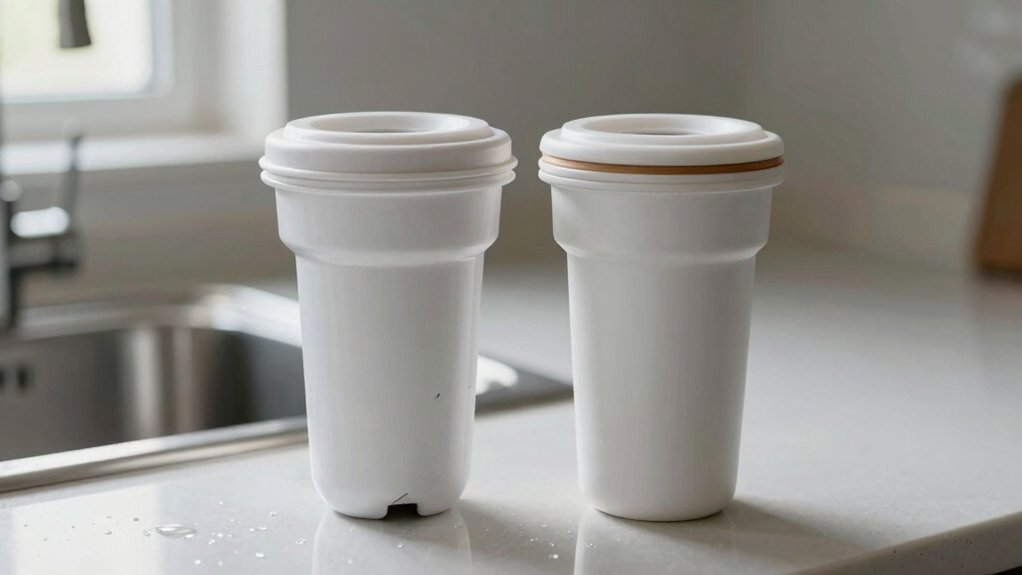
Check the certification stamps (NSF/ANSI 42, 53, 58, 401, 372) and confirm the exact number and model/SKU on NSF or WQA sites. Vague “NSF certified” text is a red flag. Time the flow rate and record total liters filtered to verify capacity against specs.
Scan lot/QR/barcodes and match encoded production dates to the printed date. Inspect holograms/microprint for label security. If anything mismatches, report to the manufacturer. Keep going to learn how to verify each item.
Quick Overview
- Inspect the certification stamp for exact standard numbers (42, 53, 58, 401, 372) and matching model/SKU.
- Verify certifications on NSF/WQA sites and flag vague “NSF certified” labels without standard numbers.
- Scan QR/serial, check lot/barcode encoding and confirm production dates match manufacturer records.
- Measure flow rate by timing a known volume and compare to published specs; inconsistent decline suggests counterfeit.
- Track cumulative filtered volume against claimed capacity. Report discrepancies and suspect stamps to the brand.
Certification Stamp Comparison
How can you tell a genuine certification stamp from a fake one? You inspect the seal for exact standard numbers (42, 53, 58, 401, 372) and matching model/SKU. Then, verify on NSF/WQA sites. Counterfeit indicators include vague “NSF certified” text, missing standard #, or expired listings.
Check contaminant claims against the listed standard and confirm annual renewal.
| Seal Example | Required Info | Red Flag |
|---|---|---|
| NSF/ANSI 42 | “42” + model/SKU; taste/chlorine claim | No number or vague claim |
| NSF/ANSI 53 | “53” + model/SKU; lead/VOC listing | Mismatched contaminants |
| WQA Gold Seal | Gold + S-code + model | Wrong logo/color, no site listing |
Scan QR/serial where available and report suspect stamps.
Flow Rate and Capacity Checks
Want to know if a filter really performs as claimed? You’ll test flow rate and run simple capacity checks to confirm. Measure output volume over a timed interval and compare to the manufacturer’s specs; counterfeit units often show inconsistent, declining flow. Record cumulative liters filtered to check true capacity against marketed lifespan.
Also perform these verifications:
- Time a known volume to verify advertised flow rate precisely.
- Track total filtered volume to confirm capacity claims over weeks.
- Pair results with lot number verification: note the number, but don’t rely solely on it.
- Add barcode inspection: scan to confirm product data matches your measured performance.
Document findings and report discrepancies to the manufacturer for next steps.
Manufacturing Lot Number Verification
Check the lot number format against the manufacturer’s standard and verify it in their database to confirm the code is legitimate. Scan the barcode or QR and match the encoded production dates to the printed dates, and flag any discrepancies.
Also compare label security features: holograms, microprint, and tamper seals against a known genuine sample.
Check Lot Number Format
Why does the lot number matter? You need accurate lot number formatting because it links a filter to production records and reveals batch traceability concerns. Inspect the stamp or label: genuine manufacturers use consistent fonts, fixed character counts, and predictable separators (letters, digits, or date codes).
If the code varies between units, has smudged or misaligned characters, or uses uncommon symbols, that’s a red flag. Compare suspected numbers to examples from known-good packaging or photos from retailer listings. Note where the lot is printed—molded into plastic or on a secure label—and whether ink quality matches other printing.
Document discrepancies with photos and serials; inconsistent lot number formatting often signals counterfeit or diverted stock.
Verify Manufacturer Database
Once you’ve flagged inconsistent lot-number formatting, the next step is to verify that number against the manufacturer’s database to confirm authenticity. Look up the lot number on the brand’s official site or contact their support. Legitimate databases will return production date, plant location, and compatible model numbers.
If the lot isn’t listed or details don’t match your unit, treat the filter as suspect. While checking, verify distributor history for the seller; authorized resellers will match the manufacturer’s records. Also compare warranty terms shown in the database with the paperwork or card you received. Counterfeit units often lack valid registrations or have shortened warranties.
Document mismatches, refuse installation, and report the seller to the manufacturer for investigation.
Inspect Barcode And QR
How will you confirm that the barcode and QR code truly tie the filter to a legitimate production run? First, inspect barcode quality: genuine barcodes are crisp, properly aligned, and use consistent fonts and spacing. Note the printed lot number adjacent to the barcode; it should match the manufacturer’s published lot formatting.
Next, scan QR codes with a trusted scanner app. Don’t use random redirecting apps. The QR should resolve to the manufacturer’s secure domain and display production details or a verification page showing lot number, manufacture date, and model. If the scanned page lacks those specifics, shows a generic URL, or the barcode doesn’t read consistently across scanners, treat the unit as suspect.
Record the code and report discrepancies to the manufacturer for confirmation.
Match Production Dates
After you scan and log the barcode or QR verification, match the lot number and production date on the filter against the manufacturer’s published records to confirm it’s from a legitimate run. You should record the format exactly: day/month/year or manufacturer code. Run a production dates comparison with the maker’s lot-history database or published recall lists.
If dates fall outside known runs or use inconsistent coding, flag the unit. Combine this step with counterfeit supply chain checks: verify the seller, shipment origin, and batch sequencing for anomalies. Keep clear notes and photos of the lot markings. If the manufacturer can’t verify the lot, treat the filter as suspect; quarantine it and report the serial and lot details to the brand for further investigation.
Compare Label Security
Why should you compare manufacturing lot numbers and label security? You need to confirm label authenticity because lot numbers, batch codes, and security features reveal provenance. Check that lot numbers match packing slips and manufacturer records. Ensure that formatting follows the brand’s known pattern and that expiry or production dates align with production runs.
Inspect holograms, microprint, tamper-evident seals, and barcode clarity. Poor printing, misaligned codes, or missing microtext are strong counterfeit indicators. Verify placement and ink quality against a trusted genuine sample or manufacturer images. If any code looks off, document it with photos and retain packaging.
Report Invalid Codes
Where should you turn if a manufacturing lot number looks wrong or won’t verify? Contact the manufacturer immediately using contact information on their official website or product documentation. Photograph the lot number, barcode, packaging, and any counterfeit symbols you spot. Include the seller’s details and purchase receipt.
Use the manufacturer’s online verification portal or dedicated fraud-reporting email. If the code returns as invalid codes, insist on written confirmation. If the manufacturer confirms a counterfeit, report the seller to the marketplace and to consumer protection agencies. Request a refund or replacement from your payment provider.
Keep records of all correspondence and dates; those logs support claims and help manufacturers trace distribution of fakes.
Frequently Asked Questions
Can Counterfeit Filters Void My Refrigerator Warranty?
Yes, using counterfeit filters can void your refrigerator warranty. You’re risking damage from leaks or poor fit. Manufacturers often deny coverage for failures caused by non-genuine parts.
Warranty implications and brand authenticity are key concerns: keep receipts and buy from authorized dealers. Verify certification marks and QR codes. If you want coverage, don’t gamble with cheap imitations that can cause contamination, appliance damage, or denied claims.
Can Fake Filters Release Microplastics Into My Water?
Yes, counterfeit filters can release microplastics into your water. You’ll find fake filters use cheap polymers and poor manufacturing that shed particles. Lab tests show counterfeit filters leach contaminants and fail standards. Using counterfeit filters can also risk your refrigerator warranty if damage occurs.
Always verify certification, scan authentication features, and buy from reputable sellers to avoid microplastics, contamination, and warranty problems.
How Can I Safely Dispose of Suspected Counterfeit Filters?
You should dispose safely by sealing the suspected counterfeit filter in a plastic bag, labeling it “suspected counterfeit,” and placing it in regular trash only if local rules allow. Otherwise, follow hazardous-waste guidelines. Don’t reuse or compost it.
Verify sources by contacting the manufacturer with serials or QR codes and report the seller to authorities. Keep proof of purchase and photos for returns or reporting, and use certified replacements from reputable vendors.
Do Counterfeit Filters Affect Ice Maker Water Quality Differently?
Yes, counterfeit ice impact is real: they can degrade ice maker water quality risks more noticeably. You’ll get poorer filtration, leaching of chemicals and metals into stored ice, and increased microbial or particulate contamination.
Ice sits cold longer, concentrating contaminants. Leaks or poor fit can bypass filtration entirely. You should verify certification, scan authentication features, and replace suspect cartridges to prevent health hazards and appliance damage.
Will My Homeowner’s Insurance Cover Damage From Fake Filters?
Possibly, but you shouldn’t assume it. Insurance coverage pitfalls mean carriers may deny claims if counterfeit filters caused damage or voided warranties. You’ll need to show you bought genuine parts and maintained the system. Otherwise, insurers may cite negligence or warranty implications to refuse payout.
Document purchases, certifications, and installation. Get repair estimates and ask your insurer and plumber for written assessments to strengthen any claim.
Conclusion
You’ve now got the key checks to spot counterfeit water filters: compare certification stamps, check flow rate and capacity, verify manufacturing lot numbers and their format, and scan barcodes or QR codes.
Match production dates and confirm them in the manufacturer’s database. Inspect label security features, and report any invalid codes.
Stay methodical and skeptical; these steps quickly reveal inconsistencies and protect your water quality and health from fake or unsafe filters.
You may also like: Nsf Standards Quick Reference — a related guide worth bookmarking.