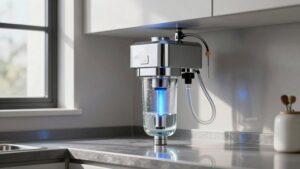
Whole House Vs Point of Use Filtration Decision Framework
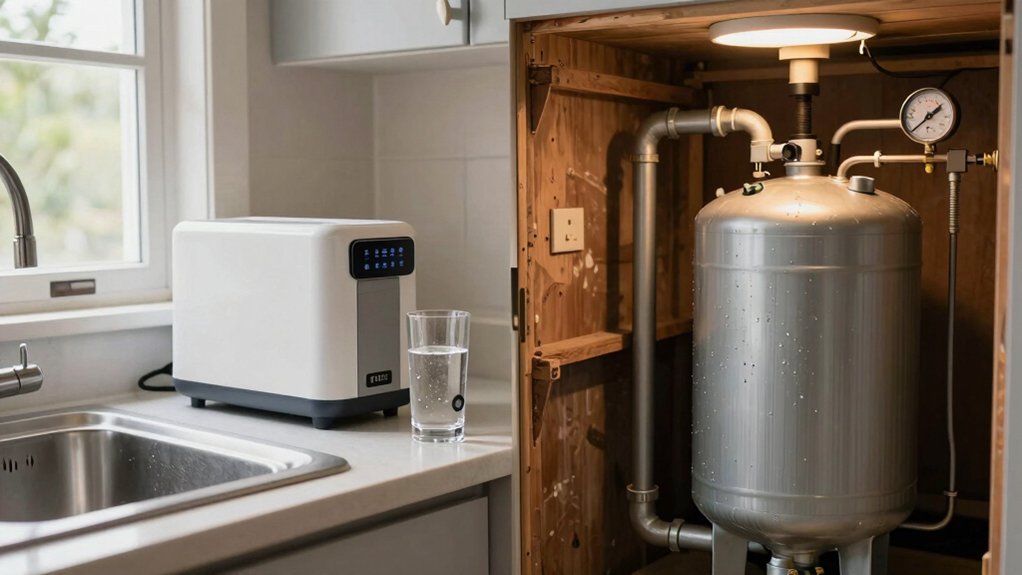
You should pick whole-house systems when you need high simultaneous GPM, large media capacity, and centralized protection for all outlets. Choose point-of-use units when demand is low to moderate, you need tighter micron control at specific taps, or space and upfront cost are limited.
Compare peak flow vs cartridge/gallon ratings. Estimate lifespan against local sediment and household use, and verify clearance, plumbing shutoffs, floor loads, and electrical placement. Continue for a detailed layout and sizing framework.
Quick Overview
- Compare peak simultaneous household GPM demand to system GPM capacity to decide whole-house feasibility versus multiple POU units.
- Match micron rating and filtration efficiency to target contaminants; balance capture needs against pressure drop and service life.
- Estimate filter longevity from sediment load and household use to calculate replacement frequency and recurring costs.
- Verify installation space, clearance, and floor load for whole-house vessels versus compact POU cartridge access constraints.
- Plan plumbing tie-in, shutoffs, bypasses, and labeled service points to ensure maintainability and code-compliant access.
Flow Rate & Capacity Chart
How much flow and capacity do you really need? You’ll evaluate flow rate and capacity against household demand: whole-house systems handle high cumulative GPM and large media volumes for all outlets. Point-of-use units supply lower flow rate and limited capacity to single taps.
Choose whole-house when peak simultaneous demand (showers, appliances) exceeds POU capacity; or when sediment and hardness require larger media to prevent pressure drop. Choose POU when you only need localized treatment and minimal flow/capacity.
Compare specifications: nominal GPM, service life (gallons), and pressure drop. Use this quick table to visualize trade-offs.
| Metric | Whole-House | Point-of-Use |
|---|---|---|
| Flow Rate | High GPM | Low–moderate GPM |
| Capacity | Large media gallons | Limited cartridge gallons |
Filter Lifespan & Micron Ratings
Flow rate and capacity set the practical limits for a system, but filter lifespan and micron ratings determine ongoing performance and maintenance frequency. You’ll evaluate filter longevity against expected contaminant load and service cadence.
Micron sizing directly controls what particles are captured; tighter micron sizing increases filtration efficiency but shortens service life under heavy sediment. Balance is required.
- Compare micron sizing to target contaminants; smaller microns improve removal but raise pressure drop.
- Estimate filter longevity from local sediment levels, household water use, and rated capacity.
- Use filtration efficiency curves to predict contaminant breakthrough and plan replacement intervals.
- Factor recurring costs: more frequent replacements for point-of-use units versus larger-capacity whole-house cartridges.
Installation Space Requirements
You’ll need to assess available mechanical clearance and vertical height constraints to determine whether a whole-house unit will physically fit in the entry area or mechanical room. Check plumbing access points and floor load capacity for placement and support. Verify electrical outlet proximity if the system requires powered components.
These spatial factors often dictate whether a whole-house system is feasible or if targeted point-of-use units are the practical alternative.
Available Mechanical Clearance
Where will a whole-home system or point-of-use unit actually fit within your mechanical space? You need to quantify available clearance and map obstructions before selecting equipment. Measure floor footprint, vertical height, and service access radius for cartridge removal, valve operation, and media replacement.
Whole-home housings and softeners demand larger clearances and 360-degree service access. Point-of-use units often fit tight cavities but still require front or under-sink clearance for filter swaps. Account for space constraints imposed by existing piping, electrical panels, and HVAC components. Include clearance for future maintenance tools and replacement stock.
Validate dimensions against manufacturer minimum service clearances and local code clearances. If clearance is insufficient, evaluate alternate locations or opt for compact PU units.
Plumbing Access Points
How will you tie a whole-home system or a point-of-use unit into your existing plumbing without impeding serviceability? Assess valve access, shutoff placement, and branch locations so you can isolate filters for service without cutting mains.
For whole-home installs, plan a clear service cavity near the main with straight pipe runs, accessible union fittings, and bypass valves sized for flow. Avoid tight corners that restrict wrench clearance. For point-of-use units, verify under-sink clearance, supply line routing, and shutoff proximity to permit quick cartridge swaps.
Document as-built locations and label isolation points for technicians. Consider two word discussion ideas like “service corridor” when mapping access. Ignore subtopic unrelated constraints such as vertical height here; focus strictly on lateral and access clearances.
Vertical Height Constraints
After mapping lateral access and service corridors, check vertical clearances above and below planned filter locations to ensure cartridge removal, media changes, and valve operation without obstructing adjacent fixtures or ceiling cavities.
You’ll measure required vertical clearance for full cartridge extraction and for swing of service valves. Compare that to ceiling voids, soffits, and floor-to-ceiling heights. For whole-house systems, tall vessels often demand dedicated shafts or basement drops. For point-of-use units, tight under-sink spaces may limit cartridge length.
Confirm pipe access for wrenching, unions, and isolation valves. Note any elbows or stacked manifolds that reduce working room. Document minimum clearances, plan removable panels or service trays, and verify installers can perform maintenance without disassembling adjacent systems.
Floor Load Capacity
Why must you verify floor load capacity before placing whole-home filter vessels or heavy media tanks? You need to confirm structural limits because filled tanks and backwash reservoirs concentrate significant mass on small footprints.
Calculate static and dynamic loads from vessel weight, media, and saturated water; compare to published floor capacity (psf or kN/m2). Factor transient loads during regeneration and maintenance access. Coordinate with plumbing flow rate specifications: higher flow rate systems often require larger, heavier manifolds and pressure vessels, increasing load.
If floor capacity is marginal, distribute weight with structural reinforcement or load-spreading platforms; place equipment over load-bearing walls or near foundations. Document engineering assumptions, include safety factors, and obtain a structural engineer’s sign-off for compliance and long-term reliability.
Electrical Outlet Proximity
Where should you position electrical outlets relative to whole-home filter vessels and control systems to ensure safe, code-compliant installation? You should locate outlets to avoid water exposure, maintain service access, and simplify power supply routing.
Mount receptacles at least 12–18 inches horizontally from filter vessels and above expected flood or drip lines; follow local code for clearance and GFCI requirements. Place dedicated circuits for control systems within sight of the equipment but outside accessory drip zones. This minimizes cable runs and avoids bends that stress conduit.
Route power supply wiring through sealed conduits with strain reliefs and label circuits at the panel. Provide a serviceable access panel and document outlet locations for future maintenance. Verify all placements with local electrical and plumbing inspectors before finalizing.
Frequently Asked Questions
How Does Filtration Affect Water Pressure for Outdoor Hose Use?
Filtration effects on water pressure for outdoor hose use are usually minimal if the system’s flow rate matches demand. You’ll notice slight pressure drops when filters add resistance or are clogged. Whole-home systems with undersized housings or high micron cartridges reduce flow more than simple point-of-use units.
You should measure gallons-per-minute and check pressure loss curves. Replace or upsized filters to restore acceptable water pressure for hose applications.
Will Filtration Change My Water’s Mineral Content for Plants?
Yes, filtration can alter mineral content used by plants. Whole-home softeners remove hardness minerals (calcium, magnesium); this reduces mineral leaching risk but lowers plant nutrition from tap water.
Point-of-use filters may not affect outdoor hose supply, so minerals remain. If you want to preserve plant nutrition, avoid routing irrigation through softeners or supplement with fertilizers.
Test treated water for ion concentrations to quantify changes and adjust feeding accordingly.
Can Systems Be Integrated With Existing Water Softeners?
Yes, integration feasibility is high. You can usually pair filtration with existing water softeners. You’ll assess retrofit considerations: available space, plumbing layout, pressure drop, and bypass valves.
Install the filter either before the softener to protect resin from chlorine or after if targeting specific contaminants. Consult flow rates and regeneration cycles. You’ll likely need minor plumbing adapters and a pro for complex setups to ensure optimal performance and warranty compliance.
Do Warranties Differ Between Whole-Home and Point-Of-Use Units?
Yes, warranty differences exist. You’ll find whole-home units often carry longer, broader warranties tied to higher installation requirements and professional setup; these warranties cover components and performance longer.
Point-of-use units usually have shorter, limited warranties reflecting simpler installation and DIY fitting. These warranties are focused on parts only.
You should verify warranty terms, required installation requirements to maintain coverage, and any maintenance or replacement obligations that can void warranties before purchase.
How Do Systems Impact Resale Value of My Home?
A whole-home system generally boosts resale value more than point-of-use units because buyers value comprehensive water protection and reduced appliance wear. You’ll likely see higher home value impact when whole-home systems address widespread issues such as hardness, sediment, and chlorine.
Point-of-use filters offer limited appeal; they improve perceived drinking water quality but minimally affect resale value. Factor in professional installation documentation and maintenance records to maximize buyer confidence and appraisal adjustments.
Conclusion
You’ll weigh flow-rate needs, filter capacity, and micron ratings against available installation space and mechanical clearances to decide whole-house versus point-of-use systems.
If high peak flow, full-home contaminant control, and sufficient vertical clearance and floor load capacity exist, go whole-house. If space, plumbing access, or electrical proximity are limited, or you only need localized treatment, choose point-of-use.
Match expected lifespan and maintenance intervals to access constraints to minimize downtime and lifecycle cost.
You may also like: Whole House Water Filter System — a related guide worth bookmarking.