Water Dispenser Safety and Electrical Precautions
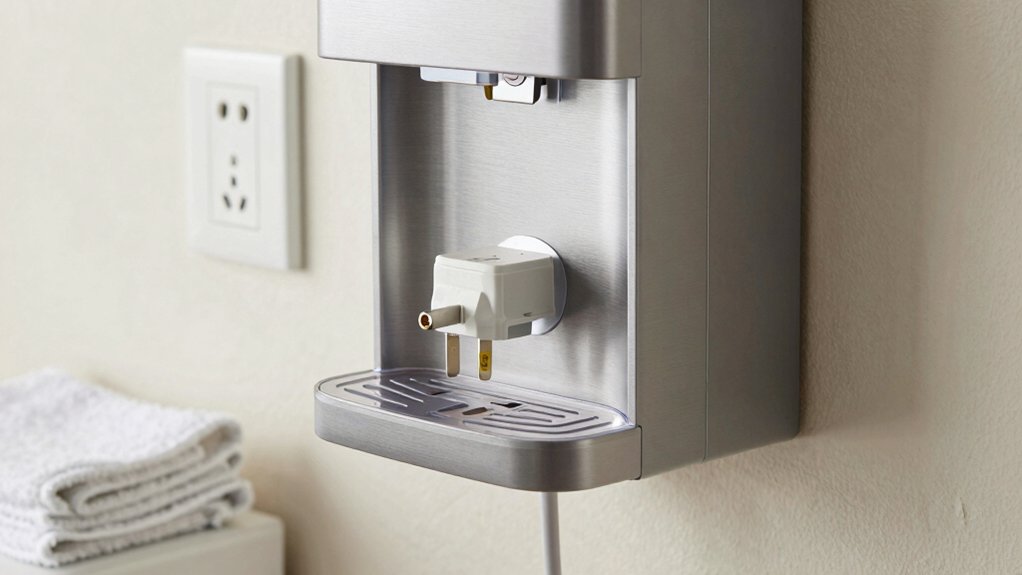
You must plug your water dispenser into a dedicated, grounded 3-prong outlet within reach of the unit, sized to the appliance voltage and amperage. Never use an extension cord. Protect the circuit with a properly rated GFCI; label it and test monthly while keeping results.
Route and secure the cord to stay dry, away from water and trip paths. Inspect for wear; replace damaged cords per manufacturer and code. Continue for installation, routing, and compliance specifics.
Quick Overview
- Plug the dispenser into a dedicated, properly grounded 3‑prong outlet rated for the unit’s voltage and amperage.
- Use a GFCI‑protected circuit and test the GFCI monthly; record results and any corrective actions.
- Route and secure the cord to stay dry, away from water paths, heat, and sharp edges. Avoid trip hazards.
- Never use extension cords long‑term. If temporary, use a grounded cord rated for the dispenser’s voltage and current.
- Inspect the cord, plug, and grommets regularly for damage. Replace per manufacturer or safety standards if worn.
Voltage & Outlet Placement
When you install a water dispenser, supply it with the correct grounded voltage: typically 110–120 V at 60 Hz for North American units (or 220–240 V for international models). Plug it into a dedicated, continuously powered 3‑prong outlet within 36 inches (914 mm). You must verify voltage compatibility and secure a dedicated circuit (15–20A for hot units; 5A–15A for ice/water models). Confirm outlet accessibility without switches or extension cords.
Position the outlet with 3 in. clearance each side and behind; ground integrity is mandatory. Fill the tank and set the thermostat OFF before energizing to avoid thermal fuse trips. Replace damaged cords; never splice. Use the table below to visualize typical requirements.
| Parameter | Value |
|---|---|
| Distance | ≤36 in (914 mm) |
| Circuit | Dedicated 15–20A |
| Clearance | 3 in (77 mm) |
| Plug | 3‑prong grounded |
GFCI Outlet Checklist
Why should you fit a GFCI for your water dispenser? You must reduce shock risk where water and electricity coincide. Use this GFCI outlet checklist to verify compliance with electrical safety fundamentals and site-specific code.
- Confirm outlet is GFCI-protected and rated for the dispenser’s circuit voltage and current; label per code.
- Verify installation location keeps GFCI accessible for testing/reset while minimizing exposure to splashes; document mounting height.
- Test GFCI trip function monthly with built-in test button and record results. Replace if trip fails or shows nuisance trips.
- Ensure upstream wiring, breakers, and bonding meet local code and manufacturer requirements; correct defects before placing equipment into service.
Follow documented corrective actions. Retain records for inspection.
Cord Length and Routing
Choose a cord length that reaches a properly sized outlet without stretching or looping. Never use extension cords that bypass NEC/UL/IEC requirements.
Route and fasten the cord to keep it dry, clear of water paths and service panels, and protected from abrasion per appliance certification guidance. Secure routing to prevent trip hazards and ensure the cord remains accessible for inspection and GFCI testing.
Optimal Cord Length
How long should a dispenser cord be to minimize electrical and trip hazards while meeting code? You should choose an optimal cord length that reaches the dedicated outlet without excess slack, preventing trip hazards and avoiding stress on strain reliefs.
Follow NEC/NFPA 70 requirements for appliance circuits and applicable UL/IEC appliance standards; verify required GFCI location and accessibility. Route the cord to maintain electrical isolation from water paths and drainage. Keep it elevated and secured away from cleaning zones.
Use built-in cord anchors and factory-provided terminations to preserve enclosure integrity and prevent conductor exposure. Document final routing in installation records and inspect periodically for abrasion, kinking, or insulation damage that could defeat protective devices or create shock and fire risks.
Avoid Extension Cords
When can you safely use an extension cord with a water dispenser? You rarely can. Extension cord safety for water dispensers is constrained by codes: IEC 60335‑2‑75, UL 399, NEC/NFPA 70. Portable cords increase risk of overload, moisture ingress, and accidental disconnection.
If temporary use is unavoidable, choose a grounded, correctly rated cord matching appliance amperage, voltage, and wire gauge. Limit length to minimize voltage drop. Label the setup as temporary and schedule relocation to a permanent receptacle. Implement cord management to keep the cord elevated, dry, and away from traffic; do not substitute this for permanent wiring.
Inspect connections for damage, avoid multi‑tap adapters, and consult a qualified electrician to achieve code‑compliant permanent installation.
Secure Cord Routing
Why route the cord carefully? You must minimize trip, strain, and abrasion risks by keeping the cord short, taut, and away from traffic paths. Position the dispenser so the factory cord reaches the outlet without stretching; NEC guidance favors fixed-in-place wiring over extensions.
Anchor the cord with clamps or cable ties to prevent pull on the plug and to maintain secure power connections. Inspect the cord jacket for cuts and confirm insulation safety. Replace any damaged cords per manufacturer or UL/IEC criteria.
Route cords behind or beneath the unit, avoiding sharp edges, heat sources, and moving parts. Document routing and strain-relief methods in maintenance logs, and verify compliance with applicable IEC 60335-2-75 and UL 399 installation requirements.
Keep Cord Dry
Where should you keep the power cord to prevent electrical hazards? Keep it elevated, routed away from sinks, drip pans, and any wet environment so water can’t reach plugs, strain reliefs, or chassis entries.
Position cord length to avoid pooling. Use factory-specified slack and avoid extensions unless listed for the appliance and rated per NEC/NFPA 70. Secure routing with clips or conduit to maintain power isolation from water paths and service panels.
If local code or IEC/UL requirements mandate GFCI or enclosure spacing, follow those clearances; document compliance. Inspect cord insulation, connectors, and grommets for wear or compressions that could compromise isolation.
Replace damaged cords with OEM or certified equivalents. Don’t improvise temporary repairs that defeat protective measures.
Prevent Trip Hazards
Keeping the cord dry is only part of safe installation; you must also control cord length and routing to eliminate trip hazards that can pull the appliance, damage strain reliefs, or expose live conductors. You should route the cord along walls, secure it with approved clips, and avoid loose runs across walkways.
Trim excess length to prevent non-electrical trips that lead to sudden pulls and potential water proximity incidents. Follow NEC/NFPA 70 cable routing principles and manufacturer instructions; where codes require, use conduit or cord retainers to maintain separation from drainage, drip pans, and service areas.
Anchor cords at both ends, maintain bend radii, and document routing so inspections verify compliance and reduce mechanical and electrical risk.
Inspect For Damage
Before you plug in or move the dispenser, inspect the power cord and its routing for nicks, crushed insulation, improper strain reliefs, and any routing that creates a trip or water-exposure hazard. You’ll check cord length to ensure it reaches the outlet without tension or looping near sinks, drains, or traffic aisles.
Follow IEC/UL placement guidance: avoid sharp edges, maintain separation from refrigerant and water lines, and secure with clips rated for the appliance. While inspecting packaging and labeling integrity, verify that grounding conductors and strain-relief devices match delivered documentation.
Replace cords that fail visual or pull tests; do not improvise extensions. Document findings for compliance records and corrective actions to meet NEC/UL/IEC expectations and reduce shock and fire risks.
Frequently Asked Questions
Are Louvers Tested to Prevent Tampering With Live Wiring?
Yes, louvers are tested to prevent tampering with live wiring. You’ll find tamper resistance and electrical isolation verified by mechanical probe tests (e.g., ¾‑inch rod at specified force) and construction checks to ensure conductive objects can’t reach uninsulated parts.
You’ll use these code-driven tests to confirm isolation, leak diversion, and fixed barriers; this reduces shock and fire risk and demonstrates compliance with applicable UL/IEC requirements and national electrical codes.
Do Refrigerant Tubing Joints Require Brazing, Not Quick-Connects?
Yes, you must use refrigerant brazing; quick connects aren’t acceptable. You’ll follow UL 399’s brazed/welded refrigerant tubing joints requirement to eliminate leak and fire risk.
Using brazing reduces joint failure, prevents refrigerant escape near electrical parts, and meets code-driven safety expectations. Don’t install quick connects in refrigerant lines on covered appliances; they’d create noncompliance and increase hazard exposure during service or vibration.
Is the Dispenser Compliant With UL 399 or IEC 60335-2-75?
You’re likely compliant with UL 399 relevance if the cooler is a self-contained drinking water unit with hermetic refrigeration, brazed refrigerant joints, drip pans, and louver/knockout protection. Otherwise, you’re not.
IEC 60335 2 75 relevance applies if the commercial dispensing appliance meets its electrical/hygiene scope and rated voltages. Check certification reports and test evidence against UL 399 and IEC 60335-2-75 clauses to confirm compliance.
How Are Water Leaks Directed Away From Electrical Components?
You route water leaks into dedicated drip pans and drain basins so they can’t reach electrical isolation zones. Channels and sloped surfaces guide leaked water away from wiring and components. You use welded/brazed refrigerant joints, sealed barriers, and louvered enclosures to maintain electrical isolation.
Design and testing per UL/IEC requirements verify leak paths, drainage capacity, and separation; this minimizes shock and fire risk under normal and fault conditions.
Are Button Cell Batteries Evaluated to UL 4200A Standards?
Yes, you’re required to evaluate button cell batteries to UL 4200A standards. You’ll assess leakage, short-circuit, thermal runaway, and secure mounting per UL 4200A standards to mitigate fire and chemical risks.
You’ll document test results, ensure protective barriers against user access, and verify battery retention during maintenance or impacts. Compliance reduces recognized hazards and supports overall electrical safety certification for the appliance.
Conclusion
You must treat water dispenser electrical safety as nonnegotiable: install outlets at code‑compliant locations and use GFCI protection. Avoid extension cords, and choose the shortest practical cord. Route and secure the cord to prevent trips, and keep it dry and away from water lines.
Inspect the cord and plug regularly for damage, and replace immediately if compromised. Following these targeted, code-driven precautions minimizes shock, fire, and trip risks, and keeps the installation compliant and safe.