How to Interpret Tds Meter Readings
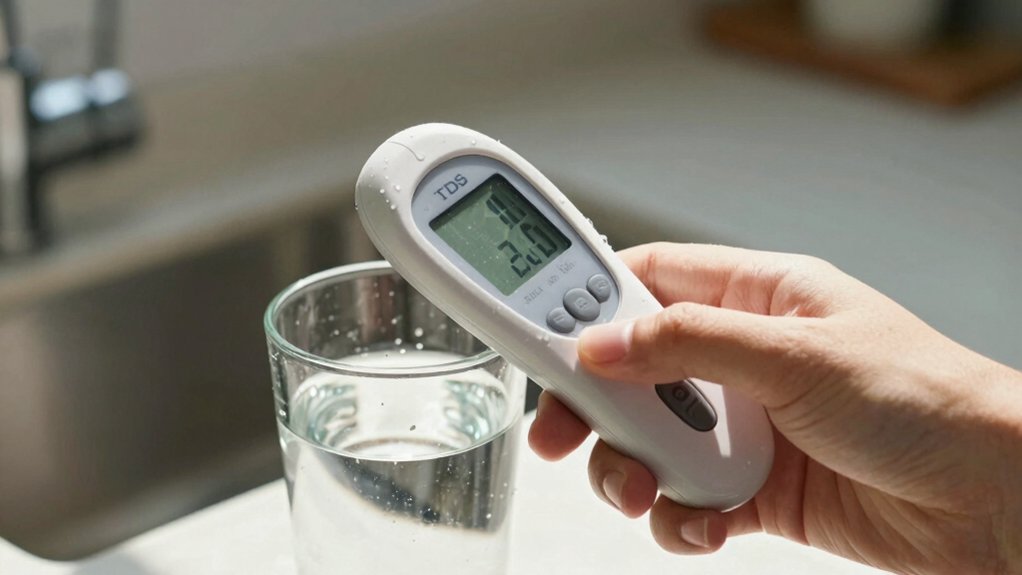
You’ll interpret a TDS meter by comparing the ppm value to expected source ranges: rain or purified water ~0–20 ppm, RO/bottled 0–150 ppm, typical tap 150–500 ppm, and groundwater or borewells often >1,000 ppm.
Use those bands to judge mineral load, potential saline or aquifer influence, and drinking suitability: ideal 150–300 ppm; EPA secondary limit 500 ppm. Log source, temperature, and time for trends.
Calibrate and compensate for temp to confirm accuracy if you want to learn more.
Quick Overview
- TDS measures total dissolved solids in ppm; lower values mean purer water, and higher values indicate more dissolved minerals or contaminants.
- Compare readings to drinking thresholds: ideal 150–300 ppm, acceptable up to 500 ppm, and concern above 500 ppm.
- Interpret source context: Rain/RO are very low. Tap often reads 150–500 ppm, and groundwater/borewell can exceed 1,000 ppm.
- Ensure accurate readings by calibrating regularly with a certified 342 ppm solution and using temperature compensation.
- Track source, temperature, time, and calibration logs to spot trends, seasonal changes, or contamination events.
TDS Ranges by Water Source
Wondering how TDS varies by source? You’ll use TDS interpretation to compare Water sources quickly: rain and purified water show extremely low TDS. RO and bottled vary low to moderate; tap typically sits at 150–500 ppm. Groundwater or borewells can exceed 1,000 ppm. Interpret ranges against drinking thresholds: ideal 150–300 ppm; EPA secondary 500 ppm.
Use source-specific context: mineral-rich aquifers raise TDS, and coastal or saline inputs push levels far higher. Measure consistently and log source, temperature, and time for trend analysis.
| Source Category | Typical TDS (ppm) |
|---|---|
| Purified / Rain | 0–50 |
| RO / Bottled | 20–650 |
| Tap / Surface | 150–500 |
| Ground / Borewell | 300–1,500+ |
Calibration Frequency & Temp
How often should you calibrate your TDS meter? You should set calibration frequency based on use, environment, and required accuracy. For routine checks, calibrate more often; for infrequent spot checks, less.
Daily or before critical measurements: Calibrate if you need lab-grade repeatability. Verify temperature compensation at sample temp.
Weekly: Calibrate in service environments or when probe exposure to contaminants is common. Confirm compensation circuit stability.
Monthly: Acceptable for low-use, controlled conditions. Still verify temperature compensation and store calibration records.
Always use a certified 342 ppm solution at ~25°C (77°F) or apply appropriate temperature compensation. Log calibration date, adjustment magnitude, and any drift to inform future calibration frequency.
Battery Replacement Interval
Expect typical TDS meter batteries to last several hundred hours of use; however, actual lifespan depends on cell type and usage patterns. Watch for flickering or slow/stuck readings, dim displays, or the meter failing to power on as clear signs you need a replacement.
Consider factors like frequent backlight use, cold storage, and prolonged standby when planning replacement intervals. Recycle old cells per local regulations, and extend life by removing batteries during long storage.
Typical Battery Lifespan
How long will a TDS meter’s battery actually last in regular use? Typical battery lifespan depends on usage pattern, meter circuitry efficiency, and battery chemistry. If you test intermittently (a few minutes per session, several times weekly), alkaline AA/AAA cells commonly last 6–12 months. Button-cell meters often run 1–2 years.
Lifespan factors include display type (LCD vs backlit), sampling duration, frequency of powering on/off, and ambient temperature. Continuous logging or backlight use can reduce life to days or weeks. Meter age and intermittent high-current events (probe heating, logging transmissions) further shorten runtime.
Replace batteries proactively on an annual schedule for handhelds under moderate use. Alternatively, base replacement on cumulative powered hours for precise maintenance planning.
Signs Battery Needs
When should you replace the battery? You should act when meter performance indicates degraded battery health: display dimming, slow startup, frequent low-battery warnings, or readings that intermittently freeze. Confirm by running stability checks. If readings wander or lock despite correct technique, the battery is likely the cause.
Do not confuse sensor faults; swap the battery with a known-good cell and repeat tests before servicing. Use manufacturer-specified cells to preserve calibration and avoid leakage. Verify charger compatibility if using rechargeable packs. Incompatible chargers can overheat cells and alter voltage output, causing erratic readings.
Record replacement events and post-replacement calibration. Replace proactively if the meter will be used in critical monitoring to prevent data loss during field measurements or long-term trend logging.
Replacement Frequency Factors
Why replace the battery on a schedule rather than only when it fails? You maintain measurement integrity: battery voltage drift causes low-power sensor behavior and erroneous TDS/EC conversions. Set replacement frequency based on usage hours, measurement cadence, and environmental temperature. Heavy field use and extreme cold shorten battery life.
Track two word discussion ideas like “usage profile” and “voltage decay” when documenting intervals. Use a simple log: install date, cumulative hours, and voltage checks. Replace proactively when voltage approaches manufacturer threshold or at a fixed interval, for example, 12 months for light use and 3–6 months for continuous use. Scheduled replacement minimizes stuck readings, calibration difficulties, and downtime.
Record replacements to refine future replacement frequency for your application.
Proper Battery Disposal
Where should you take used TDS meter batteries for safe disposal? Take them to a certified household hazardous waste (HHW) facility or a battery recycling drop-off. Municipal collection points ensure compliant handling and prevent environmental contamination. You should avoid landfill disposal because leaking cells accelerate battery corrosion; this risks sensor damage if stored with meters.
Before transport, isolate terminals and place batteries in a non-conductive container. Document the replacement date to correlate with observed voltage sag during use; this helps verify end-of-life and supports proper inventory. If your meter showed erratic or low readings attributable to batteries, include those notes when disposing so technicians can assess whether residual contamination affected calibration.
Follow local regulations for lithium, alkaline, and button cells.
Extending Battery Life
After you replace and properly dispose of old cells, you can extend the new batteries’ service life by following a few practical habits that reduce load and preserve voltage stability. Monitor voltage before and after measurement sessions. Avoid using the meter continuously for long periods.
Match battery chemistry to the meter’s specification: alkaline, NiMH, or lithium. This will prevent voltage sag and leakage. If using rechargeable cells, follow manufacturer charging practices. Use controlled-current slow charging and avoid overcharge.
Remove batteries if the instrument will be stored for months; leakage accelerates failure. Keep contacts clean and dry to minimize internal resistance. Replace batteries at the first sign of unstable or drifting readings rather than waiting for complete cutoff. Log replacement dates to establish a predictable battery replacement interval.
Frequently Asked Questions
Can TDS Detect Specific Contaminants Like Lead or Nitrate?
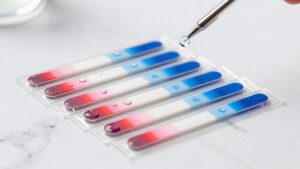
No, you can’t use TDS for lead detection versus nitrate detection. It measures overall ionic load, not specific species. You’ll rely on contaminant specificity tests: ICP-MS, AAS, ion chromatography, or targeted test strips to identify lead or nitrate.
Use TDS only for broad TDS measurement trends, pre-screening, or system performance checks. If TDS spikes, follow with specific analytical methods to determine which contaminant caused the change.
Why Do Hot and Cold Samples Give Different Readings?
Hot sample differences occur because conductivity rises with temperature, so your meter, unless temperature-compensated, reports higher TDS. Cold sample differences show lower conductivity and thus lower TDS. You should use temperature compensation or measure at ~25°C; wait for thermal equilibrium and record sample temperature. Rapid warming, sensor heating, or evaporation will skew results.
For consistency, standardize sample temperature and note it when comparing readings.
Does Dissolved CO2 Affect TDS Readings?
Yes, dissolved CO2 raises TDS slightly because it forms carbonic acid and dissociates to bicarbonate/carbonate, adding conductive ions. You’ll see a modest increase in ppm.
Temperature compensation matters: EC changes with temperature. Therefore, use a meter with proper temperature compensation to isolate CO2 effects. For accuracy, measure at consistent temperature and equilibrate samples. Note that CO2-driven TDS shifts are small compared with mineral salts.
Can TDS Meters Measure Saltwater Accurately?
Yes, you can measure saltwater with a TDS meter, but saltwater accuracy is limited. You’ll get a conductivity-based TDS estimate that rises with dissolved salts. Measurement limitations include variable kₑ conversion for seawater ions, electrode polarization at high salinity, and sensor range limits.
Calibrate with appropriate standards; avoid exceeding probe specs. Use EC readings with seawater-specific conversion or refractometry for more reliable salinity quantification.
How Do Soaps or Oils on Probe Alter Readings?
Soaps residues and oil films on the probe raise or erratically jump TDS readings by insulating the electrode and altering conductivity at the sensor interface. You’ll see lower stable values if films block contact. You may also observe transient spikes if residues dissolve unevenly.
Clean with mild detergent rinse, then distilled water, dry, and recalibrate. Repeat measurements until consistent. If readings remain abnormal, replace or professionally service the probe and verify battery/calibration.
Conclusion
You’ve learned how to read TDS meter values across water sources. Keep devices accurate by calibrating at appropriate intervals and temperatures. Monitor battery condition and lifespan. Replace batteries when output becomes unstable, dim, or erratic.
Consider usage and storage factors. Dispose of cells per local regulations. Extend service life by storing the meter dry, removing batteries during long storage, and avoiding extreme temperatures. Follow these steps to ensure reliable, repeatable TDS measurements.
You may also like: Tds Mean In Drinking Water — a related guide worth bookmarking.