How to Evaluate Compatible Water Filters Vs Oem Filters
You’ll judge compatible versus OEM filters by testing micron rating, flow and pressure tolerances, materials, seals and certifications against OEM specs. Verify 0.5–1 μm vs 5 μm needs for bacteria/cyst vs debris. Confirm housing size, thread standard and port alignment, and match MOP, burst and dynamic pressure ratings.
Check chemical compatibility of plastics and O‑rings, and confirm NSF/ANSI test reports and certifier IDs. Follow this checklist and you’ll uncover the key differences and risks.
Quick Overview
- Compare micron ratings and media type (e.g., 0.5–1 μm ceramic vs 5 μm pleated) to match contaminant removal and flow needs.
- Verify third‑party certification (NSF/ANSI) and cross‑check certifier, certificate number, test dates, and reduction reports.
- Confirm physical compatibility: cartridge outer diameter, length, port threading (NPT/BSP) and dimensional drawings to avoid misfit.
- Match pressure and temperature ratings: ensure cartridge MOP, burst, and cycle limits meet or exceed housing specifications.
- Check materials and seals for chemical and temperature compatibility (housing polymer/metal and O‑ring elastomers) to prevent degradation.
Filter Micron & Flow Rates
How fine does a filter need to be for your water source? You evaluate micron rating versus flow: 0.5–1 μm captures bacteria/cysts and improves VOC removal. 5 μm tolerates pressure swings and resists clogging; this preserves filter lifespan. For well or high-sediment sources, stage with 20–50 μm prefilters to prevent premature blockage.
Mineral-rich water shortens service life unless scale-inhibiting features are present. Low-flow systems favor ceramic 0.5–1 μm media to maintain throughput without pumps. Consider installation ease: finer cartridges may need sturdier housings and pressure regulation. Balance microbial safety, flow requirements, system pressure, and maintenance schedule when selecting OEM or compatible options.
| Micron | Typical Use |
|---|---|
| 0.5 | VOCs, bacteria |
| 5 | Sediment resilience |
| 20–50 | Prefilter stage |
Certification Labels Checklist
After choosing micron ratings and flow characteristics, verify certification labels to confirm performance claims and safety. You should inspect label details and look for certifying bodies; demand traceable documentation. Certification labeling tells you which contaminant reductions were validated and under what conditions. Do not accept vague claims. Request third party test reports to corroborate label assertions and check test dates, protocols, and limits of detection. Compare report parameters to your expected service conditions.
- Confirm NSF/ANSI or equivalent standard referenced on the label.
- Verify certifier identity and certificate number against their database.
- Obtain third party test reports showing reduction percentages and test methods.
- Check expiration or re-test dates and applicable flow/pressure conditions.
Use this checklist before approving compatible filters.
Filter Housing Compatibility Limits
When evaluating compatible filters, you should verify housing dimensions and threading to guarantee a proper mechanical fit. Check rated pressure limits, material chemical compatibility, and O‑ring/seal geometry to prevent leaks or premature failure.
Also confirm flow rate specifications match system requirements to avoid reduced performance or warranty issues.
Size And Threading
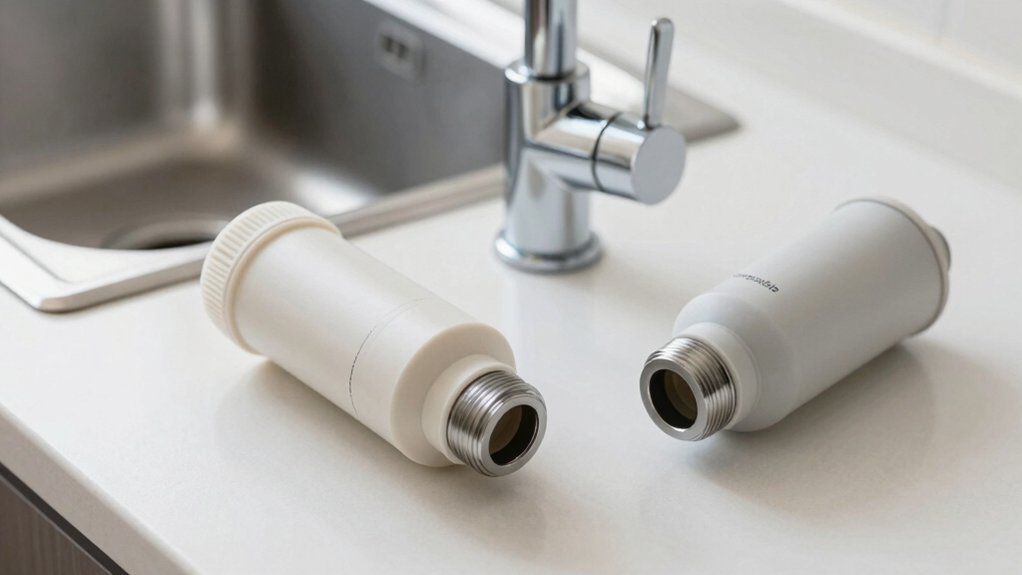
Why does size and threading matter for compatible filters? You need precise size compatibility because housings and filter ports use tight tolerances; a few millimeters difference prevents proper sealing or alignment. Verify filter outer diameter, length, and inlet/outlet locations against the OEM drawing or spec sheet.
Threading standards are equally critical: BSP, NPT, or proprietary pitch differences will stop proper engagement and can cause cross-threading or leaks. Measure pitch, diameter, and nut/bolt clearance, and confirm gasket seating surfaces. Choose compatibles that publish dimensional drawings and threading standards, or supply adapters if approved.
Never assume visual fit. Validate with measured specs to prevent installation failure, leaks, or compromised filter performance.
Pressure Rating Limits
How much pressure can your refrigerator’s filter housing safely handle? You must verify the housing maximum operating pressure (MOP) and maximum burst pressure against the compatible filter’s specification. Install a cartridge rated equal to or above the MOP; underspecified cartridges risk leaks or rupture.
Check manufacturer datasheets for static and dynamic pressure ratings, temperature correlations, and cycle life under pressure. When comparing OEM and compatible options, include price comparison and verify that lower cost compatibles don’t sacrifice rated pressure. Confirm installation torque limits and use proper seals to maintain rating.
Finally, ensure warranty coverage explicitly references failures from overpressure or installation defects. Otherwise, the manufacturer may deny claims for pressure-related damage.
Material Chemical Compatibility
Which chemicals in your water and cleaning agents will the filter housing actually tolerate? You should verify material compatibility by comparing the housing polymer or metal against known contaminants and sanitants (chlorine, chloramine, peroxide, acids, alkalis, solvents).
Check manufacturer data sheets for chemical stability temperature-dependent charts and concentration limits. Materials like PPS, PVDF, stainless steel 316, and certain engineered plastics offer higher resistance; standard ABS, nylon, or untreated zinc alloys may degrade faster.
Assess prolonged exposure, pH range, and oxidizer contact to predict swelling, embrittlement, or leaching. When specs are missing, request laboratory compatibility tests or choose housings with documented resistance.
Prioritize housings whose chemical stability exceeds the worst-case service conditions for reliable performance.
Seal And O-Ring Fit
When inspecting seal and O‑ring fit, start by confirming dimensional tolerances and material compatibility with your housing and filter cartridge. A snug, uniform compression without visible gaps or extrusion ensures a reliable pressure seal and prevents bypass. You’ll measure groove width, gland depth, and O-ring size against manufacturer specs using calipers and a profile gauge.
Verify elastomer compound compatibility with water chemistry and temperature to avoid swelling, hardening, or extrusion. Check concentricity and surface finish of the mating surfaces; scratches or flash compromise seal fit. Install components dry and then with specified lubricant to confirm seating and torque limits without distortion. Reject cartridges that require excessive force or show nonuniform compression patterns. Those indicate marginal compatibility and risk leakage or premature failure.
Flow Rate Restrictions
Why does flow rate matter for filter housing compatibility? You must match a filter’s specified flow rate to the housing limits to avoid pressure loss, bypass, or seal failure. Housings have maximum and minimum flow tolerances; exceeding them reduces contact time with media and can allow untreated water through. Conversely, too low a flow can cause stagnation and biofilm risk.
When evaluating compatible filters, verify published flow rate performance versus the OEM spec and confirm material compatibility with the housing and seals. Different media densities and end-cap materials change hydraulic resistance and thermal expansion. Use manufacturer data sheets and, if available, independent test results to confirm that the compatible unit maintains required flow without compromising fit or materials.
Frequently Asked Questions
Do Compatible Filters Affect Refrigerator Warranty Coverage?
Yes, using compatible filters can affect warranty coverage. You should check warranty implications in your appliance terms; manufacturers often require OEM parts to maintain full coverage. If compatibility standards aren’t met or a third-party filter causes damage, claims can be denied.
However, if the compatible filter meets stated specifications and certifications and causes no harm, you can typically retain warranty rights. Document compatibility and retain purchase records.
How Do Replacement Schedules Differ Between OEM and Compatible Filters?
You’ll typically follow the same replacement schedules for OEM and high-quality compatible filters, usually every 6 months or per liter capacity. However, some compatibles with lower capacity need more frequent changes. Track usage and flow rate to adjust intervals.
Using a compatible filter rarely creates warranty impact if it’s certified and installed correctly. However, keep purchase records and certifications to dispute any manufacturer claims otherwise.
Can Compatible Filters Introduce Taste or Odor Changes Over Time?
Yes, compatible filters can cause taste change or odor lingering if materials, carbon quality, or manufacturing leave residues or degrade prematurely. You should expect high-quality compatibles to match OEM performance; however, inconsistent media or poor seals may release organics or support bacterial growth, producing off-flavors or persistent odors.
Verify third-party certifications, inspect materials, flush new filters per instructions, and replace on schedule to minimize taste and odor issues.
Are There Environmental Differences in Filter Materials and Disposal?
Yes, you’ll see differences. Environmental impact depends on materials, certifications, and manufacturing: OEMs often use higher-grade plastics and certified media, while compatibles vary widely.
Disposal methods matter; check recyclability symbols, local programs, and manufacturer take-back options. You should prefer filters with clear material disclosure, third-party certification, and recyclable housings or compostable components to minimize landfill waste and chemical leaching during disposal.
Do Compatible Filters Carry the Same Customer Support or Return Policies?
Not always; compatible filters often lack the same customer support and return policies as OEMs. You should verify warranty length, support channels, and return windows before buying.
OEMs typically offer formal support lines, documented troubleshooting, and clearer return/exchange procedures. Compatible brands vary: some match OEM service levels, while many provide limited or online-only support and shorter return policies.
Document claims and keep purchase receipts for any claim.
Conclusion
When choosing a compatible water filter instead of an OEM unit, prioritize matching micron ratings and flow rates to preserve performance and filter life. Verify third-party certifications, housing size, thread type, and pressure ratings against your system specs.
Confirm materials tolerate your water chemistry and that seals, O‑rings, and flow restrictors align to prevent leaks or bypass. Doing these checks ensures safe, reliable filtration and avoids voiding warranties or compromising water quality.
You may also like: Types And Connection Sizes Reference — a related guide worth bookmarking.