Reverse Osmosis Stages Explained
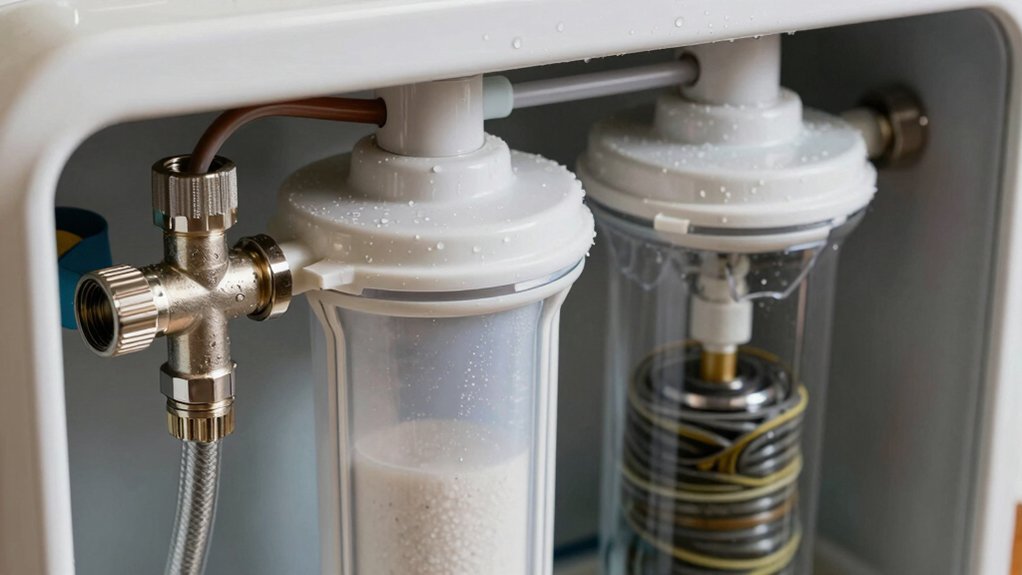
You’ll see feed water go through staged barriers: pre‑treatment removes particulates and chlorine to protect membranes. Primary filtration captures finer solids. The membrane stage separates permeate and concentrate, controlling recovery and rejection. Post‑treatment polishes and stabilizes water.
You’ll monitor permeate flow, TMP, and TDS to spot fouling or salt passage. Use antiscalant dosing, pH and temperature control, and flushes to prevent scaling. Continue and you’ll learn practical tuning and maintenance steps.
Quick Overview
- Pre-treatment removes solids, chlorine, and organics (sediment filters, carbon, softeners) to protect membranes and prevent fouling or chemical damage.
- Primary filtration (cartridge/multimedia) further reduces fine particles and turbidity to maintain permeate flux; it also reduces pressure drop increases.
- The membrane stage uses semipermeable RO elements to separate permeate (low-TDS) from concentrate. Recovery is set by feed flow and pressure.
- Antiscalant dosing, pH control, and temperature management prevent salt scaling and maintain rejection. It is essential to monitor permeate TDS and differential pressures.
- Post-treatment (polishing, disinfection, remineralization) conditions permeate for end use and ensures stable water chemistry; it also ensures distribution safety.
Permeate Flow & Rejection Rates
How does permeate flow relate to rejection rate in your RO system? You monitor permeate flow (Qp) because recovery and pressure change rejection rates; higher Qp at fixed feed often lowers rejection due to increased salt passage. You’ll calculate recovery = Qp/Qf and salt passage = (Permeate TDS / Avg Feed TDS) ×100 to get rejection %.
| Signal | Effect on Quality | Action |
|---|---|---|
| Higher Qp | Rejection may fall | Reduce recovery or raise pressure |
| Lower Qp | Rejection improves | Accept lower yield |
Control feed TDS, temperature, and pressure to stabilize rejection rates. Use average feed/concentrate TDS for accurate calculations. Test permeate TDS to verify membrane performance. Schedule maintenance if rejection drifts.
Membrane Pressure Drop Limits
Why does pressure drop across RO membranes matter to your system’s performance? You monitor pressure drop because it signals flow restrictions that reduce permeate yield and raise energy use. Limits are set to prevent differential stresses that deform elements and compromise rejection.
Track inlet, brine, and permeate pressures. An increasing pressure drop often indicates membrane fouling and requires intervention before irreversible damage.
Establish baseline pressure drop per membrane at clean condition. Set alarm thresholds: for example, a 15–25% increase over baseline. Correlate pressure rise with permeate decline and TDS changes. Schedule cleaning or backwash when thresholds hit to limit fouling. Replace membranes when irreversible pressure loss or rejection failure occurs.
Maintain logs and act promptly to protect recovery and longevity.
Salt Scaling Prevention Methods
To prevent salt scaling, you’ll combine targeted pre-treatment filtration with chemical and operational controls tailored to your feedwater. Use antiscalant dosing, pH adjustment, and temperature management to keep sparingly soluble salts below saturation. Schedule periodic high-velocity flushes to remove nascent deposits.
I’ll outline component choices, dosing strategies, control targets, and flushing procedures so you can implement an effective prevention plan.
Pre-Treatment Filtration Options
Wondering how to prevent scale from fouling your RO membrane? You’ll use targeted pre-treatment filtration to remove particulates and chlorine that exacerbate scale and membrane fouling. Start with a graded sediment cartridge to trap >5 µm solids. Consistent pre filter maintenance (replace every 6–12 months) preserves flux and reduces biofilm risk.
Follow with an activated carbon stage to remove chlorine, chloramines, VOCs and organic precursors that can interact with hardness ions. For higher hardness or iron, install media filters (greensand, catalytic carbon) or duplex softening before the membrane to lower scaling species mechanically.
Consider multi-stage arrays where serviceable pre-filters are staged for progressive loading. Evaluate water chemistry and operational recovery to select pre treatment alternatives that minimize scale while maximizing membrane life.
Antiscalant Chemical Dosing
After installing graded sediment and carbon pre-filters to reduce particulates and oxidants, you’ll often still face dissolved hardness and sparingly soluble salts that precipitate on the RO membrane. Antiscalant chemical dosing prevents that by interfering with crystal nucleation and growth. You select an antiscalant based on feedwater composition (Ca, Mg, Ba, Sr, silica, carbonate, sulfate) and dose to maintain a target Langelier/Scale Index margin.
Dosing pumps inject concentrate upstream of the membrane at controlled ppm. You monitor residuals, permeate flux decline, and differential pressure to adjust rates. Proper antiscalant dosing supports membrane anti scaling, extends membrane life, reduces cleaning frequency, and preserves recovery. Maintain feedwater temperature and turbidity within specification to ensure antiscalant performance.
pH Adjustment Strategies
pH adjustment is a key salt-scaling prevention method that you use to shift carbonate, sulfate and silica equilibria away from supersaturation before feedwater reaches the RO membrane. You control pH to suppress carbonate precipitation and alter silica and sulfate speciation; this reduces nucleation risk on membrane surfaces.
Implement inline dosing of acid (e.g., sulfuric, hydrochloric) or alkaline agents to target a calculated setpoint based on feedwater chemistry and recovery rate. Monitor pH stability continuously with probes and automatic controllers; integrate proportional dosing to respond to load changes.
Maintain mineral balance considerations: excessive acidification can mobilize metals or upset downstream remineralization. Validate strategy with saturation indices, periodic scaling coupons, and adjust dosing to minimize antiscalant overlap while protecting membrane flux and longevity.
Temperature Control Practices
How can you use temperature control to curb salt scaling on RO membranes? You’ll manage feed-water temperature to keep solubility margins safe. Higher temperatures lower salt solubility and raise scaling risk. Implement temperature optimization protocols that define operational bands (typically 10–30°C depending on chemistry) and interlock with feed pumps.
Maintain flow stability to prevent localized cooling or heating that shifts saturation indices. Use inline sensors and PID control to modulate heaters or coolers and correlate temperature setpoints with recovery rates and concentrate composition. Log temperature and scaling indicators for trend analysis and adjust setpoints before threshold excursions.
Coordinate temperature control with antiscalant dosing and pressure management; don’t rely solely on heat adjustments. This approach minimizes deposit formation and preserves membrane flux.
Periodic Membrane Flushing
Flushing RO membranes periodically prevents salt crystals from nucleating and adhering to the membrane surface; this helps you maintain flux and extend membrane life. You implement periodic flushing as a short-duration, high-velocity rinse that dislodges incipient scale before it becomes tenacious.
Configure automated timers or conductivity-triggered valves to initiate flush cycles during low-demand intervals. Use designed flush rates and durations from membrane manufacturer data to avoid damage.
Integrate a system bypass to route concentrate and avoid interrupting downstream supply during flush events. Ensure bypass valving prevents cross-contamination. Track cumulative flush volumes and frequency to optimize chemical dosing and cleaning schedules.
When you combine controlled periodic flushing with appropriate pretreatment, you reduce chemical clean frequency and preserve membrane permeability without sacrificing system availability.
Monitoring And Scaling Indicators
When should you intervene to prevent scale buildup on RO membranes? You act when monitoring shows sustained rises in differential pressure, declining permeate flux, or increasing salt passage (TDS creep). Measure feed, concentrate, and permeate conductivity. Log recovery rate and TMP daily under constant flow.
Use LSI/RSI calculations to predict precipitation risk from calcium, magnesium, alkalinity, and silica. Implement low-dose antiscalant feed, pH adjustment, or reduced recovery when indices exceed thresholds. Inspect membrane housings for discoloration and follow color casing cautions during cleaning to avoid chemical damage.
Document actions and sensor data for trend analysis; retain service records for warranty considerations. Calibrate probes quarterly, replace sensors on drift, and schedule chemical cleanings based on measured scaling indicators.
Frequently Asked Questions
How Often Should Each Pre-Filter Be Replaced in Hard Water Areas?
You should replace sediment and carbon pre-filters every 3–6 months in hard water areas.
Sediment filters clog faster from mineral-laden particulates; therefore, check pressure drop monthly and swap earlier if flow drops.
Carbon media still removes chlorine and organics but gets fouled quicker. Replace on the same 3–6 month cadence.
Monitor system performance and consider a water softener to extend filter and RO membrane life.
Can RO Systems Remove Microplastics Smaller Than 1 Micron?
Yes, you’ll remove most microplastics smaller than 1 micron using RO. RO membrane effectiveness stems from submicron pore sizes (~0.0001 microns) and pressure-driven separation; thus, particulate microplastics are retained and sent to concentrate.
Pre-filters (sediment, carbon) reduce load and protect the membrane, improving microplastics filtration longevity. Maintain scheduled replacements and monitor differential pressure to preserve membrane effectiveness and sustained microplastic removal performance.
Is Remineralized RO Water Safe for Infants and Formula Preparation?
Yes, remineralized RO water can be safe for infants and formula preparation if done correctly. You should verify remineralization safety by ensuring added minerals (calcium, magnesium) meet pediatric guideline levels and that sodium remains low.
Infant formula concerns include precise mineral concentrations and sterilization. You should follow formula manufacturer instructions and pediatrician advice. Use tested remineralization cartridges or add measured, food-grade mineral sources to maintain consistent composition.
How Noisy Is the RO Pump During Normal Operation?
You’ll hear low-level pump noise during normal operation; it’s typically comparable to a quiet refrigerator humming. Noise mainly occurs during pressurized operation cycles when the booster runs to maintain membrane feed pressure.
Vibrations and flow noise are minimal if the pump’s mounted on dampers and fittings are tightened. Higher noise indicates cavitation, loose mounts, or worn bearings: service or replacement will restore expected quiet levels during regular operation cycles.
Do RO Systems Waste More Water in Low-Pressure Homes?
Yes, you will waste more water in low-pressure homes because low pressure challenges reduce RO membrane flux; this increases concentrate ratio and drain volume. You can mitigate this by installing booster pumps, permeate pumps, or selecting energy-efficient designs with high recovery membranes and multi-stage arrangements.
Maintain pre-filters to prevent fouling, which worsens waste. Monitor feed pressure and TDS: boosting pressure improves recovery and reduces wasted water.
Conclusion
You’ve now seen how permeate flow, rejection rates, and pressure-drop limits interact with scaling risks and membrane life. Use targeted pre-treatment, antiscalant dosing, and pH control while keeping temperature within design limits to reduce scaling and preserve flux.
Monitor differential pressure, conductivity, and recovery to spot fouling early. Schedule periodic flushing and cleaning protocols based on measured indicators. Apply these controls consistently to maximize RO performance and membrane longevity.
You may also like: Reverse Osmosis Glossary Terms — a related guide worth bookmarking.