Why Filtered Water Tastes Bad After Changing Filter
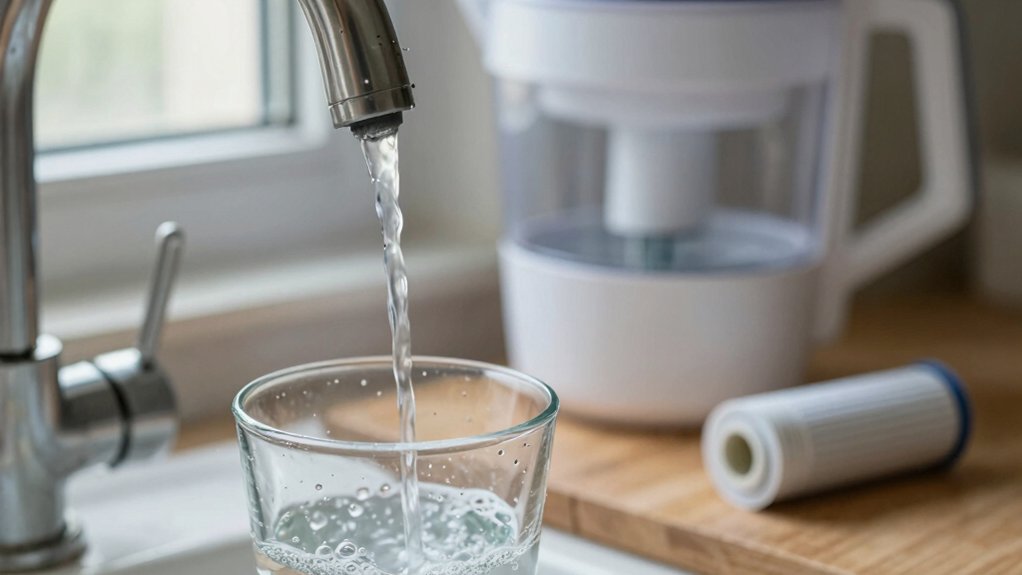
You’ll notice off-flavors after a carbon filter change because trapped carbon fines, manufacturing preservatives, and rapid adsorption dynamics transiently alter chlorine and taste compounds.
New media adsorbs free chlorine rapidly, shifting flavor perception. Loose carbon dust or black particulates release bitter, metallic notes until purged.
Flush several gallons of cold water at full flow; inspect for turbidity and specks, and document volumes. Continue until clarity and taste stabilize — more practical steps and metrics follow.
Quick Overview
- New carbon filters release carbon fines and manufacturing residues that cause black specks, cloudiness, and off-tastes until flushed.
- Fresh carbon adsorbs chlorine rapidly; this lowers free chlorine and reveals underlying water flavors you weren’t noticing before.
- Inadequate flushing or too-short contact time leaves preservative liquids or trapped air. This produces chemical tastes or mouthfeel changes.
- Flushing at full cold-water flow for the manufacturer’s recommended volume removes fines, bubbles, and turbidity that cause bad taste.
- Post-change free-chlorine readings above ~0.5 ppm or persistent off-taste indicate improper installation, exhausted media, or insufficient flush.
Post-Change Chlorine Ppm Chart
How quickly will chlorine levels drop after you change a carbon filter? You’ll see free chlorine residuals fall rapidly; often within the first few gallons, activated carbon adsorbs chlorine efficiently. That rapid decline can unmask underlying flavors and alter taste perception. Therefore, measure free chlorine to confirm performance.
| Location | Typical PPM | Note |
|---|---|---|
| Distribution entry | 0.2–2.0 | Incoming range varies by system |
| Point-of-use after new carbon | 0.0–0.2 | Rapid adsorption expected |
| Long-run distribution | 0.04–0.8 | Far-end residuals lower |
Use a kit with 0.1 PPM resolution. If post-change readings remain >0.5 PPM, suspect improper contact time, channeling, or exhausted media. Replace or flush per manufacturer specs.
Flush New Filter Thoroughly
Why flush thoroughly? You must remove manufacturing residues, trapped air, and carbon dust that create bitter or chalky notes. Proper flushing is a controlled, measurable step toward taste restoration.
- Determine flush duration from manufacturer specs or system type; RO units need longer, often several gallons.
- Run water at normal flow, time the output or measure volume; confirm turbidity clears and bubbles diminish.
- Monitor taste periodically during flushing. Initial off-flavors should decline as carbon fines and protective liquids exit.
- Document flush volume and residual taste. If off-taste persists beyond recommended flush duration, investigate filter fit, quality, or source chemistry.
Follow these procedures precisely to convert empirical flushing into repeatable, evidence-based taste restoration.
Carbon Fines Removal Steps
After installing a new carbon cartridge, flush the filter using cold water and run several gallons to purge carbon fines and trapped air.
Collect and inspect the outflow for visible black particulates or cloudiness. Then, repeat flushing until the water is clear.
This procedure is evidence-based: multiple systems and manufacturers report that repeated cold-water flushes remove residual carbon dust and restore expected taste.
Flush New Filter
Want clear, neutral-tasting water right away? You should flush new cartridges immediately to remove carbon dust and manufacturing residues. Begin by running cold water through the filter at full flow for a manufacturer-specified interval or until discharge is visibly clear. This evacuates entrained fines and trapped air.
For pitcher or inline activated-carbon units, intermittent rapid flushes plus settling pauses help dislodge compacted carbon dust. Monitor turbidity and odor: once particulate and bitter notes disappear, normal operation can resume. For reverse-osmosis prefilters, flush until supplied guidance is met to remove preservation liquids. Document flush volume and time for reproducibility.
If off-tastes persist after proper flushing, proceed to diagnostic steps rather than repeating brief flushes.
Run Several Gallons
Curious how to clear that bitter, chalky taste quickly? Run several gallons through the new cartridge at full flow to purge carbon fines and trapped air. Start with recommended manufacturer volumes. If unspecified, flush 2–5 gallons while checking taste and turbidity.
This direct dust removal expels manufacturing residues and microscopic carbon particles that cause off-flavors. For reverse-osmosis units, extend flushing to remove preservative liquids and allow membrane stabilization. Monitor pH and conductivity: initial drops in TDS reflect mineral rebalancing as residual salts and trapped minerals are washed out.
Stop when water runs clear, taste normal, and readings stabilize over successive liters. Document volumes flushed for future cartridge-change protocols and reduce repeat complaints.
Use Cold Water Only
Why should you use cold water only when flushing a new carbon filter? You’ll prevent thermal expansion, reduce solubility of fine carbon particles, and avoid mobilizing manufacturing residues that hot water can dislodge. New filters shed carbon fines; cold flushing limits release rate and improves particulate removal efficiency during the initial several-gallon purge.
Use steady cold flow at manufacturer-recommended pressure until turbidity and visual black specks disappear. Cold water also minimizes release of any binder compounds and volatile residues, helping taste restoration prospects by isolating carbon dust as the primary variable.
Don’t run hot water through the cartridge during commissioning; it can accelerate leaching and prolong off-tastes. Cold-only flushing yields more predictable, evidence-based removal of carbon fines and faster return to normal flavor.
Collect And Inspect
How should you collect and inspect the initial flush to confirm carbon fines removal? You should collect inspection samples immediately from the first several liters, using clean, transparent containers to visualize turbidity and particulate. Run cold water at the recommended flow for the system (typically several gallons). Collect aliquots at set intervals (e.g., 0.5, 1, 2 liters).
Compare visual clarity and note any black specks; carbon fines indicate incomplete flushing. For quantitative confirmation, measure turbidity with a portable nephelometer or use a 0.45 µm filter capture and weigh retained particulates after drying. Record time, volume, and flow rate.
Repeat until turbidity and particulate mass stabilize near baseline. Document results to validate that carbon fines and manufacturing residues have been removed.
Repeat If Cloudy
If your inspection samples still show cloudiness or black specks after the initial flush, repeat flushing in measured increments until clarity stabilizes. You should document volume flushed and visually inspect aliquots. Carbon fines follow a decay curve; therefore, three to five additional incremental flushes (0.5–2 gallons each, system-dependent) typically reduces particulate load to background.
Use a clear container, backlight, and 0.45 µm filter test if available to confirm removal. Expect a transient minor taste as trapped air and fines exit. Monitor for mineral rebound if you have an RO with remineralization; flushing can transiently alter perceived hardness and mouthfeel.
If particulates persist beyond expected cycles, replace the cartridge or contact the manufacturer for defect analysis.
Frequently Asked Questions
Can a New Filter Cause Stomach Upset or Health Risks?
Yes, a new filter can cause digestion concerns and minor health risks if it releases carbon dust, manufacturing residues, or trapped microbes that create off taste causes and irritation.
You’ll usually only get transient stomach upset; flushing the filter per instructions and using certified cartridges minimizes risks. Persistent symptoms, strong metallic or sulfurous tastes, or illness warrant stopping use and testing water or consulting health professionals for contamination or improper filter selection.
How Long Until Taste Returns to Normal?
You’ll typically see taste restoration within a few liters to several hours of normal use. Filter duration and system type dictate specifics. For activated carbon or pitchers, flush 2–5 gallons (8–20 L) to remove carbon dust and air. RO units often need 5–24 hours or dozens of gallons for storage tanks and membrane conditioning.
If the off-taste persists past recommended flushing tied to filter duration, test the water or replace the cartridge.
Does Filter Brand Affect Initial Off-Taste?
Yes, brand impact matters. When you install a new filter, manufacturing variances (media type, carbon grading, binders) create a measurable taste difference and initial off taste from carbon dust, protective lubricants, or differing adsorption profiles.
Higher-quality brands typically flush cleaner and use refined media, reducing transient bitterness. You should follow manufacturer flush volumes and consider verified brands if persistent off tastes or mismatched contaminant removal occur.
Can Pipe Corrosion Cause Bad Filtered Water Taste?
Yes, pipe corrosion can cause bad filtered water taste. Corroded pipes release metals (iron, copper, zinc) and disrupted scale into the flow, altering taste perception by introducing metallic, bitter, or rusty notes.
Even after filtration, disturbed particulates can bypass or overload cartridges. You should test water chemistry, inspect plumbing for corrosion, flush lines thoroughly, and consider targeted filters or pipe replacement to resolve persistent metallic off-flavors.
Should I Test Water After Every Filter Change?
You don’t need to test water after every filter change unless you observe issues. Establish a testing frequency based on risk: monthly for systems treating questionable sources, quarterly for municipal supplies, and after any taste restoration failures.
Use TDS, chlorine, and metal-specific tests to verify performance. Document results and flush appropriately. If anomalies persist, perform thorough lab testing or replace/filter type to ensure consistent, safe filtration.
Conclusion
After you change a filter, you’ll often notice an off taste because trapped carbon fines and residual manufacturing dust temporarily raise particulates and alter chlorine ppm. Flush the new cartridge immediately, running several gallons of cold water while collecting and inspecting effluent until it’s clear and chlorine stabilizes at expected post-change ppm.
If cloudiness or taste persists, repeat flushing. Persistent taste after thorough flushing indicates installation error or defective media requiring replacement.
You may also like: Tap Water Tastes Like Chlorine — a related guide worth bookmarking.